
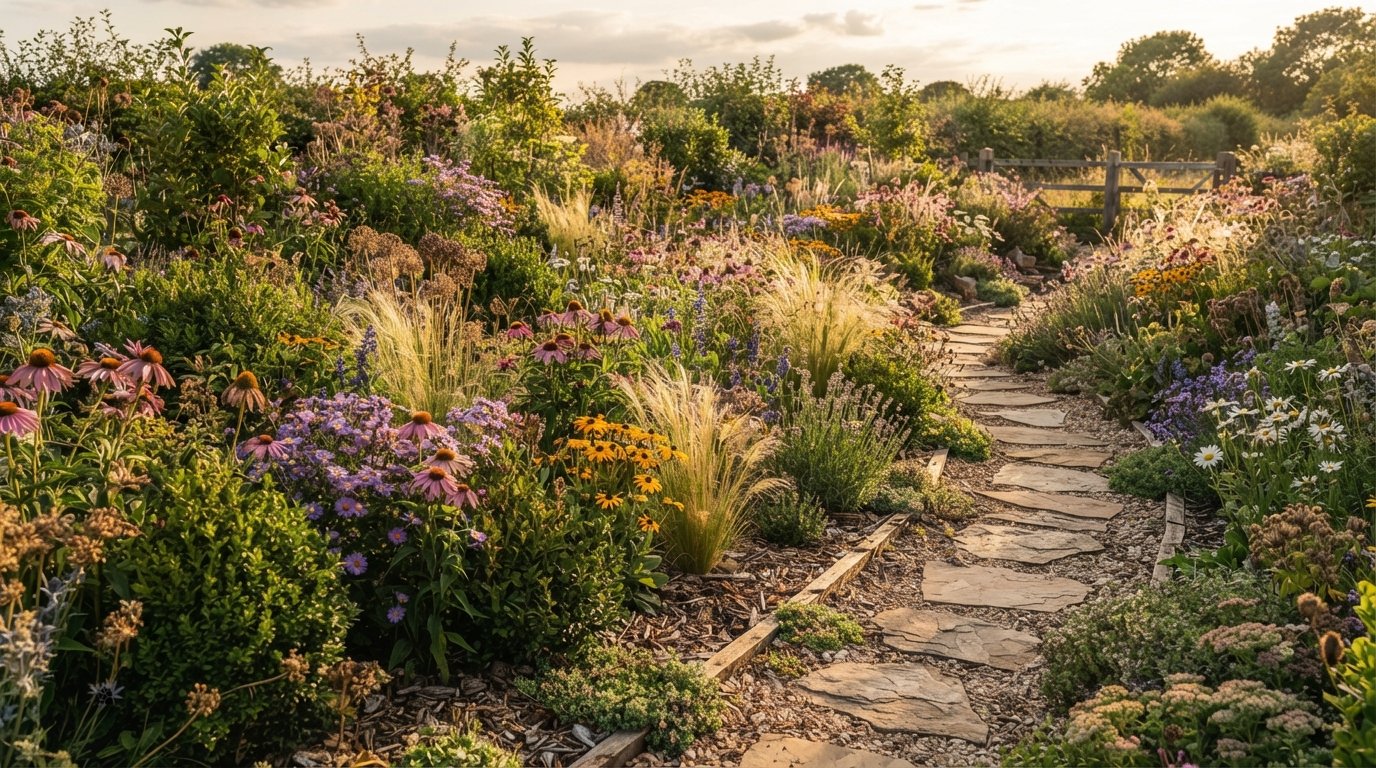
Wildflowers can turn an ordinary yard into a colorful, relaxed, and wildlife-friendly space. Instead of perfectly arranged flower beds, a wildflower garden celebrates natural shapes, mixed colors, and plants that move gently with the breeze.
Whether you have a large backyard, a small corner, or just a few containers, there are many ways to bring a wildflower look into your garden. You can mix native flowers with grasses, create a cottage-style border, or dedicate an entire section of your yard to a natural meadow.
Here are 17 wildflower garden ideas to help you create a beautiful outdoor space that feels natural and full of life.
1. Create a Colorful Wildflower Meadow
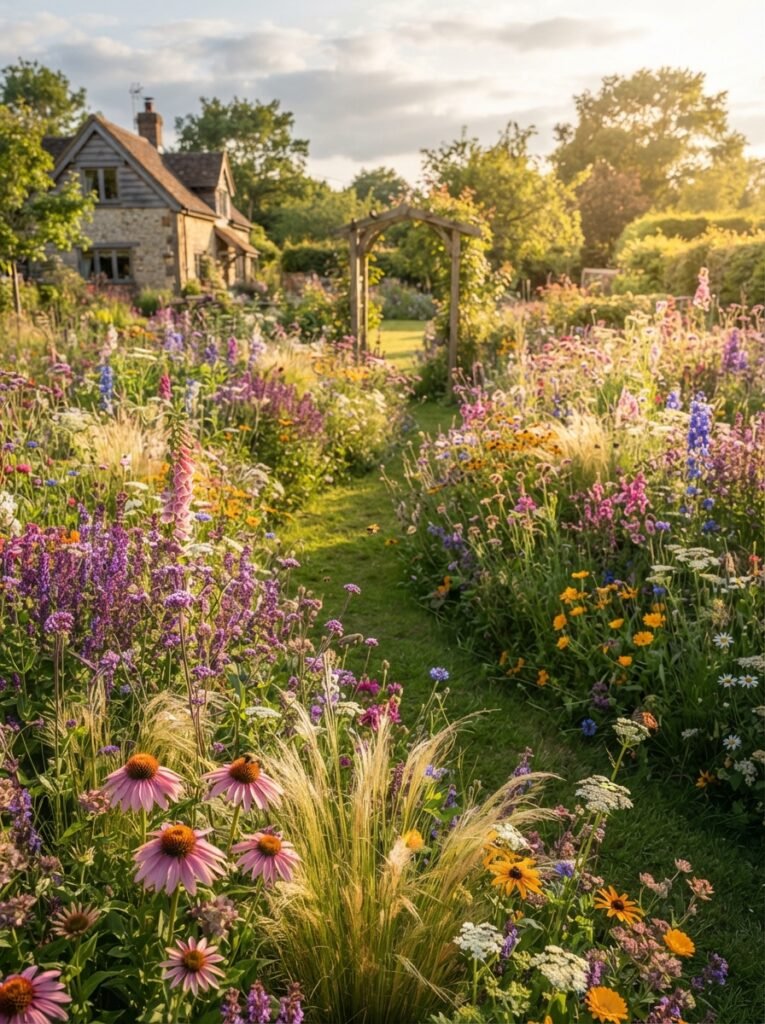
A wildflower meadow is one of the easiest ways to create a natural-looking garden. Instead of arranging every flower in neat rows, allow different varieties to grow together in loose groups.
Choose flowers that are suited to your local climate and soil. Mixing different bloom times can also help keep the meadow colorful for longer.
Why You’ll Love It
- Creates a relaxed natural landscape.
- Adds lots of seasonal color.
- Can provide valuable habitat for pollinators.
2. Add Wildflowers Along a Garden Path
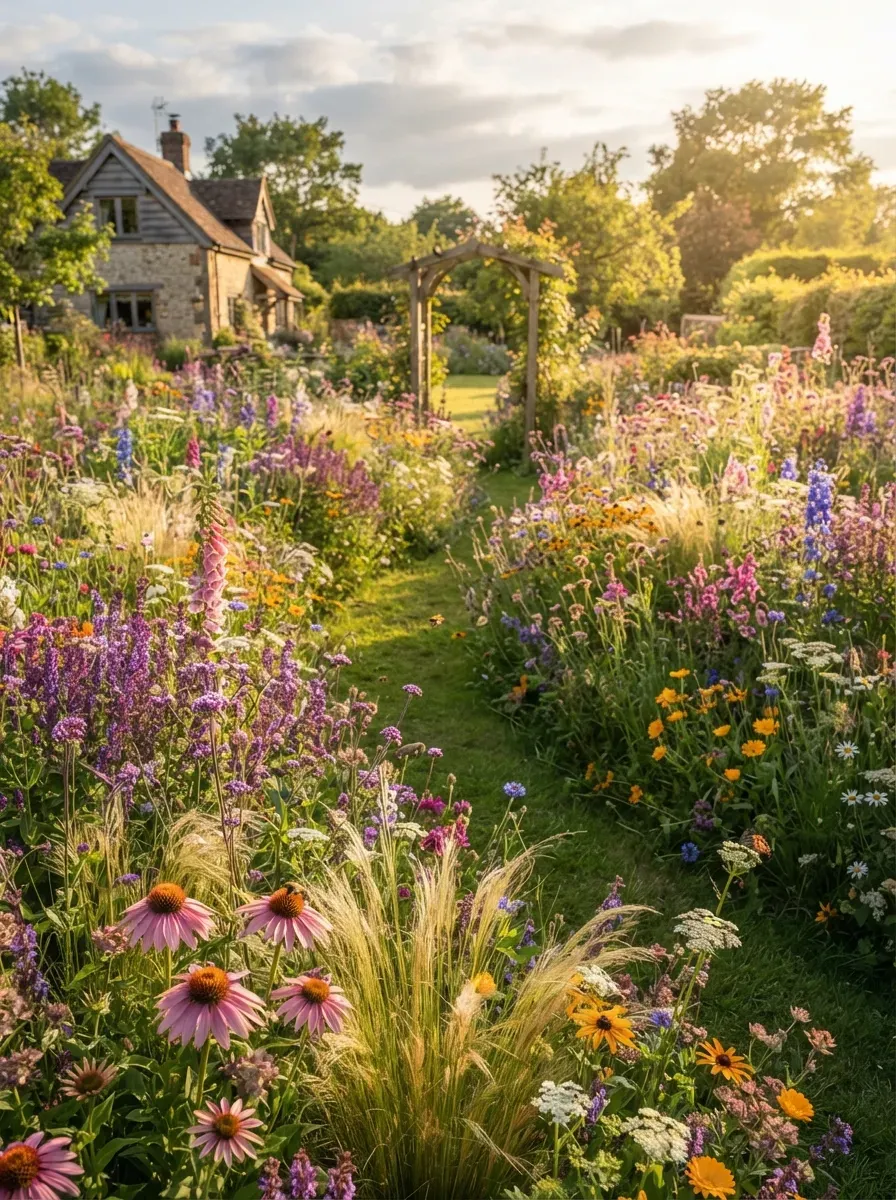
A garden path can look much more inviting when surrounded by wildflowers. Let the flowers soften the edges of stone, gravel, or brick paths.
Plant taller varieties farther from the walkway and shorter flowers near the edge. This keeps the path accessible while still giving it a natural, overflowing appearance.
Why You’ll Love It
- Makes pathways feel more inviting.
- Adds color to hard landscaping.
- Creates a relaxed cottage-garden look.
3. Design a Native Wildflower Garden
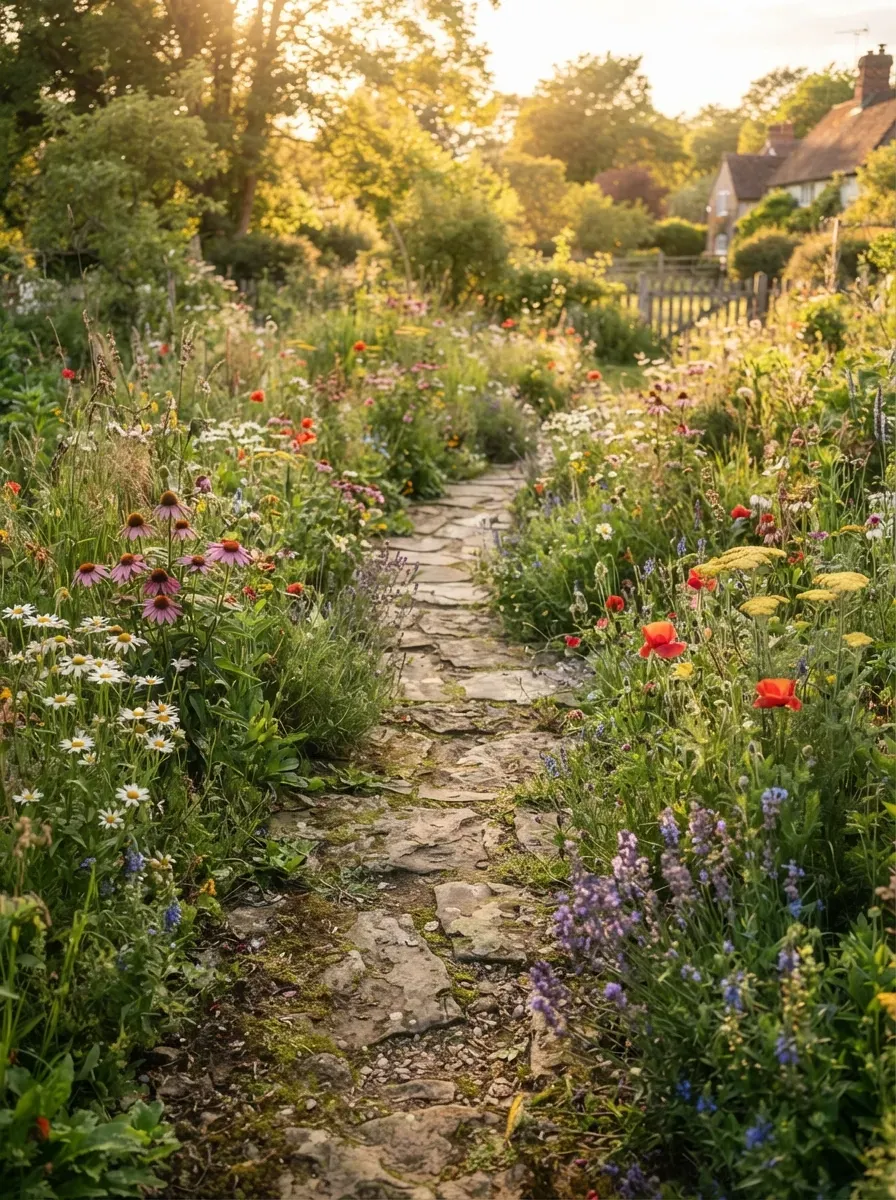
Using native plants is a smart approach when creating a wildflower garden. Plants adapted to your local environment are often better suited to the area’s climate, soil, and seasonal conditions.
Before planting, check which wildflowers naturally grow in your region. A local native plant nursery or extension service can help you choose appropriate species.
Why You’ll Love It
- Supports local garden biodiversity.
- Plants are suited to regional conditions.
- Creates an authentic natural appearance.
4. Make a Small Backyard Wildflower Corner
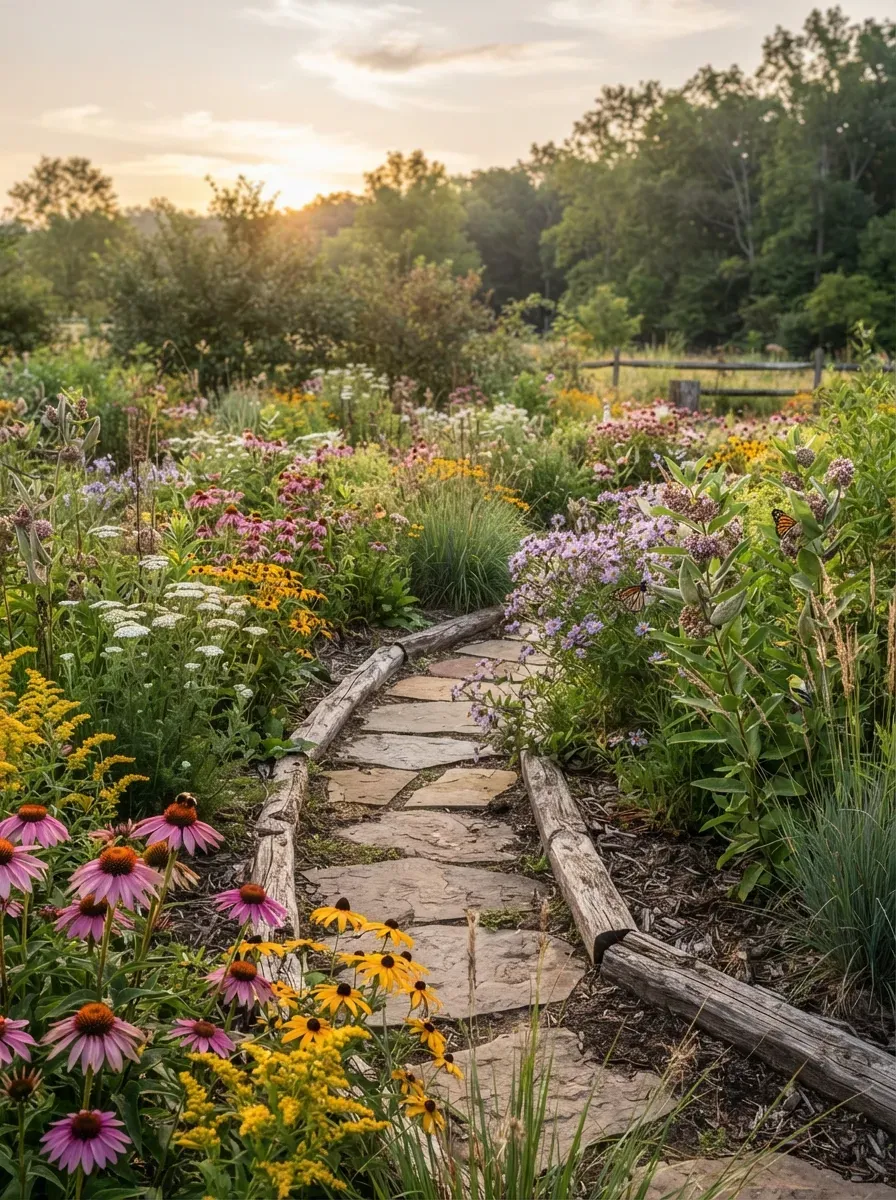
You don’t need a huge yard to enjoy wildflowers. A small corner can become a colorful mini meadow with just a few carefully chosen plants.
Use different heights to make the area feel fuller. A low-growing border around taller flowers can create the appearance of a much larger planting area.
Why You’ll Love It
- Works in small yards.
- Easy to start with a limited plant selection.
- Adds color to unused corners.
5. Mix Wildflowers with Ornamental Grasses
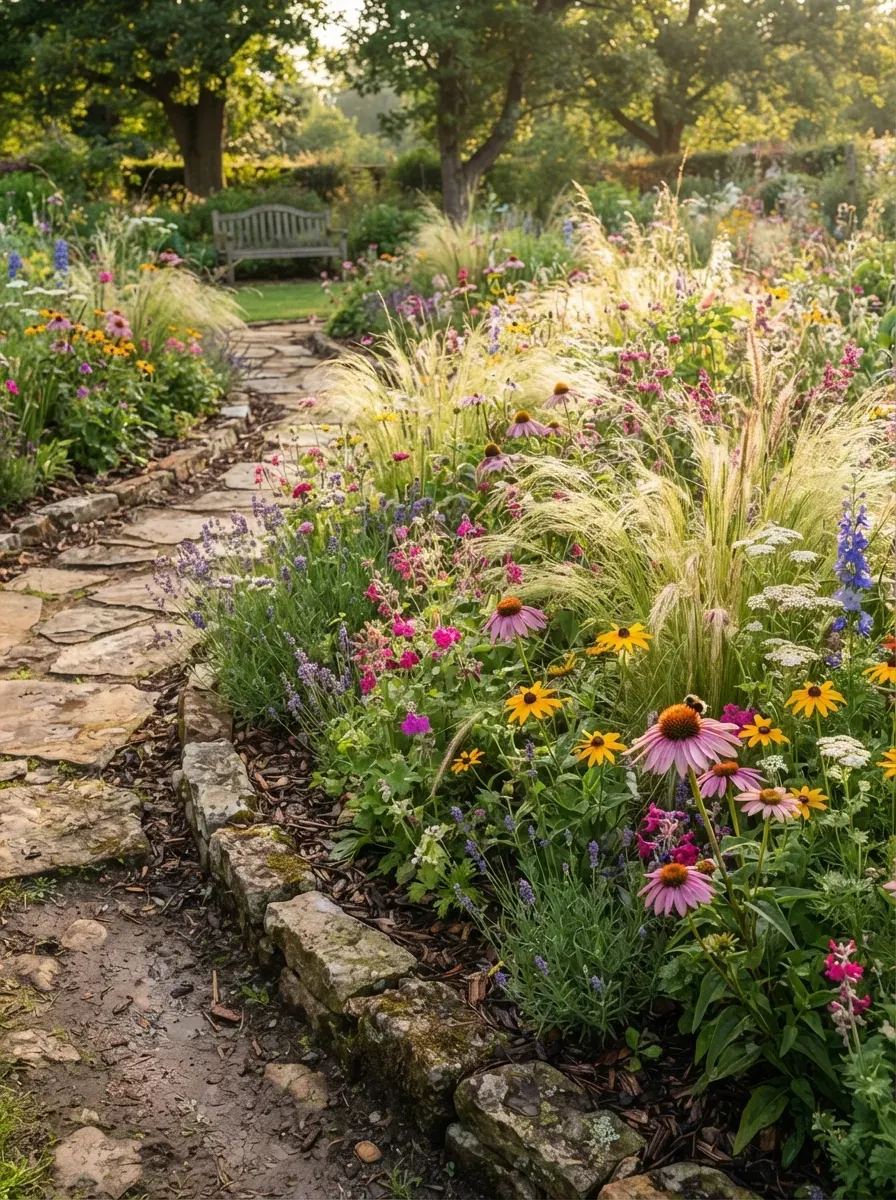
Ornamental grasses can make wildflower beds look even more natural. Their movement adds texture while their seed heads can provide interest after many flowers have finished blooming.
Combine grasses with flowers of different heights rather than planting everything at the same level. This creates depth and gives the garden a loose meadow-like appearance.
Why You’ll Love It
- Adds movement and texture.
- Extends visual interest beyond flowering season.
- Creates a natural meadow effect.
6. Create a Wildflower Cottage Garden
 ]
]
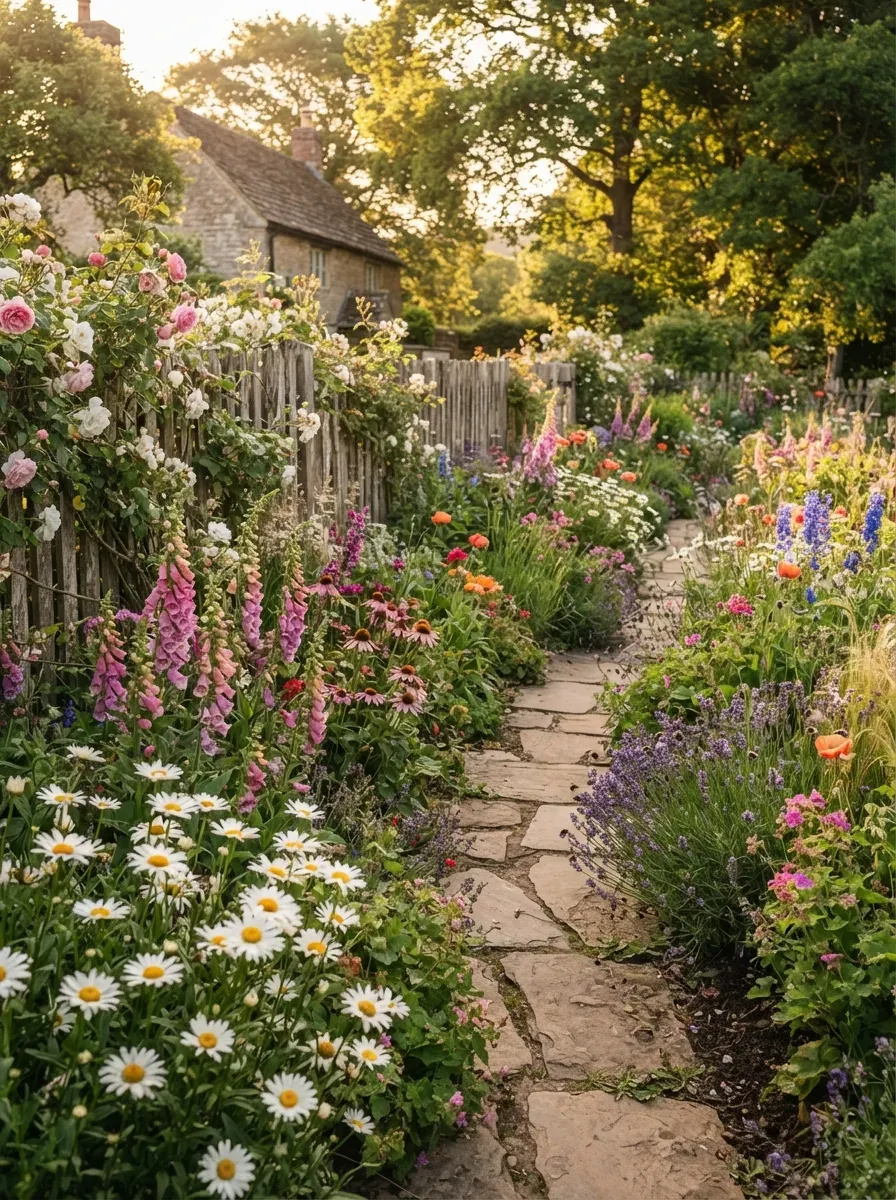
A cottage garden and a wildflower garden can work beautifully together. The trick is to avoid overly formal planting and allow flowers to overlap naturally.
Add a simple path, rustic fence, or small seating area to complete the look. Repeating a few flower colors throughout the bed will help the garden feel intentional.
Why You’ll Love It
- Creates a romantic garden atmosphere.
- Perfect for informal planting.
- Allows many flower varieties to work together.
7. Plant a Butterfly-Friendly Wildflower Garden
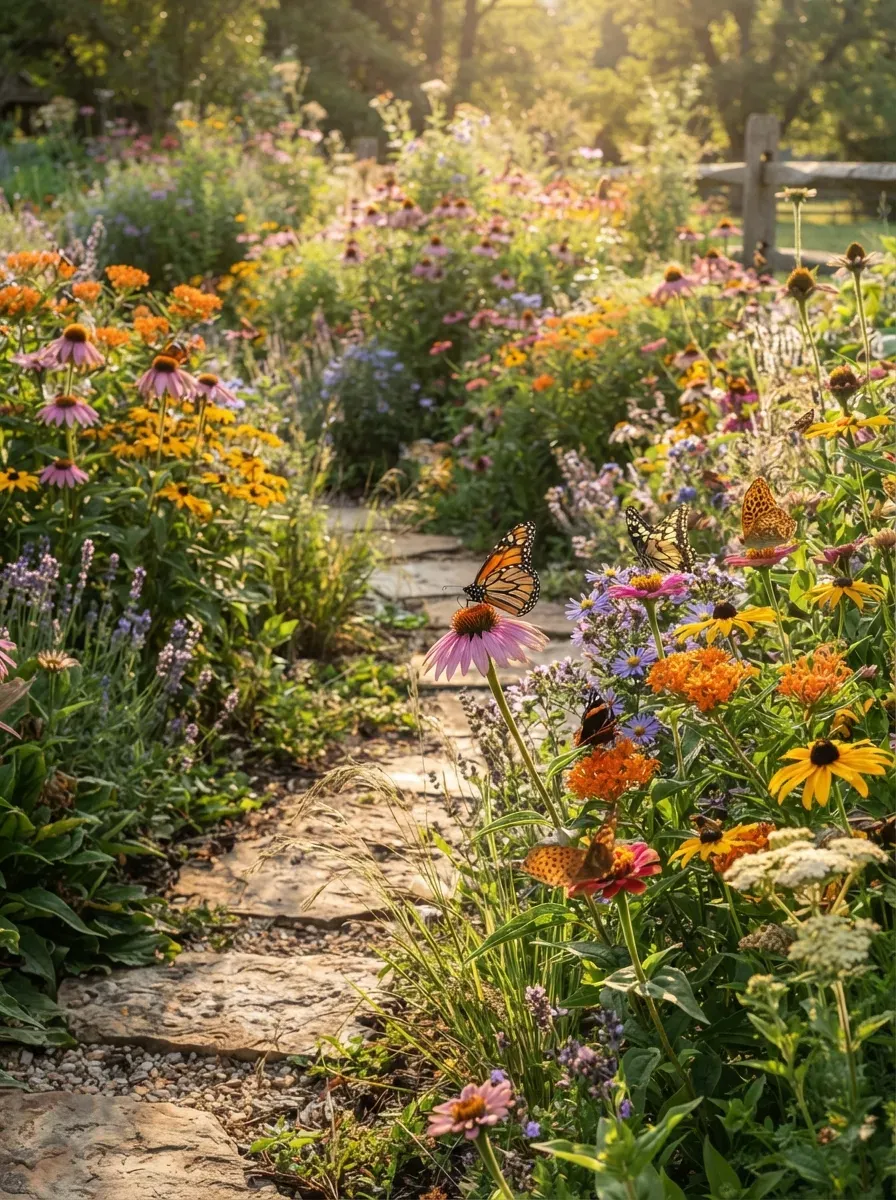
Wildflowers can make your garden more attractive to butterflies when you choose plants that provide nectar and suitable habitat. Try to include flowers with different bloom periods so food is available across the growing season.
Avoid relying only on one type of flower. A diverse planting can provide more resources and make the garden visually interesting too.
Why You’ll Love It
- Creates a welcoming space for butterflies.
- Adds vibrant seasonal color.
- Encourages a more diverse garden ecosystem.
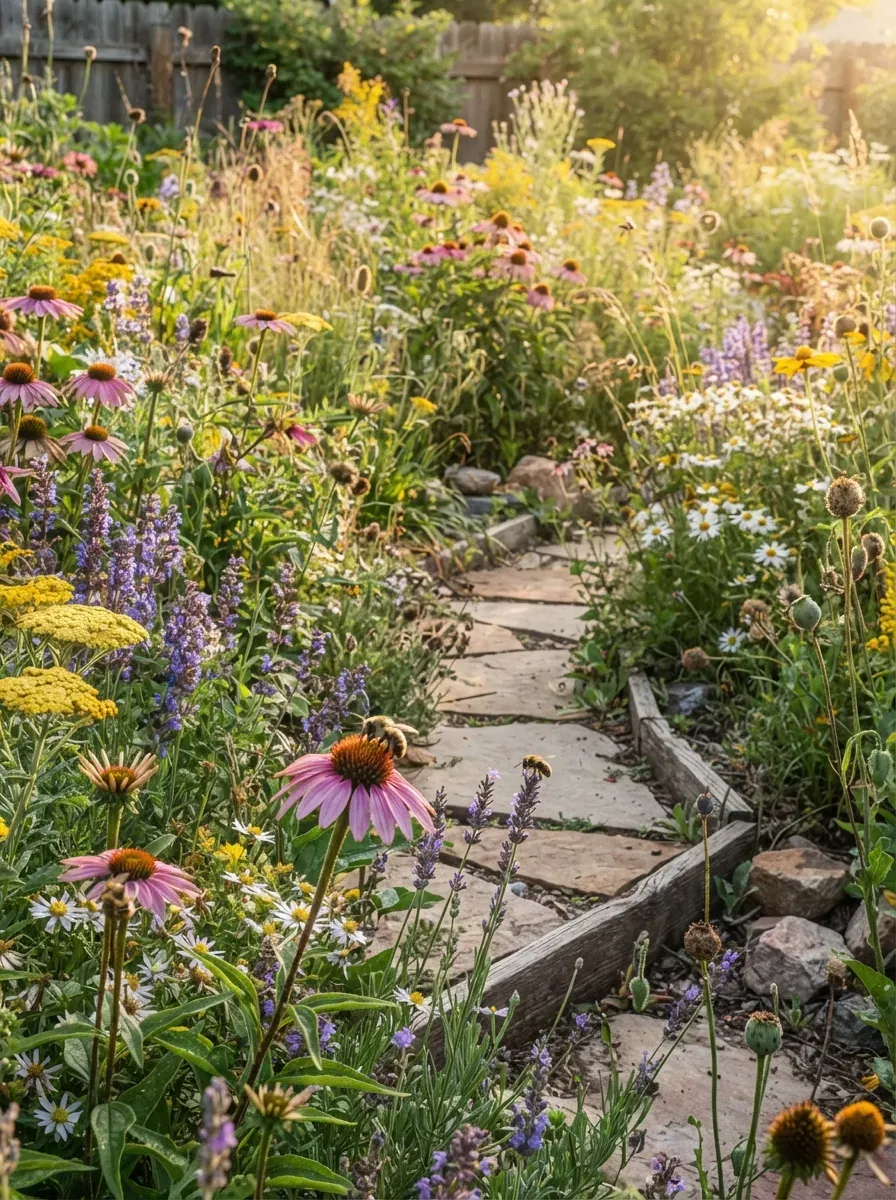
8. Create a Wildflower Garden Under Trees
A shady area beneath trees doesn’t have to remain empty. If the soil and light conditions are suitable, you can create a woodland-inspired wildflower garden.
Choose plants specifically suited to the amount of shade your garden receives. Start by observing the area throughout the day so you know whether it gets full shade, partial shade, or dappled sunlight.
Why You’ll Love It
- Makes use of difficult garden spaces.
- Creates a peaceful woodland atmosphere.
- Adds flowers beneath mature trees.
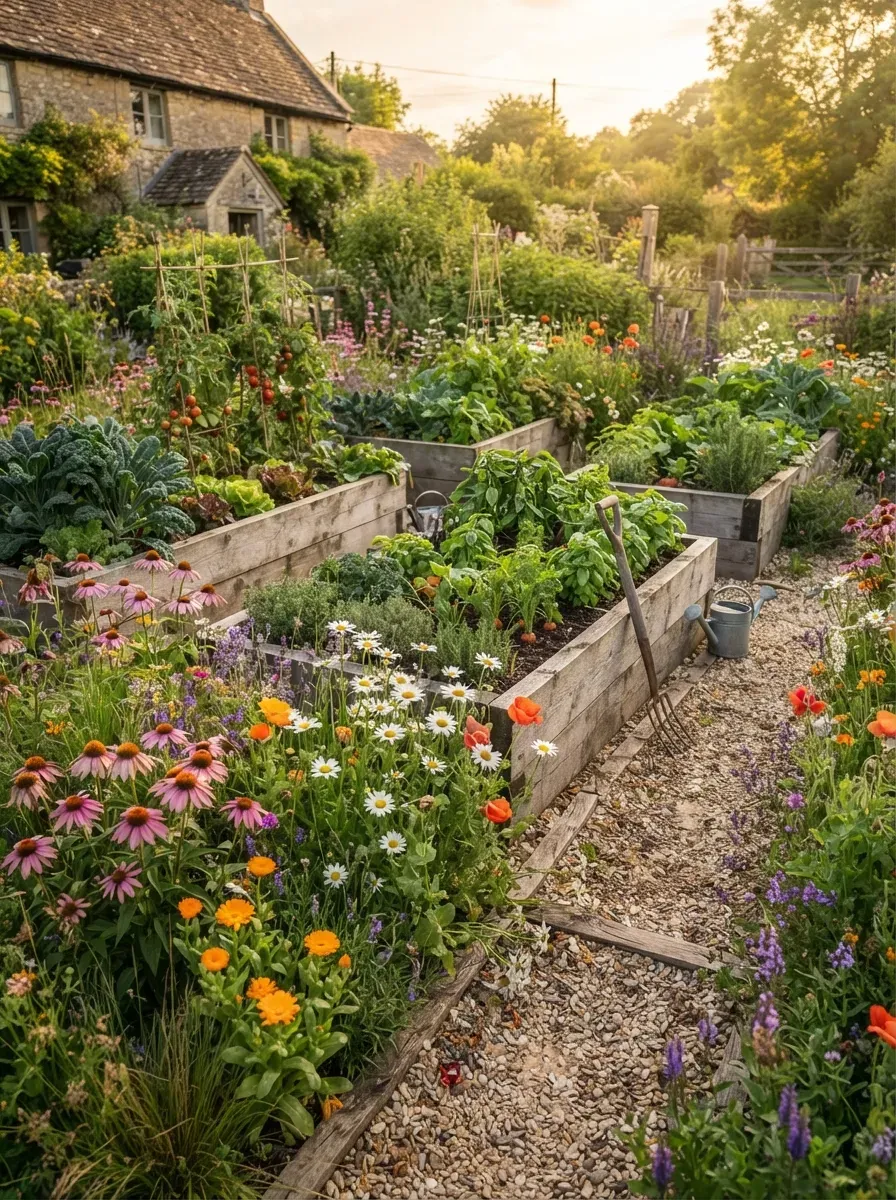
9. Add Wildflowers Around Raised Beds
Wildflowers can make a vegetable garden feel softer and more decorative. Plant them around the outside of raised beds while keeping pathways and growing areas easy to access.
Choose flowers that won’t overwhelm your vegetables. Compact varieties can work especially well around the edges.
Why You’ll Love It
- Combines beauty with productive gardening.
- Softens the look of raised beds.
- Creates a colorful edible garden.
10. Design a Wildflower Border Along a Fence
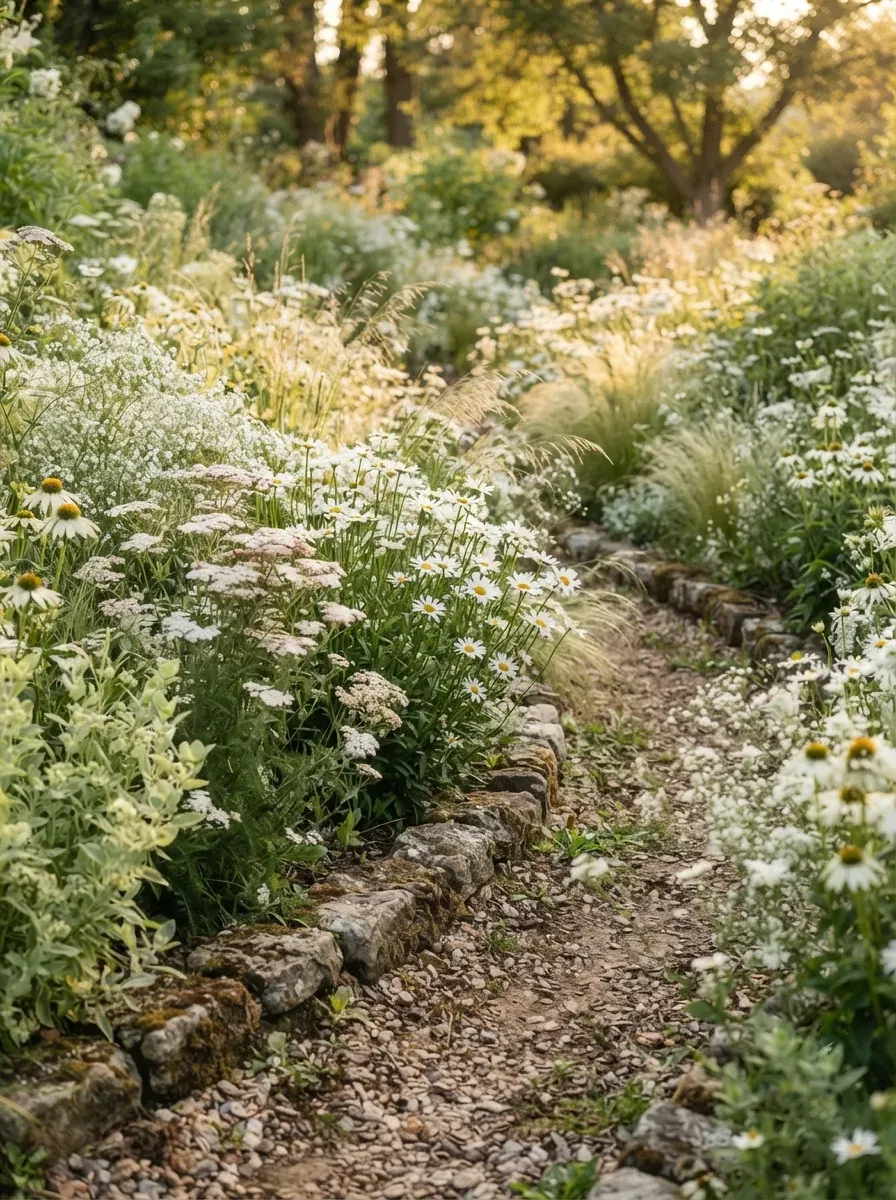
A fence provides a natural backdrop for a wildflower border. Taller varieties can grow toward the back while shorter flowers fill the front.
Allow some plants to lean and spill naturally over the border. That relaxed growth is part of what gives a wildflower garden its charm.
Why You’ll Love It
- Makes plain fences more attractive.
- Provides a natural backdrop for flowers.
- Works well in narrow garden spaces.
11. Grow Wildflowers in Containers
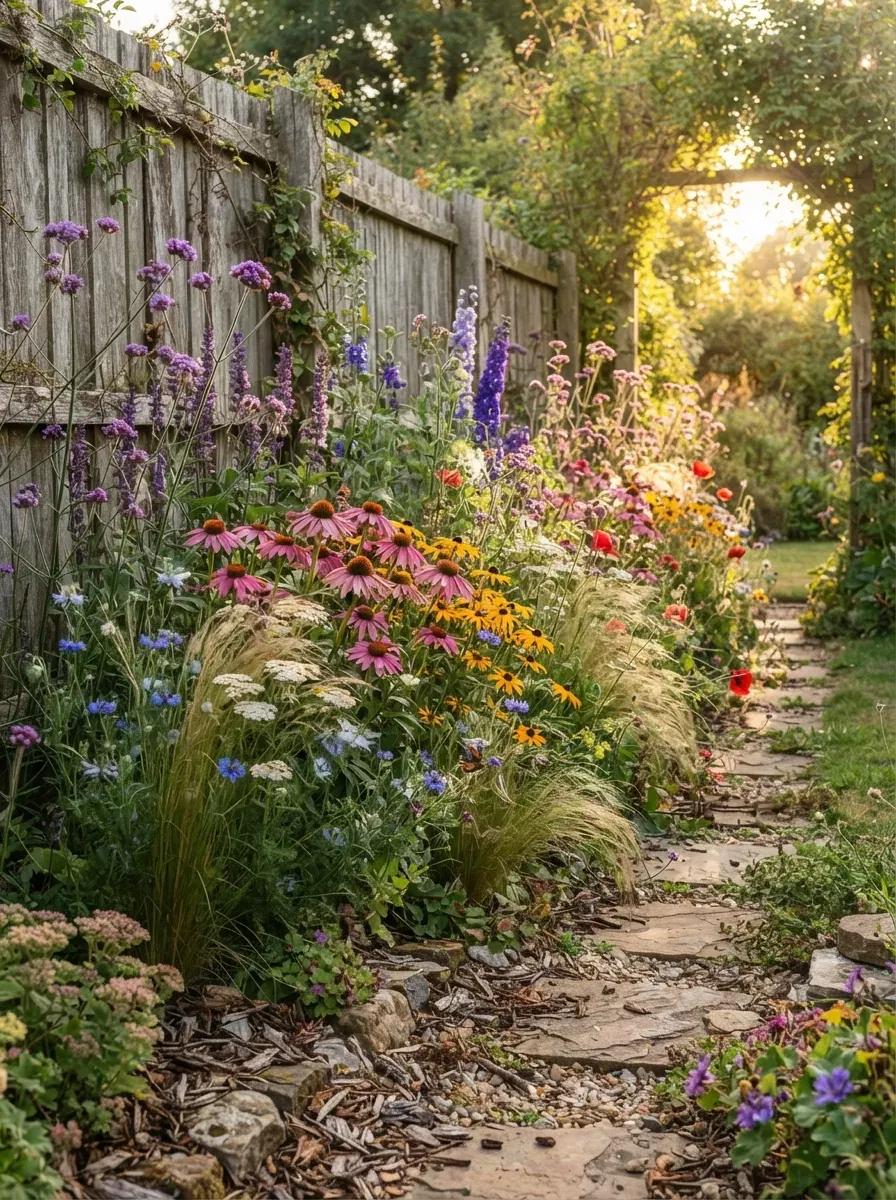
Containers are a great solution if you don’t have enough ground space for a traditional wildflower garden. You can use several pots to create a small collection of meadow-inspired plantings.
Make sure each container has suitable drainage and enough room for the plants you choose. A sunny patio or balcony can become surprisingly colorful with the right combination.
Why You’ll Love It
- Perfect for patios and small spaces.
- Easy to rearrange.
- Adds color without creating a permanent bed.
12. Make a White Wildflower Garden
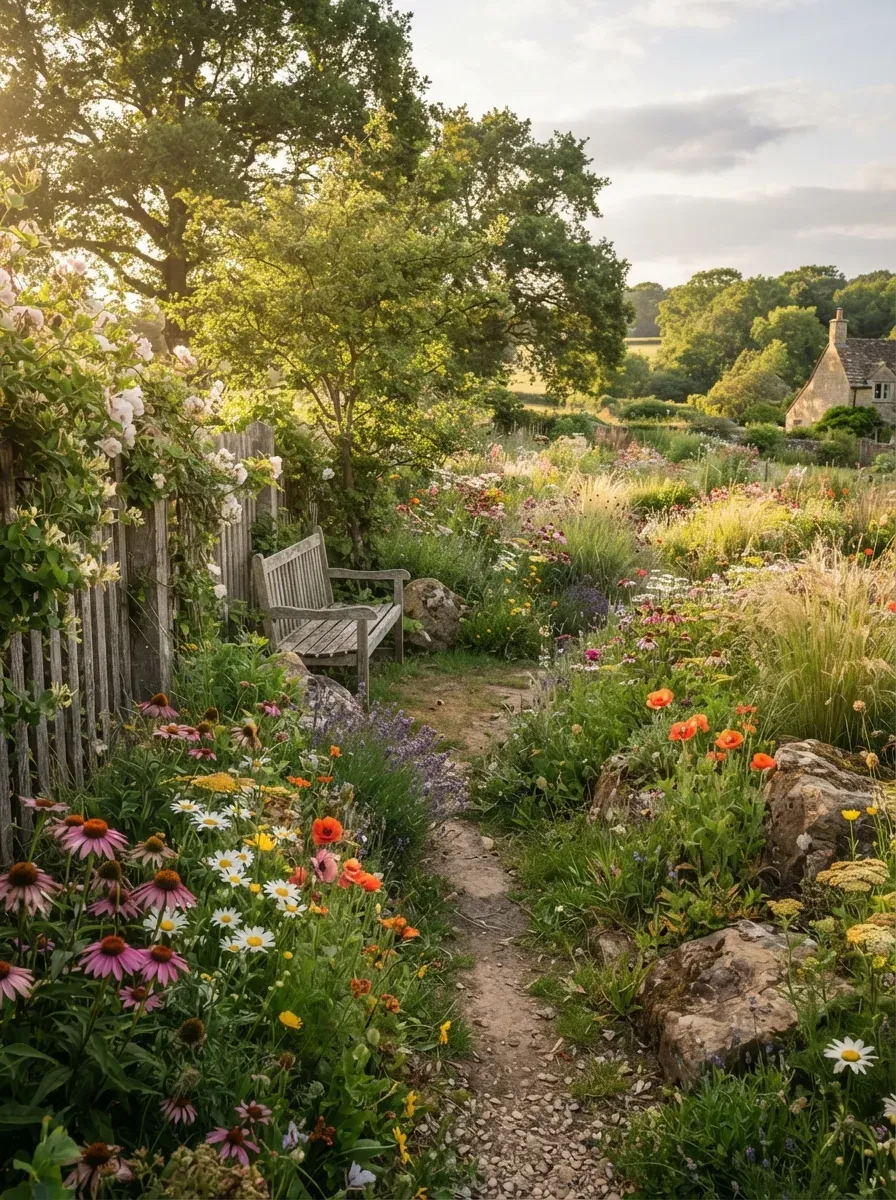
A white wildflower garden can feel calm and elegant while still keeping the relaxed character of natural planting. Use several shades of white and cream rather than trying to make every flower identical.
Green foliage and soft grasses will provide contrast. This type of garden can look especially beautiful in the evening when pale flowers stand out against darker greenery.
Why You’ll Love It
- Creates a calm color palette.
- Looks elegant without formal landscaping.
- Works beautifully with green foliage.
13. Create a Wildflower Garden for Bees
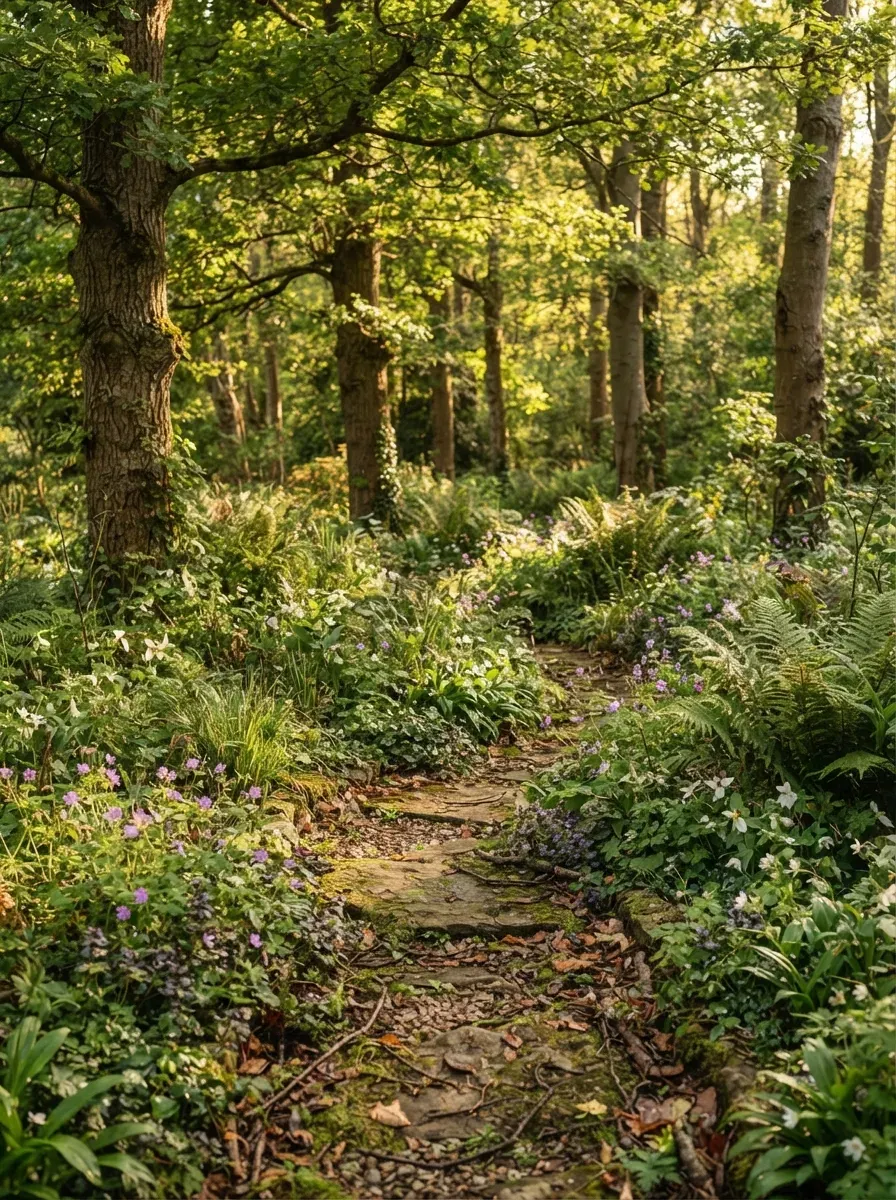
If you want to make your garden more useful for pollinators, include a variety of flowering plants rather than relying on one species. Flowers with accessible blooms can provide valuable nectar for visiting bees.
It’s also important to avoid unnecessary pesticide use and provide a suitable environment around the flowers. Local native plants can be a particularly good starting point.
Why You’ll Love It
- Supports visiting pollinators.
- Adds a diverse mix of flowers.
- Makes your garden more ecologically interesting.
14. Add a Wildflower Garden Around a Seating Area
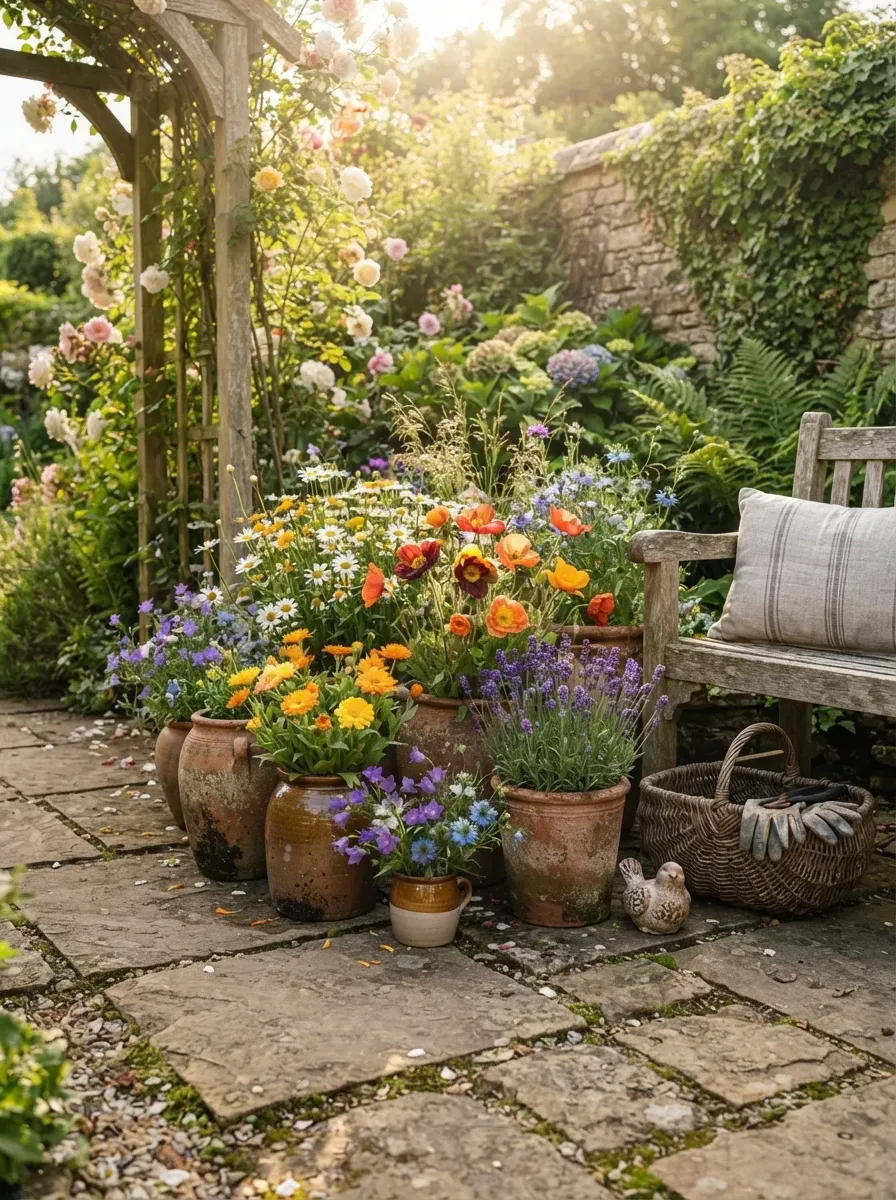
Wildflowers can make an outdoor seating area feel tucked into nature. Instead of surrounding the patio with formal hedges, use loose flower planting to create a softer transition.
Leave enough space around furniture for comfortable movement and maintenance. Taller flowers can be placed farther away so they frame the seating area without blocking the view.
Why You’ll Love It
- Creates a peaceful outdoor retreat.
- Makes patios feel more natural.
- Adds seasonal color around seating areas.
15. Create a Pink and Purple Wildflower Garden
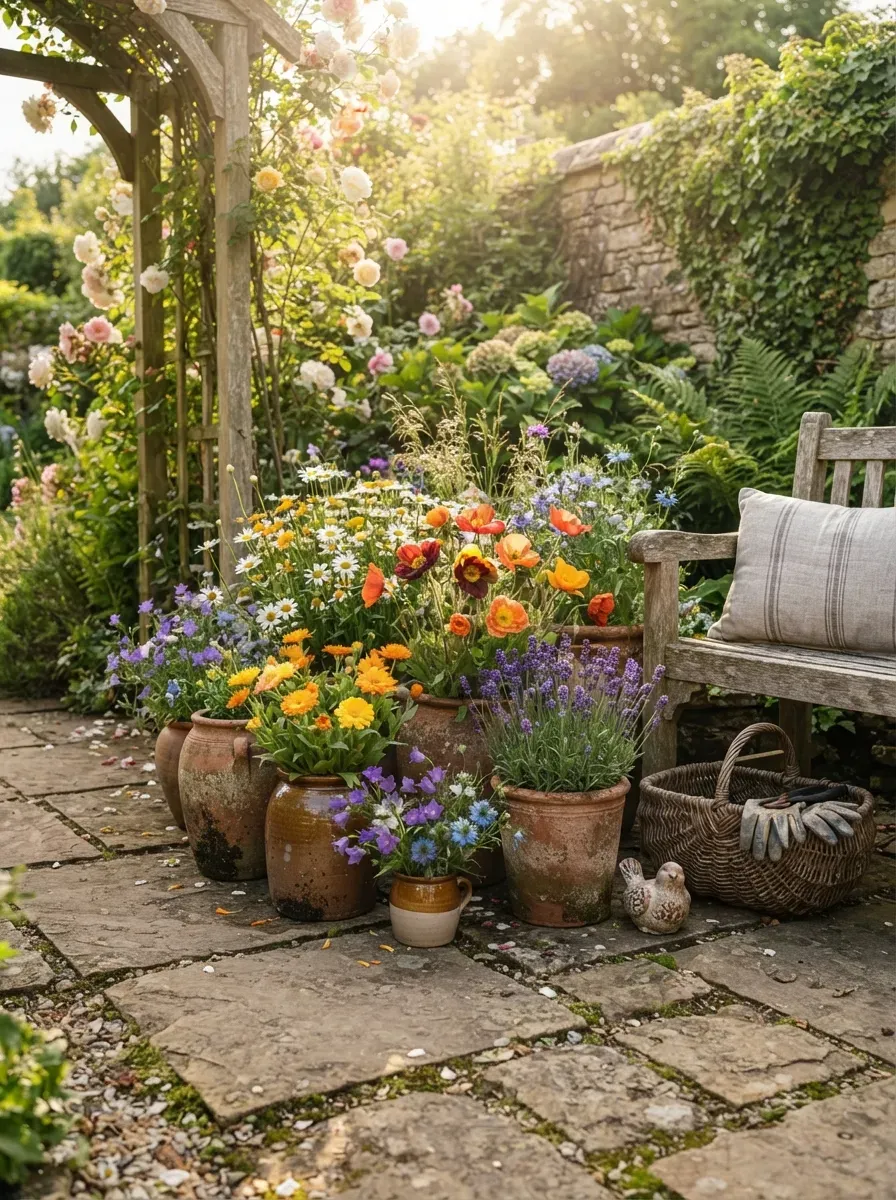
Pink and purple make a beautiful combination for a romantic wildflower garden. The two colors provide enough contrast while still feeling soft and cohesive.
Repeat the colors in different areas instead of putting all the pink flowers together. This creates a more natural meadow effect.
Why You’ll Love It
- Creates a soft romantic atmosphere.
- Easy to coordinate with green foliage.
- Looks beautiful throughout the flowering season.
16. Make a Rustic Wildflower Garden
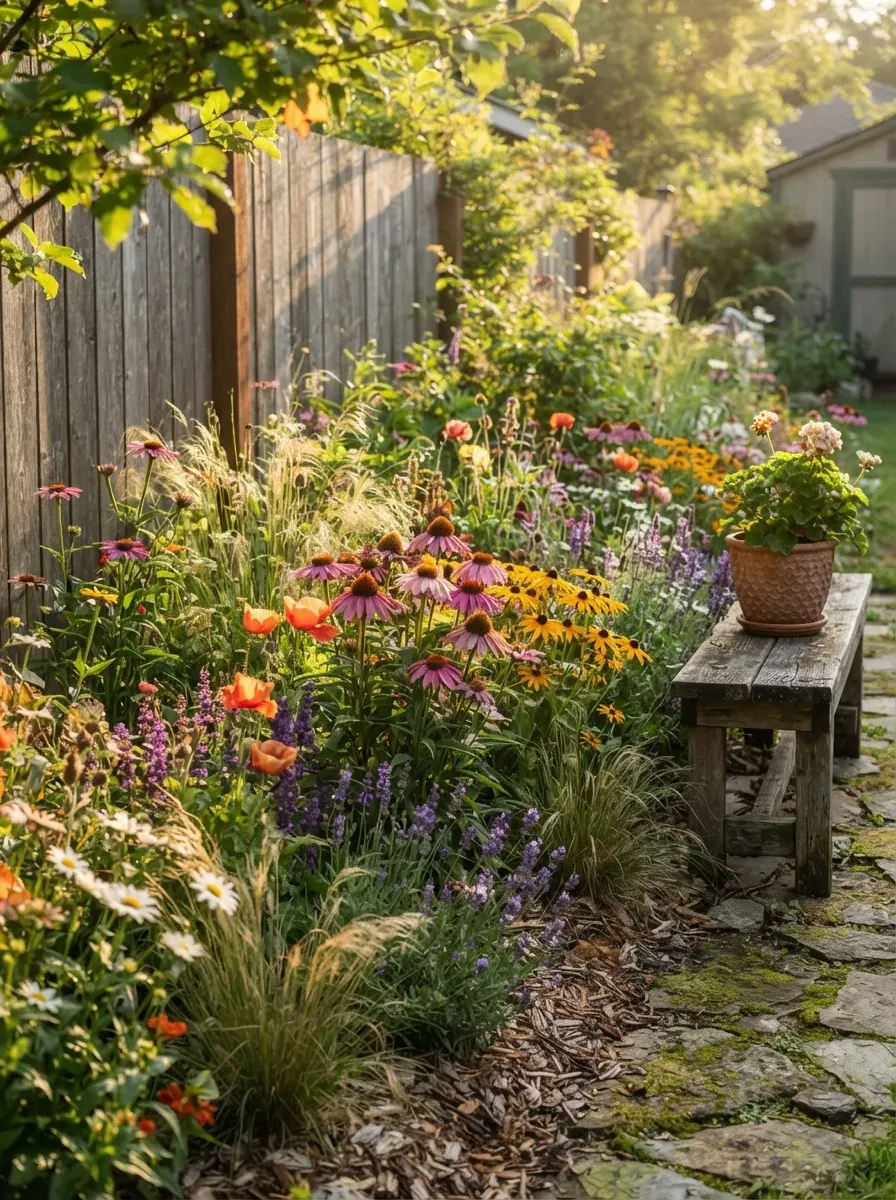
For a rustic garden, combine wildflowers with natural materials such as weathered wood, stone, gravel, and reclaimed garden structures.
Don’t worry about making everything look perfect. A little irregularity is what makes this style work.
Why You’ll Love It
- Creates a relaxed countryside feel.
- Works well with natural materials.
- Easy to keep visually informal.
17. Create a Four-Season Wildflower Garden
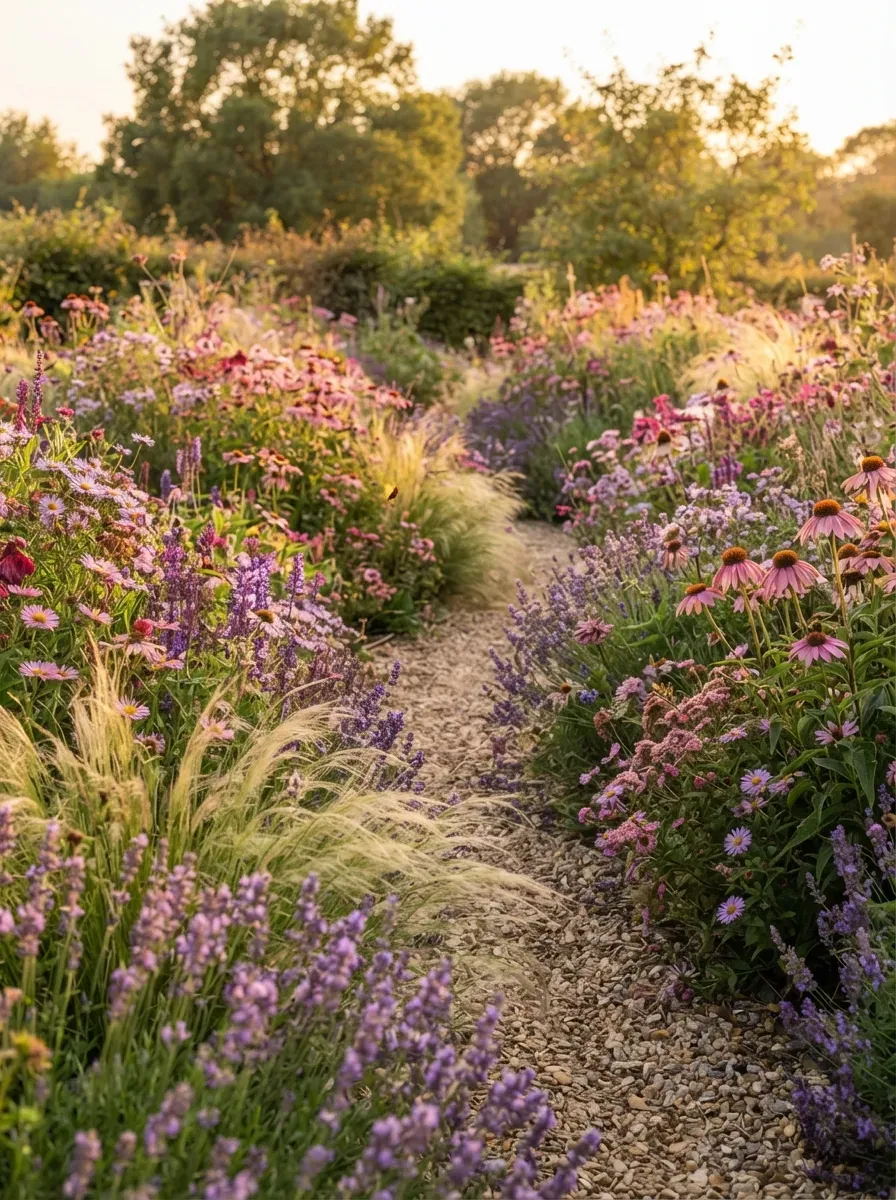
A wildflower garden doesn’t have to disappear after the main flowering season. Choose plants with different bloom times and include grasses, seed heads, and evergreen structure to keep the garden interesting.
Think about the entire growing season when planning your planting. Early flowers can hand off the show to summer blooms, followed by autumn flowers and attractive seed heads.
Why You’ll Love It
- Keeps the garden interesting for longer.
- Gives wildlife more seasonal resources.
- Creates changing colors and textures.
Conclusion
These wildflower garden ideas show that you don’t need a perfectly formal landscape to create a beautiful outdoor space. Wildflowers look their best when they are allowed to grow in relaxed groups, mixed with grasses, and surrounded by natural textures.
For the best results, choose plants suited to your local climate, soil, sunlight, and moisture conditions. Native plants can be especially valuable because they are adapted to local environments and can support local wildlife.
Start small if you’re unsure. A sunny corner, pathway border, or a few containers can become your first wildflower garden. As the plants establish, you can expand the design and create the natural, colorful garden you’ve been dreaming about.