
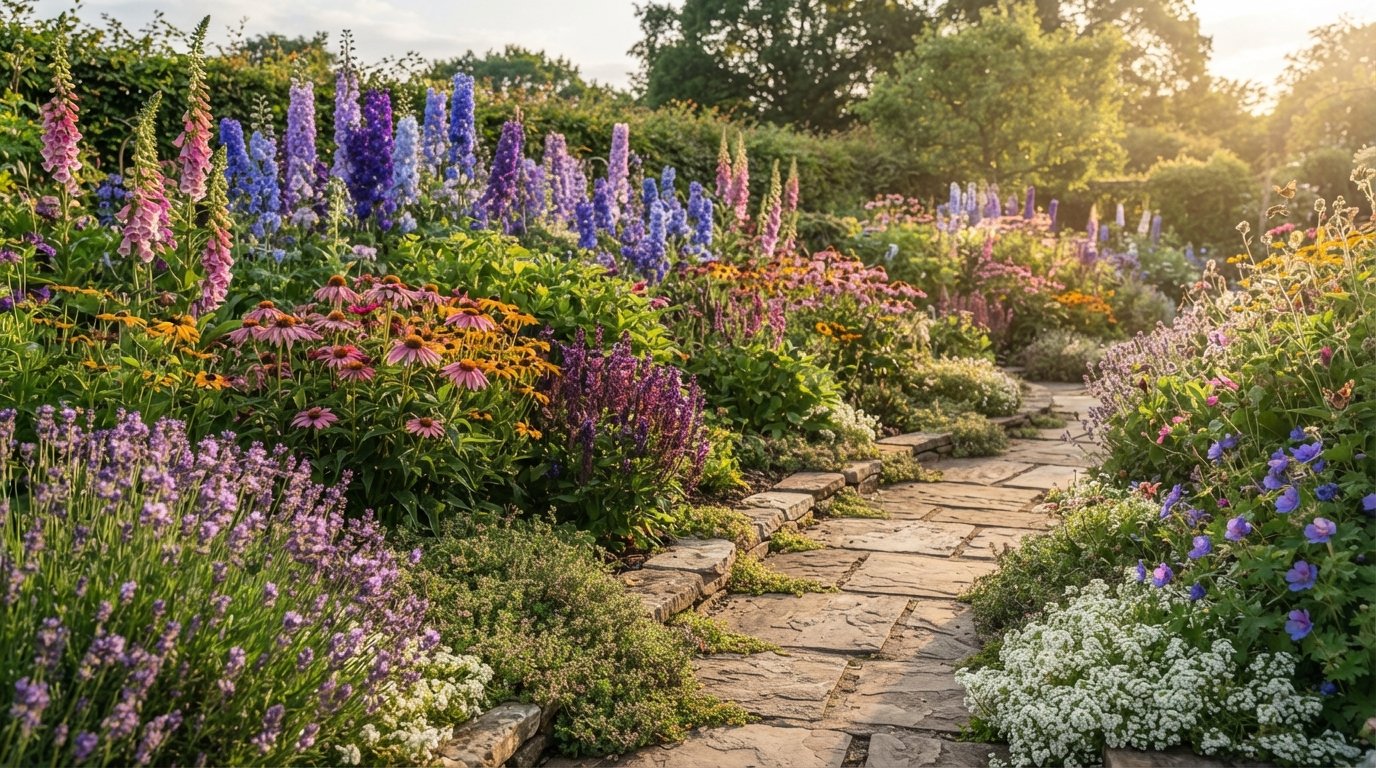
A perennial garden can bring lasting beauty to your outdoor space without requiring you to start from scratch every year. Unlike annuals, many perennial plants return season after season, making them a practical choice for gardeners who want a landscape that grows fuller and more beautiful over time.
From colorful flower borders to cottage-style beds, there are many ways to design a perennial garden. You can also mix perennial flowers with vegetables, shrubs, pathways, and other garden features to create a space that feels personal and inviting.
If you also enjoy growing edible plants, you may like our guide to raised bed strawberries for another creative garden project.
1. Create a Colorful Perennial Flower Border
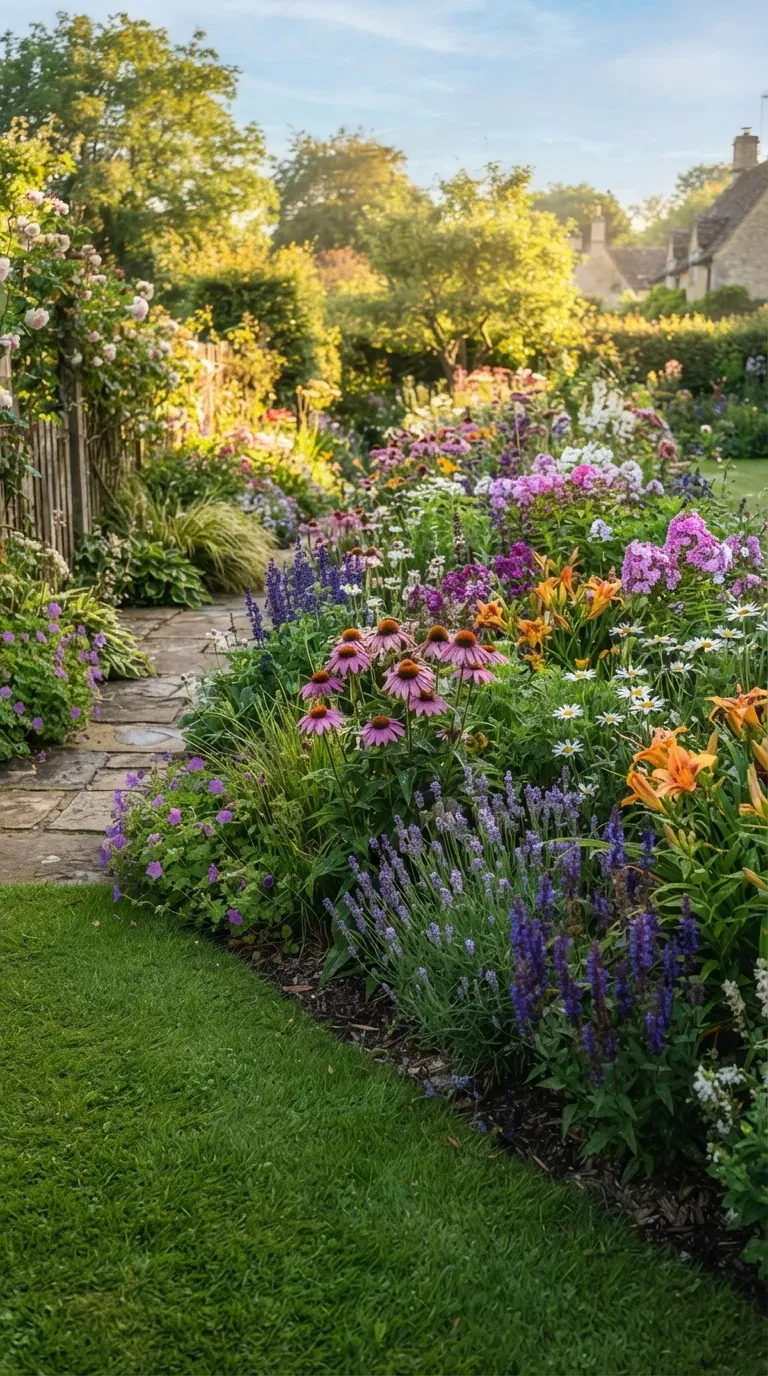
A perennial flower border is a simple way to add color along a lawn, walkway, driveway, or fence. Choose several plants with different heights so the garden has plenty of depth.
Place taller flowers toward the back and shorter varieties near the front. Mixing bloom colors and foliage shapes can make the border interesting even when some plants are not flowering.
Why You’ll Love It
- Adds long-lasting color to your landscape.
- Works along lawns, paths, and fences.
- Becomes fuller as plants mature.
2. Design a Cottage-Style Perennial Garden
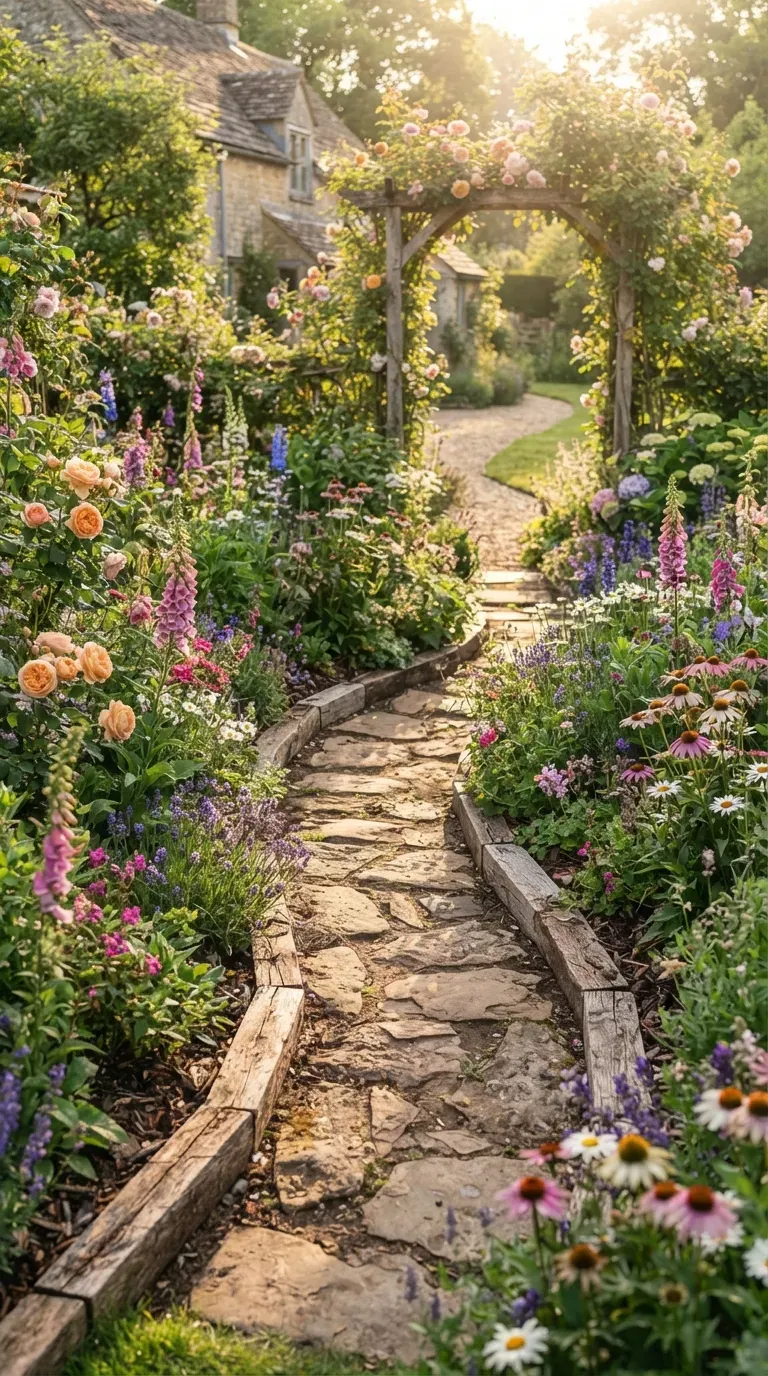
If you love gardens that feel relaxed and slightly wild, a cottage-style perennial garden may be perfect for you. Instead of arranging every plant in straight lines, let flowers grow in informal groups.
Combine different colors, heights, and textures for a natural appearance. A simple stone path winding through the flowers can make the garden feel even more charming.
Why You’ll Love It
- Creates a relaxed romantic atmosphere.
- Perfect for mixing many flower varieties.
- Looks beautiful as plants mature.
3. Make a Low-Maintenance Perennial Garden
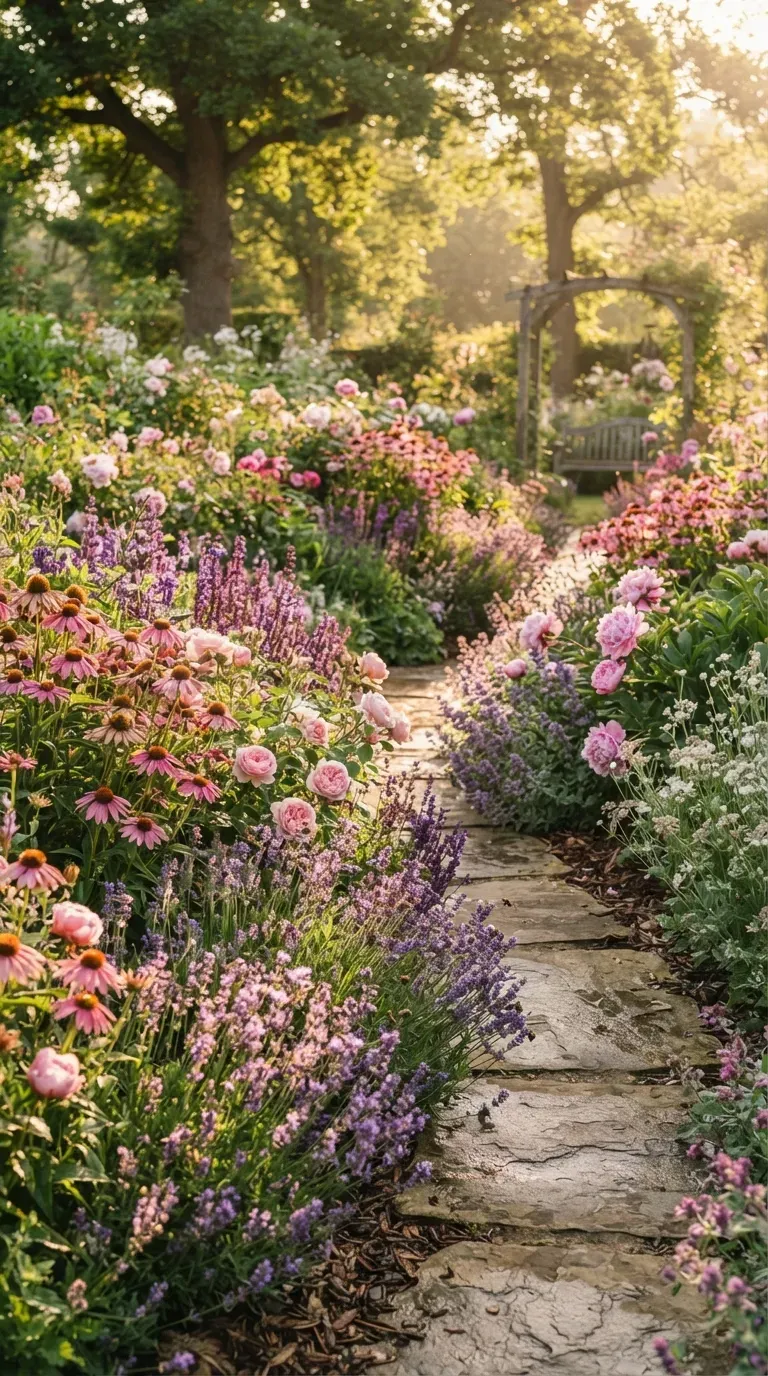
Perennial gardens can be easier to maintain when you choose plants that suit your local growing conditions. Drought-tolerant or native varieties can be especially useful in the right garden.
Keep the design simple and use mulch or gravel in open areas to reduce the amount of exposed soil. Grouping plants with similar needs can also make regular care easier.
Why You’ll Love It
- Can reduce routine garden maintenance.
- Creates a natural-looking landscape.
- Works well for busy gardeners.
4. Create a Pink and Purple Perennial Garden
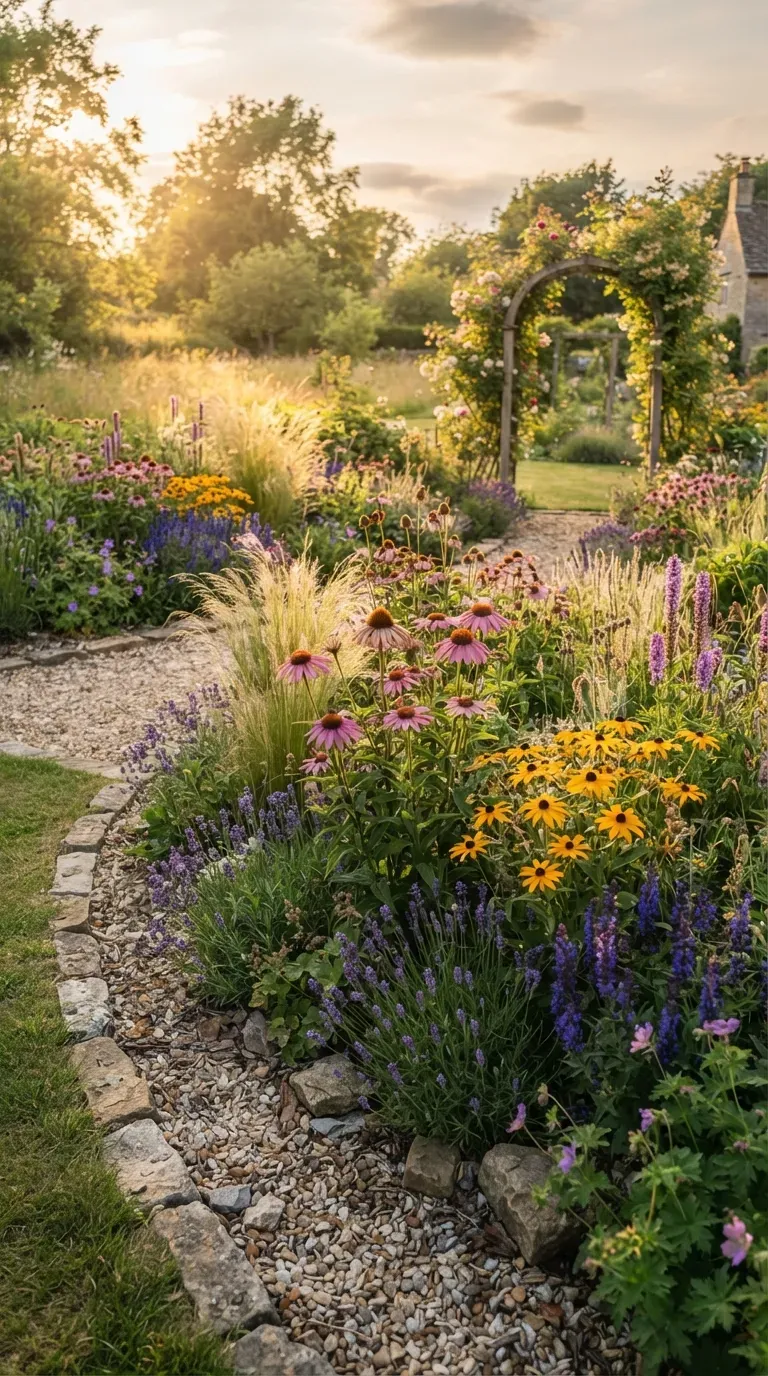
Pink and purple make a beautiful combination for a perennial garden. Pink flowers add warmth, while purple blooms bring contrast and depth.
Try repeating the same colors throughout the garden instead of placing each color in one separate section. This helps the entire space feel connected.
If you love pink-focused garden designs, you can also explore our previous guide on pink flower garden ideas for more inspiration.
Why You’ll Love It
- Creates a soft and romantic color palette.
- Works with many perennial flower varieties.
- Adds depth without using too many colors.
5. Add Perennials Around a Raised Garden Bed
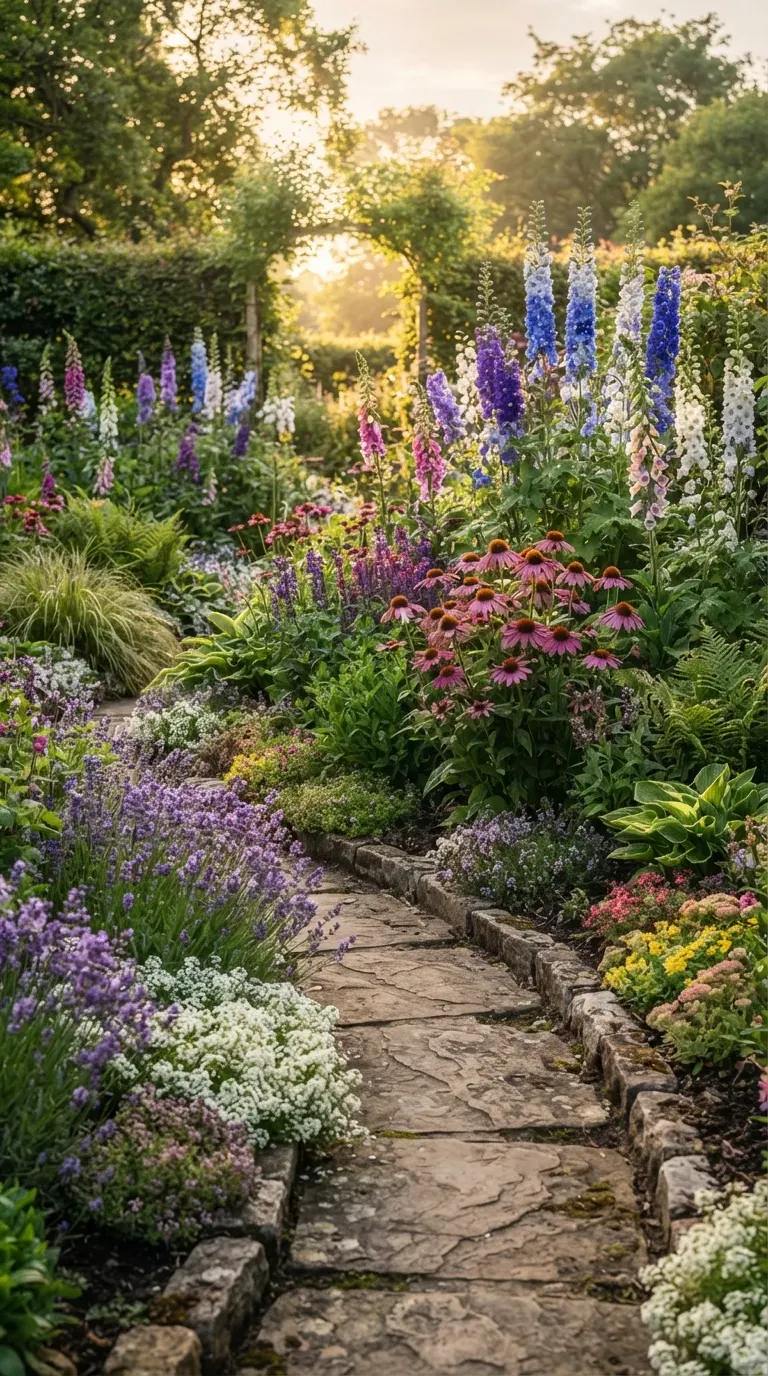
Perennial flowers can soften the look of raised vegetable or fruit beds and make an edible garden feel more decorative. Plant flowers around the outside edges while keeping the main growing area clear.
This is also a great way to connect different parts of your garden. For example, you could surround a strawberry raised bed with colorful perennial flowers.
Why You’ll Love It
- Blends edible and ornamental gardening.
- Adds color around raised beds.
- Helps create a more complete landscape.
6. Create a Perennial Garden Along a Fence
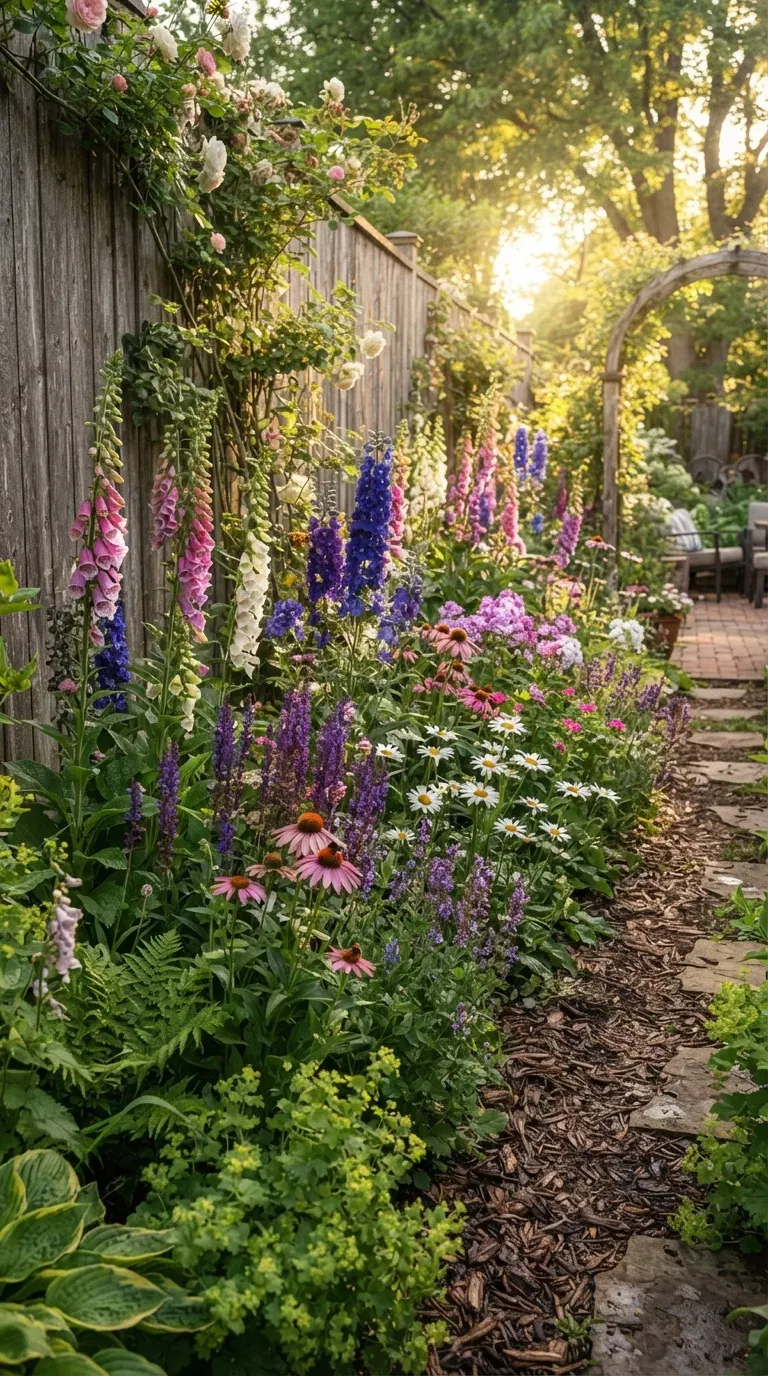
A fence can provide the perfect backdrop for a long perennial flower bed. Taller plants can grow toward the fence while shorter flowers fill the front of the border.
This layout is particularly useful when you want to add privacy, color, or visual interest to an otherwise plain boundary. Repeat a few favorite plants along the length of the bed for a cohesive look.
Why You’ll Love It
- Makes plain fences more attractive.
- Creates a colorful garden backdrop.
- Uses narrow spaces effectively.
7. Create a Layered Perennial Garden
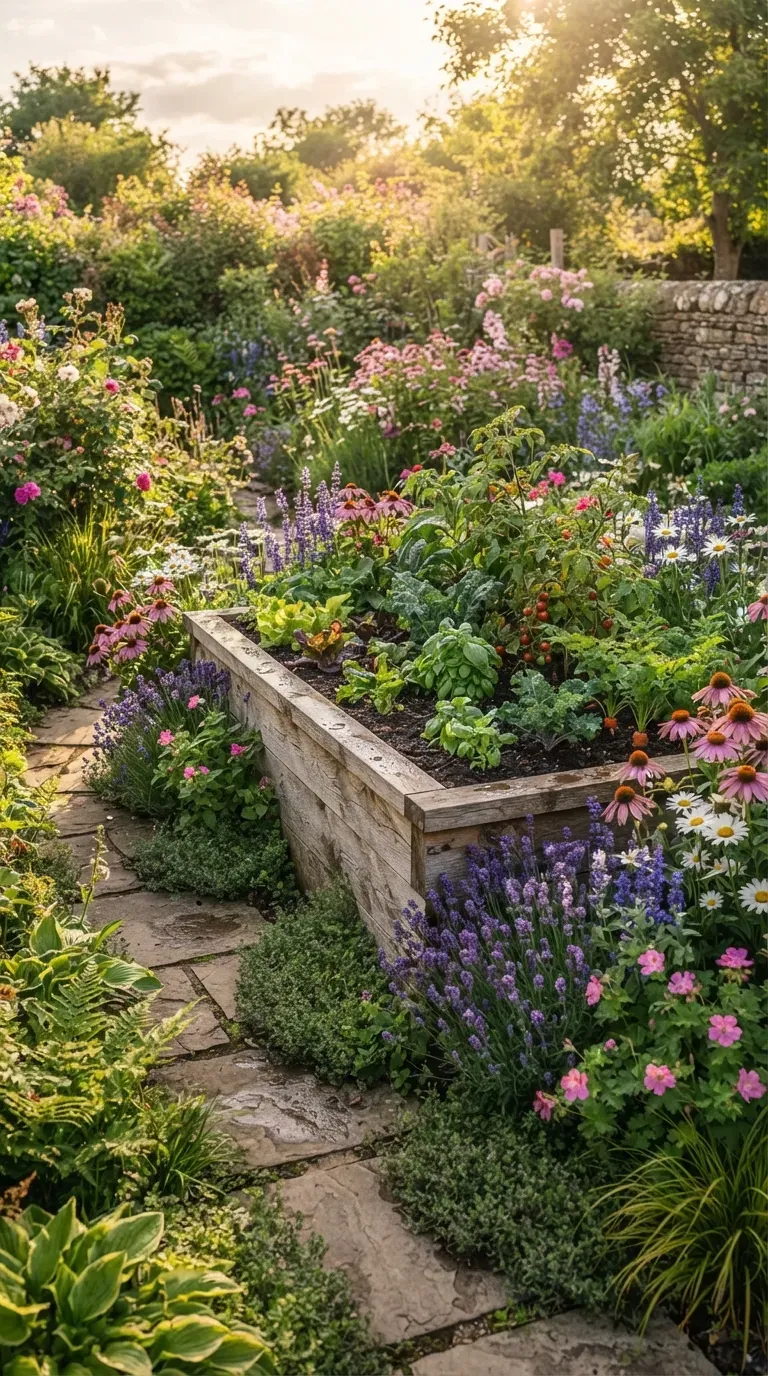
Layering plants by height is one of the easiest ways to make a perennial garden look full and professionally planned. Tall flowers create a backdrop, medium plants add body, and shorter varieties finish the front edge.
You can also repeat the same plants in several layers or sections. This creates rhythm throughout the garden and keeps the design from feeling random.
Why You’ll Love It
- Makes flower beds look fuller.
- Helps showcase plants at different heights.
- Creates a polished garden layout.
Conclusion
A perennial garden can give your yard lasting color, texture, and structure while becoming more beautiful as the plants mature. You can keep things simple with a small flower border or create a larger cottage-style landscape filled with different shapes and colors.
The best perennial garden ideas are the ones that fit your space and growing conditions. Start with a few reliable plants, repeat your favorite colors, and gradually add more varieties as your garden develops. With thoughtful planning, your perennial garden can become a beautiful part of your outdoor space for years to come.