
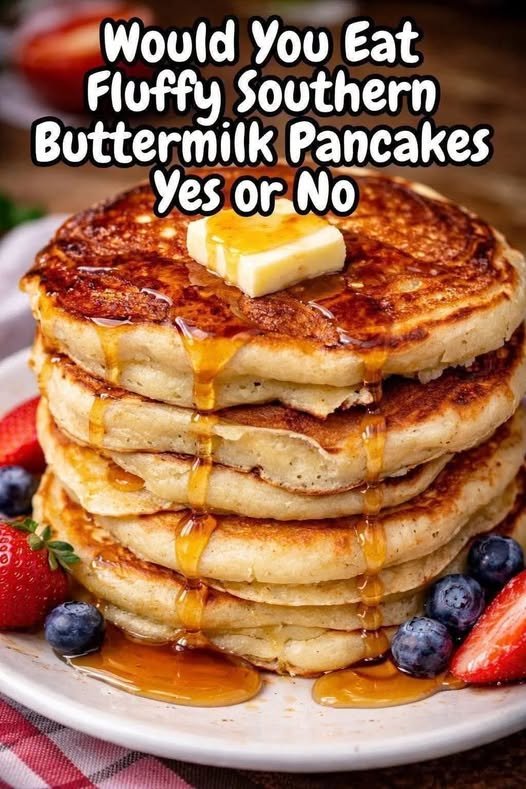
Fluffy Southern Buttermilk Pancakes – Soft, Thick, and Golden Every Time
There is something about waking up to the smell of warm pancakes that makes an ordinary morning feel a little more special. I always think of slow weekend breakfasts, a pot of freshly brewed coffee, and everyone wandering into the kitchen asking, “Are the pancakes ready yet?” Honestly, those are some of the sweetest moments, and a good stack of fluffy Southern buttermilk pancakes makes them even better.
The first thing I love about Southern-style pancakes is their texture. They are soft and tender on the inside, beautifully golden around the edges, and thick enough to soak up a generous drizzle of maple syrup. Add a little butter melting over the top, and suddenly breakfast feels like something straight out of a cozy Southern kitchen.
I also love how simple the ingredients are. Flour, buttermilk, eggs, butter, and a few pantry staples come together to make something that tastes wonderfully homemade. The secret is not fancy equipment or complicated techniques. It is using real buttermilk, mixing the batter gently, and giving it a little time to rest.
Whether you are preparing a special breakfast for your family, hosting a relaxed weekend brunch, or simply craving something comforting on a quiet morning, these fluffy Southern buttermilk pancakes are worth making from scratch.
Let’s get that skillet warm and make a stack of pancakes everyone will want to reach for!
Why You’ll Love These Fluffy Southern Buttermilk Pancakes
- Extra fluffy texture: Buttermilk reacts with baking soda to help create a light, tender pancake.
- Rich, buttery flavor: Melted butter adds a homemade taste without making the pancakes heavy.
- Golden edges: A properly heated skillet gives each pancake a beautiful golden-brown finish.
- Simple ingredients: You probably already have most of what you need in your kitchen.
- Easy to customize: Add blueberries, chocolate chips, sliced bananas, or chopped pecans to make the recipe your own.
- Perfect for sharing: These pancakes are wonderful for family breakfasts, weekend brunches, and special occasions.
What Makes Southern Buttermilk Pancakes So Special?
Traditional Southern-style cooking is all about familiar ingredients, comforting flavors, and food that brings people together. Buttermilk pancakes fit right into that tradition.
Buttermilk is the ingredient that makes this recipe stand out. Its mild acidity helps activate baking soda, producing bubbles that contribute to a tender, fluffy texture. It also gives the pancakes a subtle tang that balances the sweetness of maple syrup.
Another important detail is the batter itself. You do not want to beat it until it looks perfectly smooth. A few small lumps are completely fine. Overmixing develops the gluten in the flour, which can make pancakes chewy instead of soft.
And here is one of my favorite little reminders: patience matters. Letting the batter rest for about 5–10 minutes gives the flour time to hydrate and allows the leavening ingredients to begin working.
Ingredients You’ll Need
This recipe makes approximately 8 medium pancakes, depending on how much batter you use for each one.
| Ingredient | Amount |
|---|---|
| All-purpose flour | 1½ cups (180 g) |
| Buttermilk | 1¼ cups (300 ml) |
| Large egg | 1 |
| Unsalted butter, melted | 3 tablespoons (42 g) |
| Granulated sugar | 2 tablespoons (25 g) |
| Baking powder | 1 teaspoon |
| Baking soda | ½ teaspoon |
| Salt | ¼ teaspoon |
| Vanilla extract | 1 teaspoon |
| Butter or neutral oil, for the skillet | As needed |
A Few Ingredient Tips
Buttermilk: Full-fat buttermilk gives the pancakes a lovely richness, although regular buttermilk works well, too. If you cannot find it, you can make a quick substitute by adding 1 tablespoon of lemon juice or white vinegar to enough milk to make 1¼ cups. Let it stand for 5–10 minutes. This substitute works well, although it may not have exactly the same thickness or flavor as commercial buttermilk.
Flour: All-purpose flour is ideal for soft, fluffy pancakes. Measure it carefully to avoid adding too much, which can make the batter heavy.
Butter: Melted butter adds flavor and tenderness. Let it cool slightly before mixing it into the wet ingredients so it doesn’t scramble the egg.
Leavening agents: Both baking powder and baking soda are important here. Baking powder provides lift, while baking soda reacts with the acidic buttermilk.
How to Make Fluffy Southern Buttermilk Pancakes
Step 1: Mix the dry ingredients
In a large mixing bowl, whisk together the flour, sugar, baking powder, baking soda, and salt.
Whisking helps distribute the leavening agents evenly throughout the flour. This simple step helps the pancakes rise more consistently, so try not to skip it.
Step 2: Combine the wet ingredients
In a separate bowl, whisk the egg, buttermilk, melted butter, and vanilla extract until combined.
Make sure the melted butter has cooled slightly before adding it. If it is extremely hot, it can partially cook the egg and create little bits of scrambled egg in the mixture.
Step 3: Make the pancake batter
Pour the wet ingredients into the bowl of dry ingredients. Stir gently with a spatula or whisk just until the flour is mostly incorporated.
The batter should look thick and slightly lumpy. Resist the temptation to keep stirring until it becomes completely smooth.
This is one of the most important secrets to tender pancakes. A few small lumps are much better than an overmixed batter.
Step 4: Let the batter rest
Leave the batter undisturbed for 5–10 minutes.
During this time, the flour absorbs moisture, and the batter becomes a little more cohesive. You may also notice a few bubbles forming on the surface.
While the batter rests, you can prepare your skillet and get your favorite toppings ready.
Step 5: Heat the skillet
Place a nonstick skillet or griddle over medium-low to medium heat. Lightly grease it with butter or a little neutral oil.
The pan should be hot enough that a small drop of water sizzles gently, but not so hot that the butter burns immediately.
If the skillet is too hot, the pancakes may become dark on the outside before the centers have cooked through. A steady, moderate temperature is the key to evenly golden pancakes.
Step 6: Cook the pancakes
Pour approximately ¼ cup of batter onto the skillet for each pancake.
Cook for about 2–3 minutes, or until bubbles begin to appear on the surface and the edges look set. Carefully slide a spatula underneath and flip the pancake.
Cook the second side for another 1–2 minutes, until golden and cooked through.
Avoid pressing down on the pancakes with your spatula. It might seem like a way to help them cook faster, but it pushes out some of the air that makes them fluffy.
Step 7: Keep cooking in batches
Repeat with the remaining batter, adding a little more butter or oil to the skillet when needed.
If you’re making pancakes for several people, keep the finished ones warm in a single layer in an oven set to about 200°F (95°C). Avoid stacking too many in a covered container, as trapped steam can soften their golden surfaces.
Step 8: Serve and enjoy
Stack the pancakes on warm plates and add a pat of butter. Drizzle with maple syrup, add fresh berries, or sprinkle a little powdered sugar over the top.
Serve immediately while they are warm, soft, and wonderfully fluffy.
My Best Tips for Extra-Fluffy Pancakes
Don’t overmix the batter
This deserves repeating because it makes such a difference. Stir only until the dry flour is mostly incorporated. Overmixing can develop too much gluten, resulting in tougher pancakes.
Check the freshness of your baking powder
Old baking powder may not provide enough lift. If your pancakes consistently turn out flat, check the expiration date and store your leavening ingredients in airtight containers.
Use the right heat
Medium-low to medium heat is usually the sweet spot. If the first pancake browns too quickly, lower the temperature slightly before cooking the next one.
Flip only once when possible
Wait until bubbles appear and the edges begin to set before flipping. Flipping too early can cause the pancake to break or cook unevenly.
Avoid flattening the pancakes
Let the batter rise naturally as it cooks. Pressing the pancakes with a spatula can make them denser.
Don’t worry about the first pancake
The first one is often a test pancake. It helps you judge the skillet temperature, batter consistency, and cooking time. Adjust as needed, then enjoy the improved results with the next batch.
Delicious Variations to Try
Once you have mastered the basic recipe, it is easy to create different versions for your family or guests.
1. Blueberry Buttermilk Pancakes
Gently scatter fresh or frozen blueberries over each pancake after pouring the batter into the skillet. The berries become soft and juicy as the pancakes cook.
2. Chocolate Chip Pancakes
Add a handful of chocolate chips to the batter, or sprinkle a few over each pancake before flipping. These are especially delicious with sliced bananas.
3. Cinnamon Buttermilk Pancakes
Add ½ teaspoon of ground cinnamon to the dry ingredients for a cozy, lightly spiced flavor.
4. Banana Buttermilk Pancakes
Fold a small mashed ripe banana into the wet ingredients. The pancakes will taste sweeter and have a slightly softer texture, so cook them gently and make sure the centers are done.
5. Pecan Southern Pancakes
Add a small handful of finely chopped pecans to the batter for a gentle crunch. Toasting the pecans first brings out their nutty flavor.
6. Whole-Wheat Buttermilk Pancakes
Replace up to half of the all-purpose flour with whole-wheat flour. You may need a splash of extra buttermilk if the batter becomes too thick. The result will be a little heartier and less delicate than the original version.
What to Serve with Southern Buttermilk Pancakes
A warm stack of pancakes is delicious on its own, but a few extras can turn breakfast into a memorable meal.
- Classic toppings: Butter and maple syrup are timeless favorites.
- Fresh fruit: Strawberries, blueberries, raspberries, or sliced bananas add freshness.
- Yogurt: A spoonful of plain or vanilla yogurt provides a creamy contrast.
- Eggs: Scrambled or fried eggs make a more filling breakfast.
- Breakfast potatoes: Crispy potatoes pair nicely with the soft pancakes.
- Coffee or tea: A hot cup of coffee, black tea, or herbal tea completes the meal.
For a brunch spread, I like the idea of serving the pancakes alongside a bowl of fresh fruit, scrambled eggs, and a small pitcher of warm maple syrup so everyone can build their own plate.
How to Store and Reheat Leftover Pancakes
If you have leftover pancakes, don’t worry. They store and reheat well, making breakfast easier on busy mornings.
In the refrigerator: Let the pancakes cool, then place them in an airtight container. Refrigerate for up to 3–4 days.
In the freezer: Arrange the cooled pancakes in a single layer and freeze until firm. Transfer them to a freezer-safe bag or container, separating layers with parchment paper. For best quality, use within about 2 months.
To reheat: Warm refrigerated or frozen pancakes in a toaster, toaster oven, skillet, or microwave until heated through. A toaster or skillet generally helps maintain a better surface texture.
Avoid leaving cooked pancakes at room temperature for more than 2 hours.
Common Pancake Problems and How to Fix Them
| Problem | Possible reason | How to fix it |
|---|---|---|
| Flat pancakes | Inactive leavening agents or overmixed batter | Check freshness and mix gently |
| Tough pancakes | Too much stirring | Stop mixing when the flour is mostly incorporated |
| Burnt outside, raw inside | Skillet is too hot | Reduce the heat and cook more slowly |
| Dry pancakes | Too much flour or overcooking | Measure carefully and watch the cooking time |
| Pancakes sticking | Skillet isn’t properly prepared | Use a suitable nonstick pan and lightly grease it |
| Uneven browning | Uneven heat or excess butter | Adjust the temperature and wipe away burnt butter between batches |
Frequently Asked Questions
1. Why use buttermilk instead of regular milk?
Buttermilk adds a mild tang and reacts with baking soda to help create a tender texture. Regular milk can work in pancake recipes, but it will not produce exactly the same flavor or reaction.
2. Can I make the pancake batter ahead of time?
For the fluffiest results, it is best to cook the pancakes shortly after mixing the batter. Baking powder and baking soda begin working once the wet and dry ingredients combine, so a long wait can reduce the lift. You can measure the dry ingredients in advance and mix everything just before cooking.
3. How do I know when a pancake is ready to flip?
Look for bubbles across the surface, edges that appear set, and a bottom that is golden brown. Slide a thin spatula underneath and flip gently.
4. Can I make these pancakes without eggs?
You can try a commercial egg replacer or a suitable egg-free pancake adaptation. However, removing the egg from this particular recipe may change the structure, flavor, and texture, so the result may be less fluffy.
5. Can I make these pancakes without butter?
Yes. A neutral vegetable oil can replace the melted butter, although the pancakes will have a slightly different flavor. You can also use oil to grease the skillet.
6. Can I use this recipe for mini pancakes?
Absolutely. Use about 1–2 tablespoons of batter per pancake and reduce the cooking time. Smaller pancakes are great for brunch platters or little breakfast bites.
7. Why are my pancakes not fluffy in the middle?
The batter may be too thin, the leavening agents may be old, or the pancakes may be undercooked. Make sure you measure the ingredients accurately and cook over moderate heat long enough for the centers to set.
Nutritional Information
The following nutrition table provides estimated values per pancake, assuming the recipe makes 8 medium pancakes and includes the ingredients listed above. It excludes extra butter, maple syrup, and other toppings.
| Nutrient | Approximate amount per pancake |
|---|---|
| Calories | 160 kcal |
| Protein | 4.5 g |
| Total carbohydrates | 22 g |
| Total fat | 6 g |
| Saturated fat | 3.5 g |
| Dietary fiber | 0.7 g |
| Total sugar | 5 g |
| Sodium | 220 mg |
| Cholesterol | 35 mg |
Nutrition values are estimates and will vary with the brands used, the size of each pancake, and the exact ingredients. Maple syrup, butter, fruit, and other toppings will increase the total nutritional values.
Final Thoughts
Fluffy Southern buttermilk pancakes are one of those comforting recipes that remind us how special homemade food can be. You don’t need an elaborate breakfast menu or a long list of ingredients to make something that feels wonderful. A simple bowl of batter, a warm skillet, and a little patience are enough to create a stack of soft, golden pancakes.
What makes this recipe worth keeping is its versatility. You can serve the pancakes simply with butter and syrup, add fruit for a fresh twist, or turn breakfast into a weekend brunch with all your favorite sides.
The next time you want to make an ordinary morning feel a little more special, give these homemade buttermilk pancakes a try. Keep the batter slightly lumpy, cook them over moderate heat, and don’t rush the flip.
And when that first warm pancake hits the plate with butter melting over the top, you’ll understand why this classic breakfast deserves a place in every home cook’s recipe collection.