
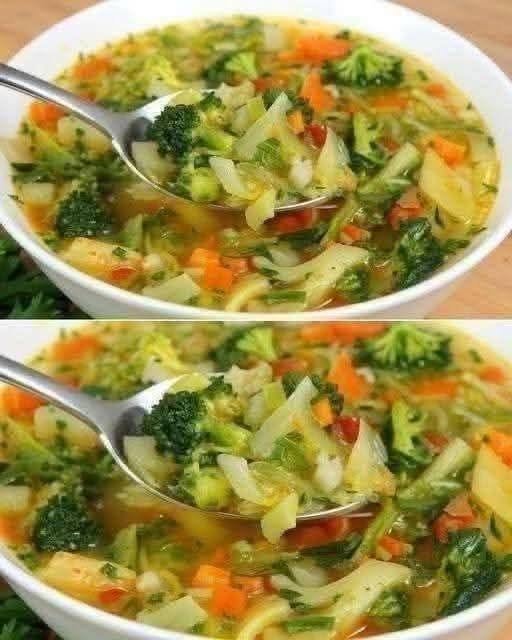
Homemade Vegetable Soup Recipe – Healthy, Comforting, and Full of Flavor
There are days when all I want is a big bowl of warm, homemade soup. Maybe it is a chilly evening, a busy weekday when I don’t feel like spending hours in the kitchen, or simply one of those days when a little comfort food sounds better than anything else. That is when homemade vegetable soup comes to mind.
What I love most about vegetable soup is how something so simple can taste so wonderful. A few fresh vegetables, some garlic and onion, a flavorful broth, and a handful of herbs can turn into a comforting meal that feels like a warm hug in a bowl.
I especially love the flexibility of this recipe. You can use the vegetables sitting in your refrigerator, adjust the seasoning to your taste, and make the soup as light or hearty as you like. It is also a lovely way to encourage everyone at the table to enjoy more vegetables without making dinner feel complicated.
Imagine a pot gently simmering on the stove, the aroma of garlic and herbs filling the kitchen, and everyone reaching for a warm bowl topped with freshly cracked black pepper. Add a slice of crusty bread on the side, and you have a simple homemade meal that feels wonderfully satisfying.
Whether you are looking for an easy lunch, a light dinner, or a cozy weekend recipe, this homemade vegetable soup is one to keep close.
Why You’ll Love This Homemade Vegetable Soup
- Easy to make: Everything comes together in one pot with simple cooking steps.
- Packed with vegetables: Carrots, potatoes, peas, green beans, and other vegetables add color, flavor, and nutrients.
- Budget-friendly: Use seasonal vegetables or whatever you already have at home.
- Naturally vegan: The recipe uses vegetable broth and no dairy products.
- Easy to customize: Add beans, lentils, pasta, or extra vegetables to make it more filling.
- Great for meal prep: Make a batch ahead of time and enjoy it for lunch or dinner throughout the week.
Ingredients You’ll Need
This recipe makes approximately 4 servings.
| Ingredient | Amount |
|---|---|
| Olive oil | 1 tablespoon |
| Medium onion, chopped | 1 |
| Garlic cloves, minced | 3 |
| Carrots, diced | 2 medium |
| Celery stalks, chopped | 2 |
| Potato, diced | 1 medium |
| Green beans, chopped | 1 cup |
| Sweet corn kernels | ½ cup |
| Green peas | ½ cup |
| Diced tomatoes | 1 cup |
| Vegetable broth | 5 cups (1.2 liters) |
| Dried thyme | ½ teaspoon |
| Dried oregano | ½ teaspoon |
| Bay leaf | 1 |
| Salt | To taste |
| Black pepper | To taste |
| Fresh parsley, chopped | 2 tablespoons |
| Lemon juice | 1–2 teaspoons, optional |
A Few Notes About the Ingredients
Vegetables: Carrots, celery, potatoes, peas, and green beans create a lovely combination of textures. Feel free to substitute zucchini, cabbage, spinach, cauliflower, or bell peppers.
Vegetable broth: A good broth gives the soup its depth of flavor. Homemade broth is wonderful, but a good-quality store-bought version works just as well. If you use salted broth, add salt gradually.
Tomatoes: Tomatoes add a gentle acidity that balances the sweetness of the vegetables.
Herbs: Thyme and oregano provide a warm, savory flavor without overpowering the fresh vegetables.
Lemon juice: This is optional, but a small squeeze just before serving brightens the soup beautifully.
How to Make Vegetable Soup From Scratch
Step 1: Prepare the vegetables
Wash the vegetables thoroughly and chop them into small, reasonably even pieces.
Try to keep the carrots, celery, and potatoes similar in size so they cook evenly. You don’t have to make every piece perfect; homemade soup is meant to be relaxed and practical.
If you are using frozen peas or corn, there is no need to thaw them first.
Step 2: Sauté the onion and garlic
Heat the olive oil in a large pot over medium heat. Add the chopped onion and celery, then cook for about 3–4 minutes until the onion softens.
Stir in the minced garlic and cook for another 30 seconds.
This little step makes a big difference. Instead of simply boiling everything together, sautéing the aromatics first helps build a deeper, richer flavor.
Step 3: Add the carrots and potatoes
Add the diced carrots and potatoes to the pot. Stir for 2 minutes to coat them in the fragrant onion and garlic mixture.
At this stage, your kitchen should already smell delicious. These simple ingredients create the foundation of a really comforting vegetable soup.
Step 4: Add the tomatoes, broth, and seasonings
Stir in the diced tomatoes, vegetable broth, thyme, oregano, bay leaf, and a little black pepper.
Bring the mixture to a gentle boil, then reduce the heat to low.
Cover the pot partially and let the soup simmer for about 15 minutes, stirring occasionally.
A gentle simmer is better than a vigorous boil because it helps the vegetables cook evenly without breaking apart too quickly.
Step 5: Add the remaining vegetables
Add the green beans, corn, and peas. Stir well and continue simmering for another 8–12 minutes, or until the vegetables are tender but not mushy.
Cooking times may vary depending on how large your vegetable pieces are.
If you are adding quick-cooking vegetables such as spinach or zucchini, add them toward the end so they retain their texture and color.
Step 6: Taste and adjust the seasoning
Remove the bay leaf. Taste the soup and add salt or black pepper as needed.
If the flavor feels a little flat, try adding a teaspoon of lemon juice. A small amount of acidity can bring the other flavors into balance without making the soup taste strongly of lemon.
For a richer flavor, you can also stir in a little extra vegetable broth or a pinch of your favorite herbs.
Step 7: Garnish and serve
Turn off the heat and stir in the chopped fresh parsley.
Ladle the hot soup into bowls and serve immediately. Add freshly ground black pepper, a squeeze of lemon, or a sprinkle of fresh herbs on top.
Pair it with warm bread, garlic toast, or a simple sandwich for an easy, satisfying meal.
My Best Tips for Flavorful Vegetable Soup
Build flavor before adding the broth
Sautéing the onion, celery, and garlic first gives the soup a more developed flavor. It is a small step that is well worth the extra few minutes.
Cut the vegetables evenly
Uniform pieces cook at roughly the same rate, making it easier to get tender vegetables without some turning mushy while others remain firm.
Add delicate vegetables later
Spinach, peas, zucchini, and other quick-cooking vegetables usually need less time than potatoes and carrots. Adding them later helps preserve their texture.
Season gradually
Broth can contain a surprising amount of sodium. Start with a little salt, let the flavors develop, and adjust near the end.
Don’t forget the finishing touch
Fresh parsley, lemon juice, or a little freshly cracked black pepper can make a simple soup taste brighter and fresher.
Let it rest briefly
Once the soup is cooked, turn off the heat and let it stand for about 5 minutes before serving. This gives you time to prepare the bowls and allows the flavors to settle.
Delicious Vegetable Soup Variations
One of the best things about homemade vegetable soup is how easy it is to change.
1. Vegetable Soup With Beans
Add one drained and rinsed can of white beans, chickpeas, or kidney beans during the final 10 minutes of cooking. Beans add plant-based protein and make the soup more filling.
2. Vegetable Noodle Soup
Add about ½–1 cup of small pasta during the final cooking stage, adjusting the broth as needed. Follow the pasta package directions and cook until tender.
If you plan to store leftovers, cooking the pasta separately helps prevent it from soaking up too much broth.
3. Spicy Vegetable Soup
Add ¼ teaspoon of red chili flakes when sautéing the garlic. You can increase the amount if you enjoy a little heat.
4. Creamy Vegetable Soup
For a creamy texture without dairy, blend one or two cups of the cooked soup and stir it back into the pot. This thickens the broth while keeping the vegetables as the main ingredient.
Alternatively, add a small splash of coconut milk for a richer, slightly different flavor.
5. Vegetable and Lentil Soup
Add about ½ cup of rinsed red lentils along with the broth. You may need additional liquid and roughly 15–20 minutes of extra simmering, depending on the lentils and the texture you prefer.
Lentils make the soup heartier and contribute protein and fiber.
6. Seasonal Vegetable Soup
Use vegetables that are in season or already available in your kitchen. Pumpkin, cabbage, cauliflower, zucchini, spinach, and bell peppers all work beautifully.
There is no need to buy every vegetable listed in a recipe. A simple combination of four or five vegetables can make an excellent soup.
What to Serve With Vegetable Soup
Vegetable soup is lovely on its own, but a few sides can turn it into a complete meal.
- Garlic bread: Perfect for dipping into the warm broth.
- Crusty bread: A simple, comforting accompaniment.
- Grilled cheese sandwich: Adds a satisfying contrast of crispy bread and melted cheese.
- Fresh salad: A crisp green salad balances the warm, soft vegetables.
- Roasted potatoes: A good option if you want a more substantial dinner.
- Crackers or toast: Easy additions for a quick lunch.
For a balanced meal, you can also serve the soup with whole-grain bread and a protein-rich side such as beans, lentils, or a hummus sandwich.
How to Store and Reheat Vegetable Soup
Vegetable soup is excellent for meal preparation because the flavors often develop further after the soup has rested.
In the refrigerator: Allow the soup to cool promptly and transfer it to shallow, airtight containers. Refrigerate within 2 hours of cooking and use within 3–4 days.
In the freezer: Freeze the cooled soup in freezer-safe containers, leaving a little space at the top for expansion. For best quality, use within about 2–3 months. Potatoes may become slightly softer after freezing.
To reheat: Warm the soup on the stovetop over medium-low heat, stirring occasionally until it is steaming hot throughout. Add a splash of water or broth if it has thickened during storage.
You can also reheat individual portions in the microwave, stirring halfway through so the soup heats evenly.
Avoid repeatedly cooling and reheating the entire pot. Reheat only the portion you plan to eat.
Common Vegetable Soup Mistakes to Avoid
| Mistake | Why it happens | How to fix it |
|---|---|---|
| Bland soup | Not enough seasoning or aromatics | Sauté onion and garlic, then adjust salt, herbs, and lemon |
| Mushy vegetables | Simmering for too long | Add delicate vegetables later and check for tenderness |
| Soup that is too thick | Vegetables absorb liquid during cooking or storage | Add warm broth or water |
| Soup that tastes too salty | Salty broth or too much added salt | Use low-sodium broth and season gradually |
| Vegetables cooking unevenly | Pieces are different sizes | Chop vegetables into similar-sized pieces |
| Watery flavor | Insufficient aromatics or seasoning | Simmer gently and adjust herbs and seasoning |
Frequently Asked Questions
1. Is homemade vegetable soup healthy?
Homemade vegetable soup can be a nutritious addition to a balanced diet. It provides vegetables, fluids, and a variety of vitamins and minerals. Its nutritional profile depends on the ingredients, portion size, broth, and any added oil or salt.
2. Can I make vegetable soup without vegetable broth?
Yes. Water works well, especially when you sauté the onion, garlic, and celery first and season the soup properly. You can also use homemade stock or another suitable broth.
3. Can I use frozen vegetables?
Absolutely. Frozen vegetables are convenient and work well in this recipe. Add them according to their cooking times, and avoid overcooking them.
4. How do I make vegetable soup more filling?
Add beans, lentils, chickpeas, pasta, barley, or potatoes. Beans and lentils are particularly useful for increasing the protein and fiber content.
5. Can I make vegetable soup in advance?
Yes. You can prepare it a day ahead and refrigerate it. Reheat gently before serving. If using pasta, it is best to cook and store it separately so it doesn’t become overly soft.
6. Can I blend this vegetable soup?
Yes. For a completely smooth soup, blend it carefully in batches using a blender suitable for hot liquids, following the manufacturer’s instructions. Alternatively, blend just a portion for a thicker, rustic texture.
7. Is this vegetable soup vegan?
Yes. This recipe is vegan when made with vegetable broth and plant-based oil, without dairy-based toppings. Check packaged broth labels if you need to ensure it contains no animal-derived ingredients.
Nutritional Information
The following values are estimates for one serving, assuming the recipe makes four servings, using the listed ingredients and no additional toppings. Actual values vary with vegetable sizes, broth brands, and the amount of salt and oil used.
| Nutrient | Approximate amount per serving |
|---|---|
| Calories | 150 kcal |
| Protein | 4 g |
| Total carbohydrates | 25 g |
| Total fat | 5 g |
| Saturated fat | 0.7 g |
| Dietary fiber | 6 g |
| Total sugar | 8 g |
| Sodium | 350 mg |
| Potassium | 750 mg |
| Vitamin A | 120% Daily Value* |
| Vitamin C | 35% Daily Value* |
Vitamin estimates are approximate and depend on the vegetable varieties and portion sizes. Daily Value percentages are general estimates for adults. Sodium can vary considerably depending on the broth and added salt. The calorie and nutrient figures are estimates rather than laboratory-tested measurements.
Final Thoughts
Homemade vegetable soup is proof that a simple meal can be both comforting and satisfying. With fresh vegetables, fragrant garlic, a flavorful broth, and a few herbs, you can create something delicious without spending your whole evening in the kitchen.
What makes this recipe especially useful is its flexibility. You can keep it light for lunch, add beans or lentils for a heartier dinner, or use whatever vegetables need to be enjoyed in your refrigerator.
The next time you want something warm and homemade, bring out your favorite vegetables, put a pot on the stove, and let everything simmer together. Serve it with a slice of warm bread, settle into your favorite spot, and enjoy a meal that feels wonderfully simple.
If you try this homemade vegetable soup, experiment with your favorite vegetable combinations and make the recipe your own. Sometimes, the best family recipes begin with nothing more than a few everyday ingredients and a little love in the kitchen.