
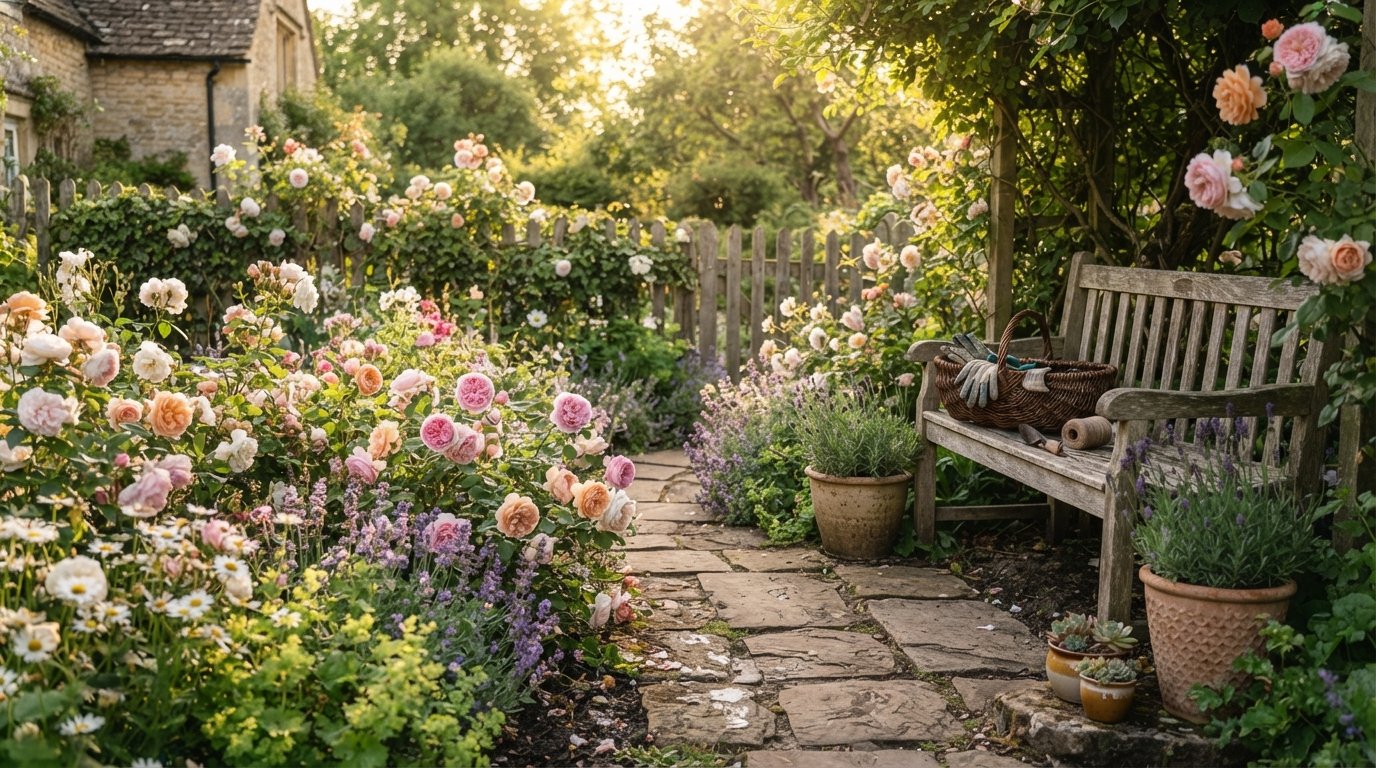
An English rose garden has a timeless charm that I always find easy to love. Soft pink, creamy white, peach, and deep red roses can make even a simple backyard feel romantic and full of character. The secret is not making everything look too perfect. Layered planting, natural pathways, climbing roses, and companion flowers help create that relaxed, lived-in English garden feeling.
When planning these gardens, I focus first on the basics that make roses easier to grow: enough sunlight, good air circulation, suitable soil, and enough space for each plant to mature. The 11 ideas below combine those practical details with beautiful design inspiration. Ideas 3, 5, and 7 also include useful products selected to support the specific gardening task, rather than adding products just for the sake of it.
1. Create a Classic English Rose Border
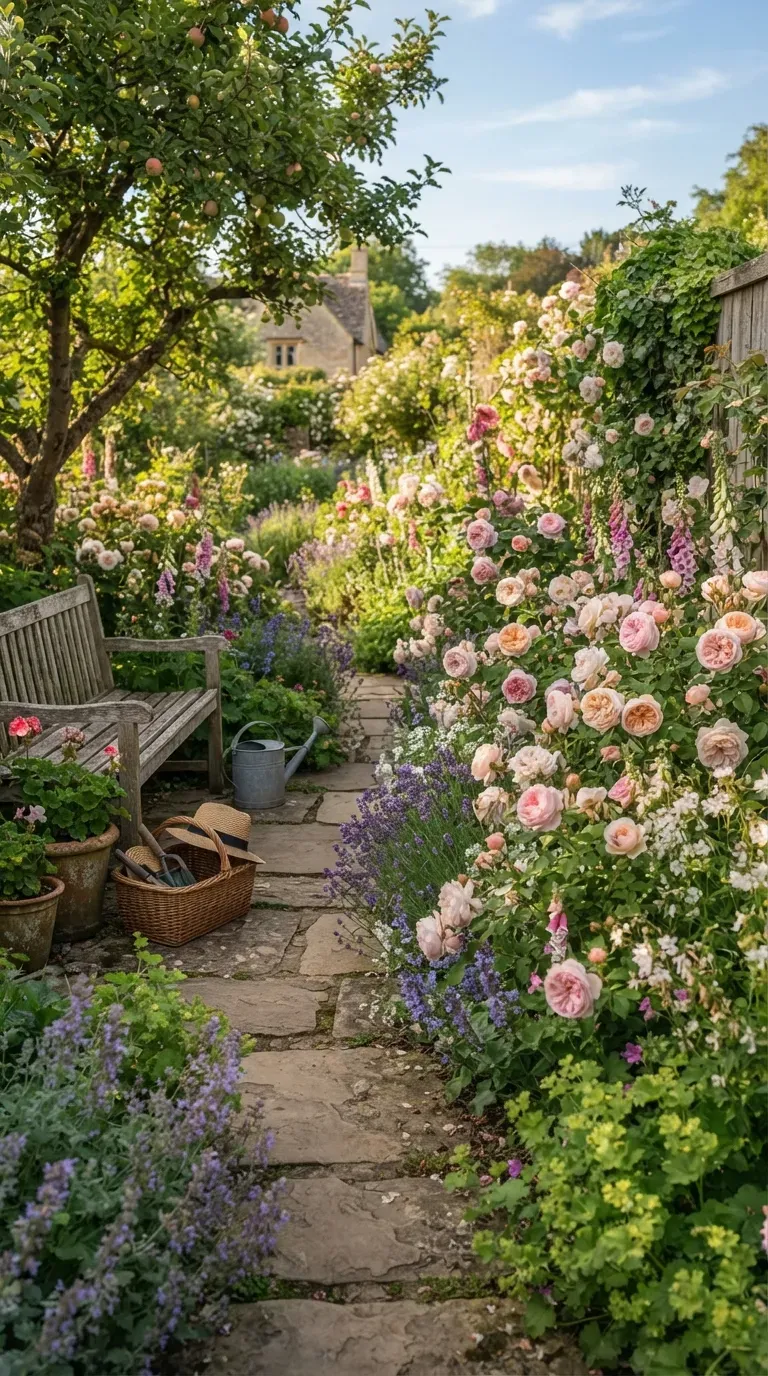
A long rose border is one of the easiest ways to bring an English garden feeling into your backyard. I like starting with a limited color palette, such as blush pink, cream, peach, and soft purple, instead of using every color at once.
From my experience with garden planning, repeating the same few companion plants makes the border feel more intentional. Roses can provide the main structure, while lavender, catmint, foxgloves, and other suitable plants soften the spaces between them.
Why You’ll Love It
- Creates a classic English country look.
- Makes the garden feel full and layered.
- Gives you plenty of opportunities for seasonal color.
2. Add a Rose-Covered Cottage Path
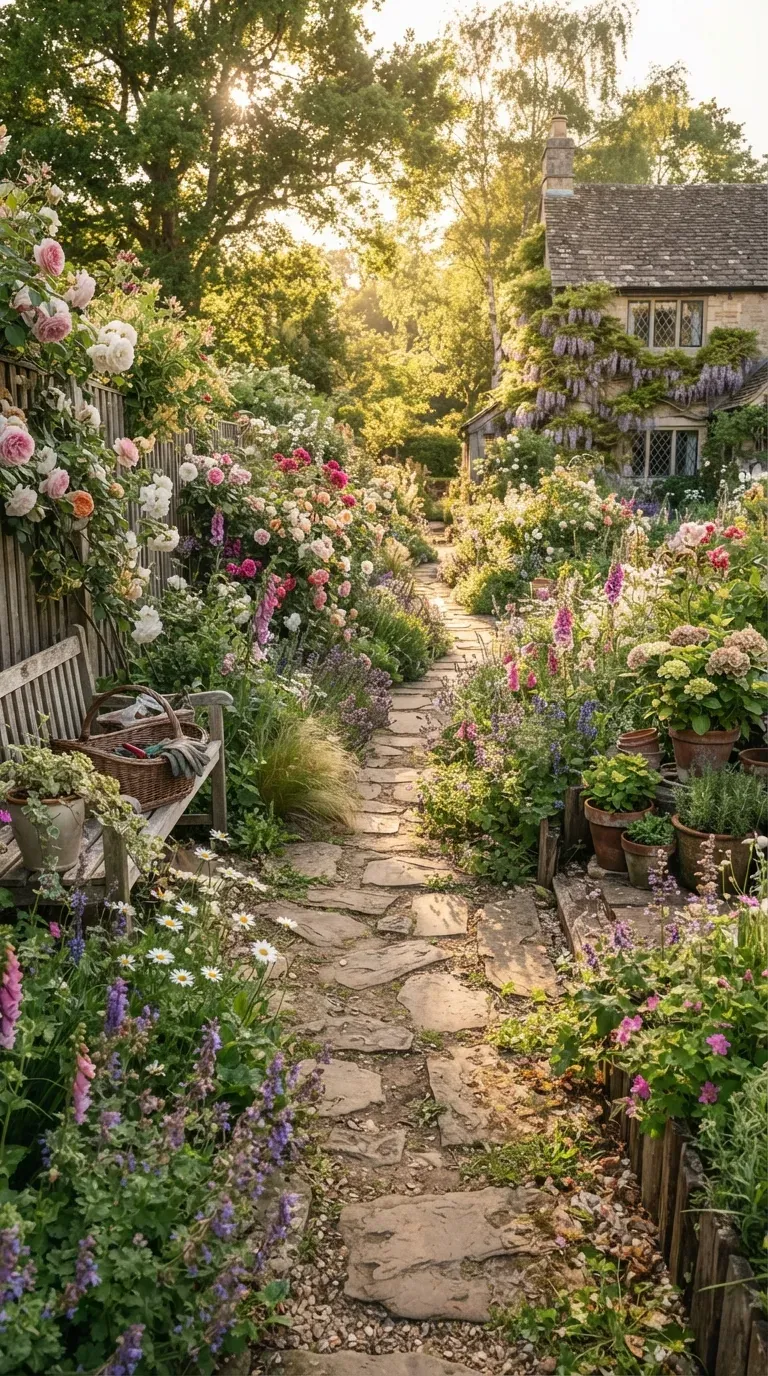
A pathway surrounded by roses can make a simple backyard feel much more special. I prefer allowing some companion plants to soften the edges rather than creating a perfectly sharp border.
The important part is keeping enough room to walk comfortably. As roses and perennials mature, a garden that looks spacious during planting can quickly become crowded.
Why You’ll Love It
- Makes walking through the garden feel more immersive.
- Adds structure without looking too formal.
- Works beautifully in both small and large gardens.
3. Build a Romantic Rose Arch
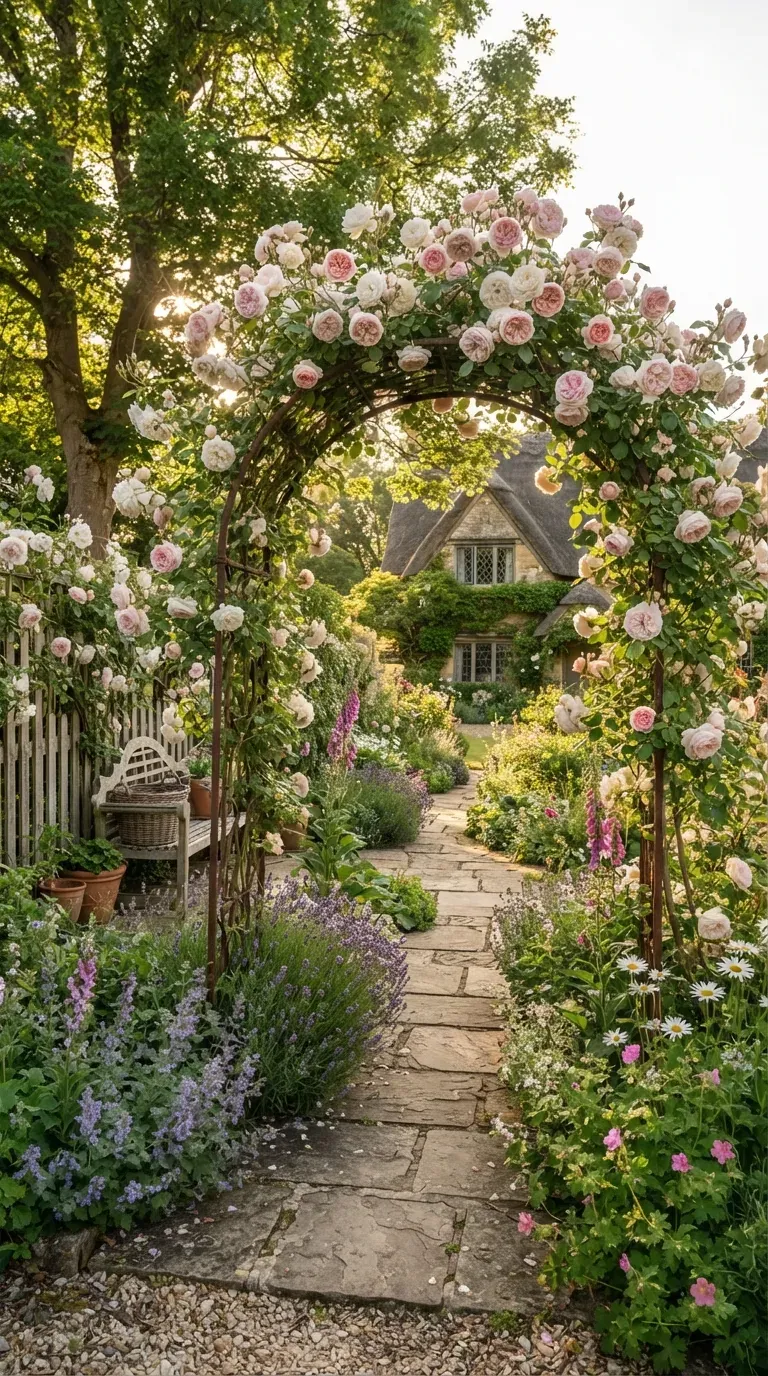
A rose-covered arch creates an instant focal point. I especially like placing one at the entrance to a garden room, along a path, or between two sections of the backyard.
My practical tip is to choose the support before the climbing rose becomes large. A mature climbing rose can become heavy, so the structure should be sturdy enough to support the plant and allow you to train the stems over time.
Useful product idea: Look for a heavy-duty garden arch or metal trellis designed for climbing plants. A strong support can make training roses easier and give the garden a defined focal point. When shopping, check the dimensions, material, anchoring method, and whether the structure suits the eventual size of your rose.
Why You’ll Love It
- Creates a stunning garden entrance.
- Adds height and vertical interest.
- Gives climbing roses a practical support system.
4. Mix Roses with Lavender and Catmint
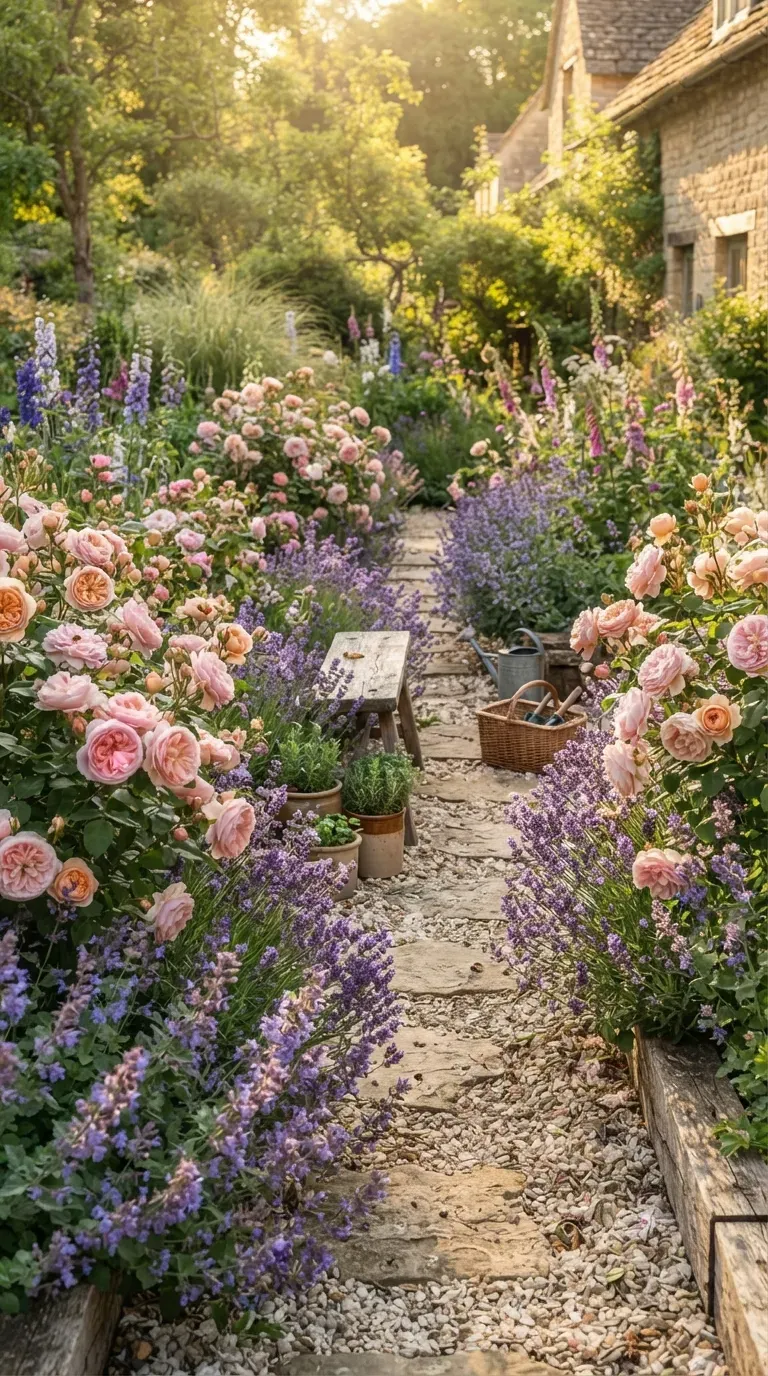
One of my favorite English rose garden combinations is soft roses mixed with purple or blue companion flowers. Lavender and catmint can create a gentle color contrast while helping the garden feel less stiff.
I would avoid planting everything too close together. Leave enough space for mature growth and airflow, then allow the garden to fill in naturally over time.
Why You’ll Love It
- Creates a beautiful pink and purple color combination.
- Adds different textures around the roses.
- Gives the garden a soft cottage-style appearance.
5. Create a Formal Rose Garden with Gravel Paths
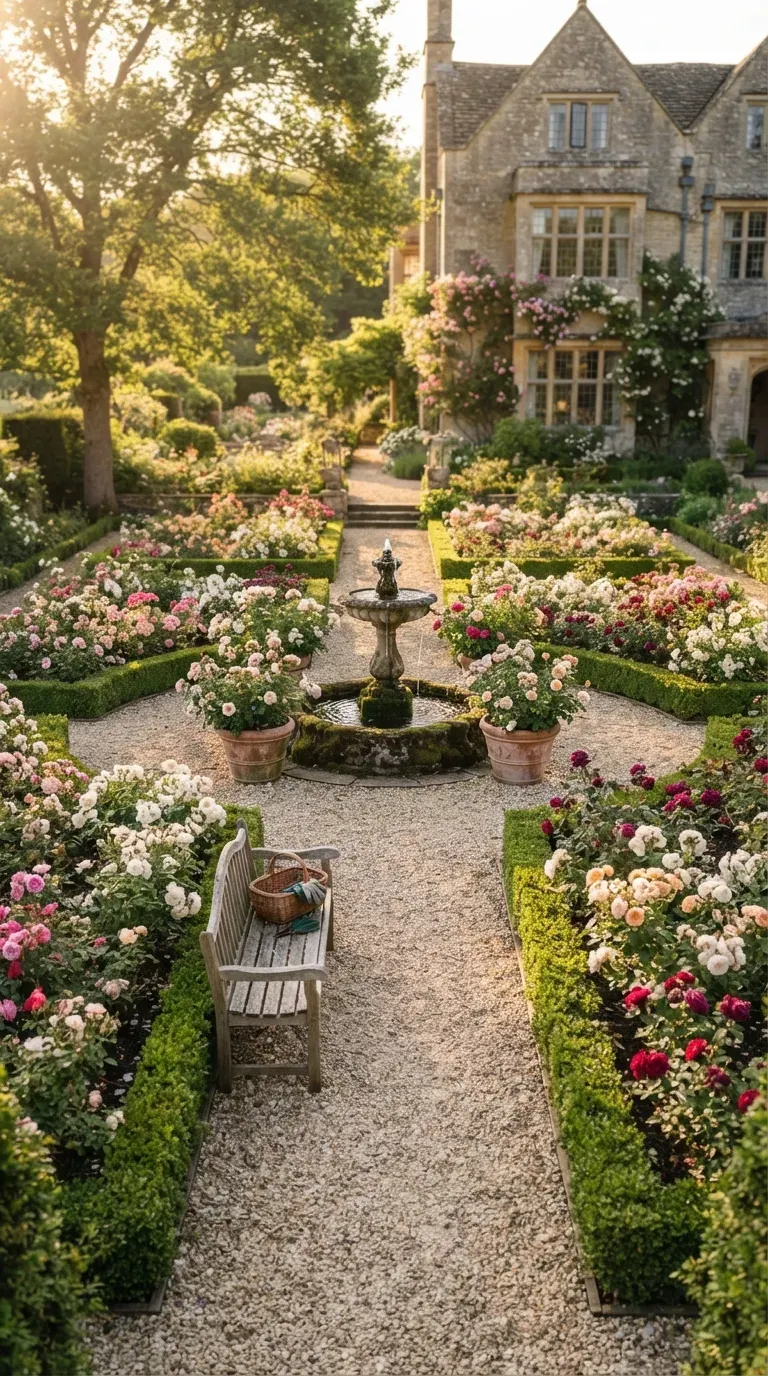
If you prefer a cleaner look, a formal layout can still feel romantic when filled with English-style roses. I like the contrast between structured pathways and the softer shape of the blooms.
Useful product idea: A rose fertilizer formulated for flowering plants can be useful when your soil and rose-care plan call for additional nutrients. I would not recommend feeding simply because a label promises bigger flowers. It is better to follow the product directions and consider your soil conditions first. Rose specialists also emphasize proper feeding as part of overall rose care, alongside watering, pruning, and monitoring plant health.
Why You’ll Love It
- Gives the garden an elegant and organized design.
- Makes paths easy to maintain.
- Creates a strong contrast with soft rose blooms.
6. Plant Roses Around a Garden Bench
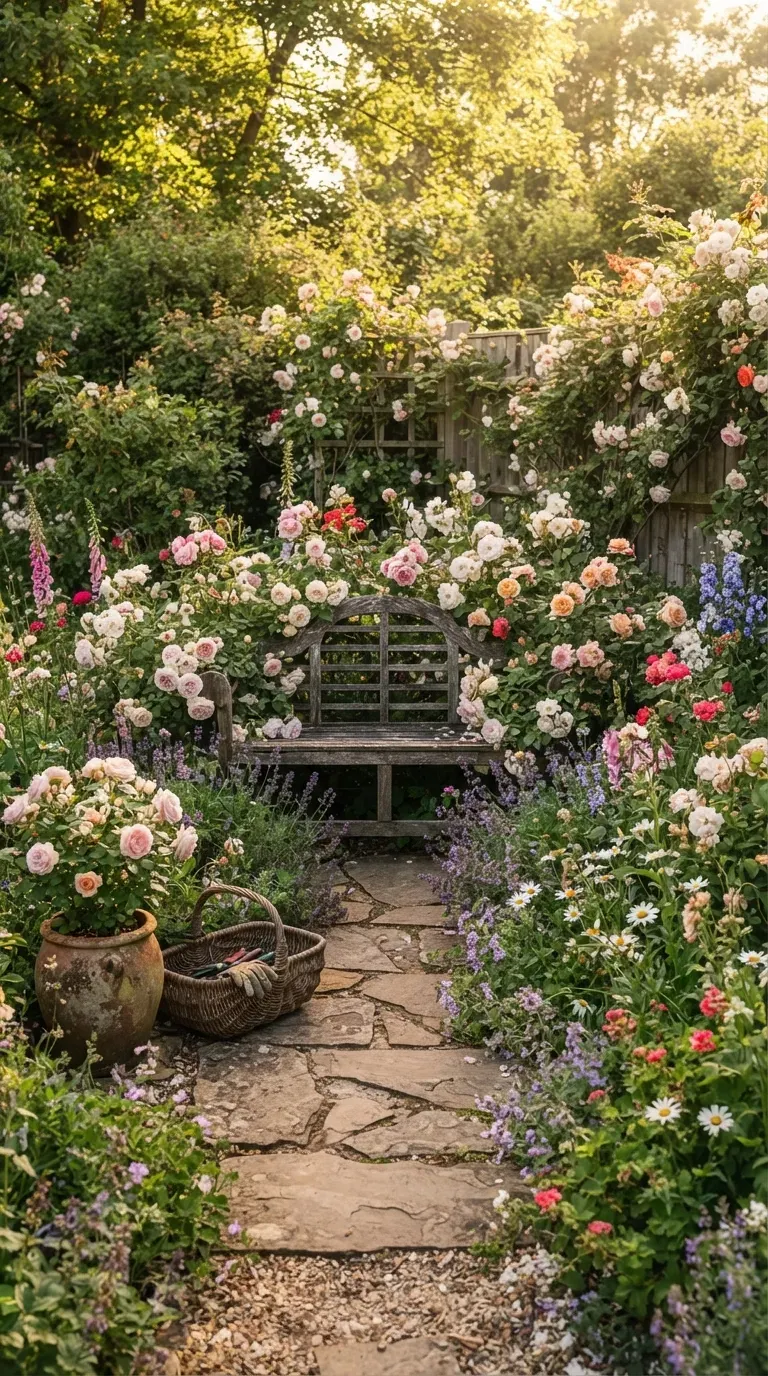
A bench surrounded by roses creates a simple garden destination. I like this idea because it encourages you to actually spend time in the garden rather than only looking at it from a distance.
Keep some open space around the seating area so the plants do not make it difficult to reach the bench. A narrow stone or gravel path can also help connect it to the rest of the garden.
Why You’ll Love It
- Creates a peaceful place to relax.
- Turns the garden into an outdoor living space.
- Adds a romantic focal point.
7. Grow a Dense Cottage-Style Rose Garden
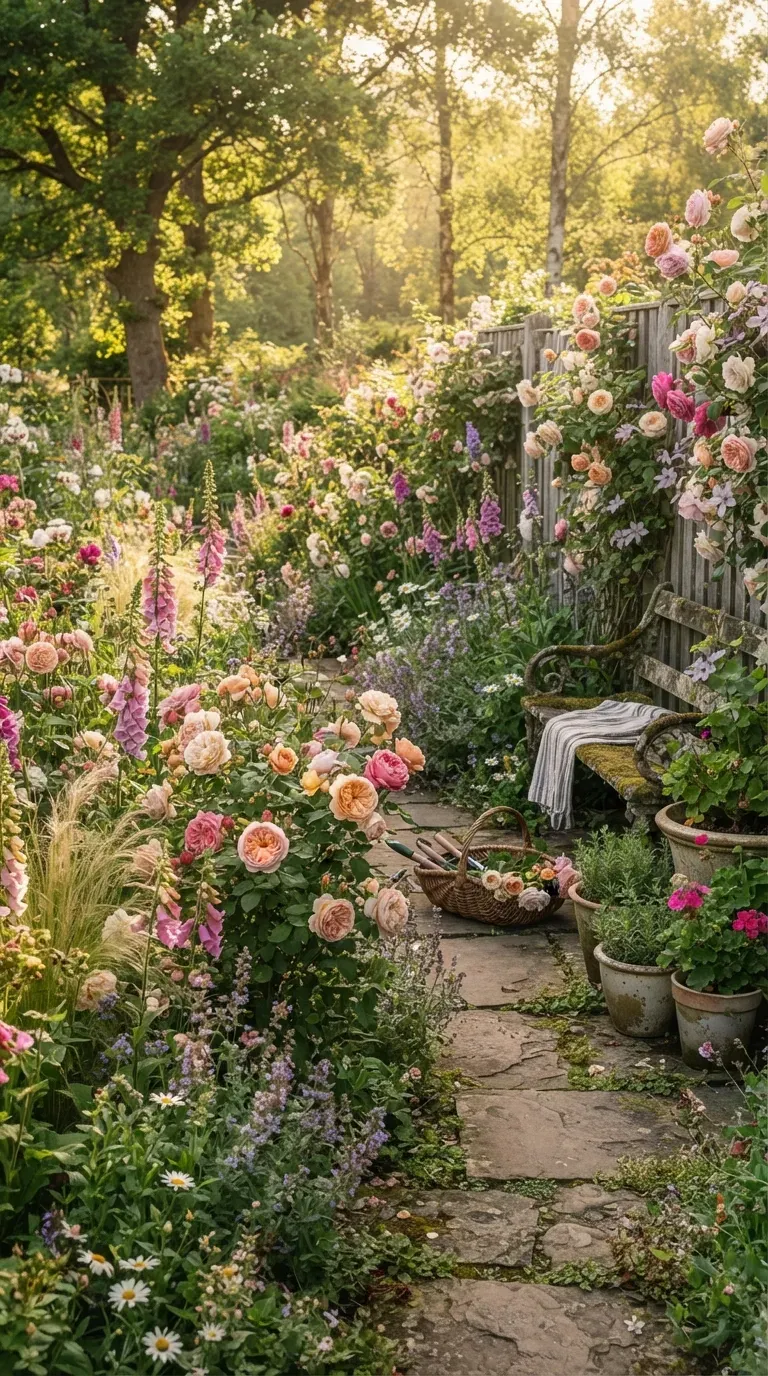
A full cottage-style garden can look wonderfully effortless, but I’ve learned that it still needs some planning. Mix plant heights and textures, but make sure you can still reach the roses for pruning, deadheading, and general care.
Useful product idea: For regular pruning and handling thorny stems, long-cuff rose gardening gloves can be genuinely useful. Independent gardening tests highlight the value of durable materials, good dexterity, and extended forearm coverage when working with thorny plants.
When choosing gloves, I would look for a comfortable fit first. Gloves that are too loose can make detailed pruning harder, while a longer cuff can provide extra forearm coverage.
Why You’ll Love It
- Creates a lush and romantic garden atmosphere.
- Lets you mix many beautiful flower shapes.
- Feels relaxed instead of overly designed.
8. Add a White and Cream Rose Garden
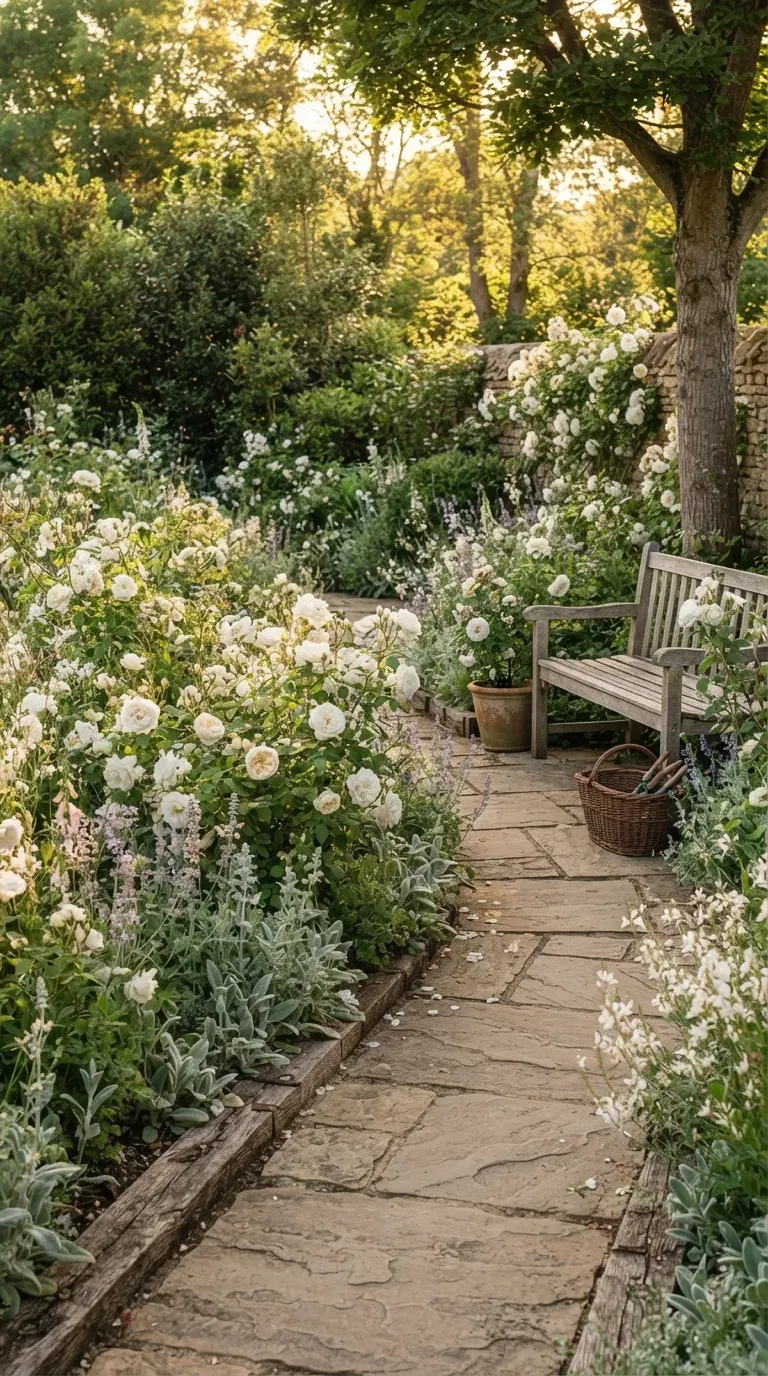
A limited color palette can make a rose garden feel calm and elegant. I particularly like white and cream roses combined with different shades of green and silvery foliage.
The garden can still have plenty of visual interest when you vary the flower shapes and leaf textures. This approach is also easier to coordinate with stone paths, fences, and other garden features.
Why You’ll Love It
- Creates a calm and elegant atmosphere.
- Works with many garden styles.
- Makes greenery and flower texture stand out.
9. Design a Small English Rose Garden
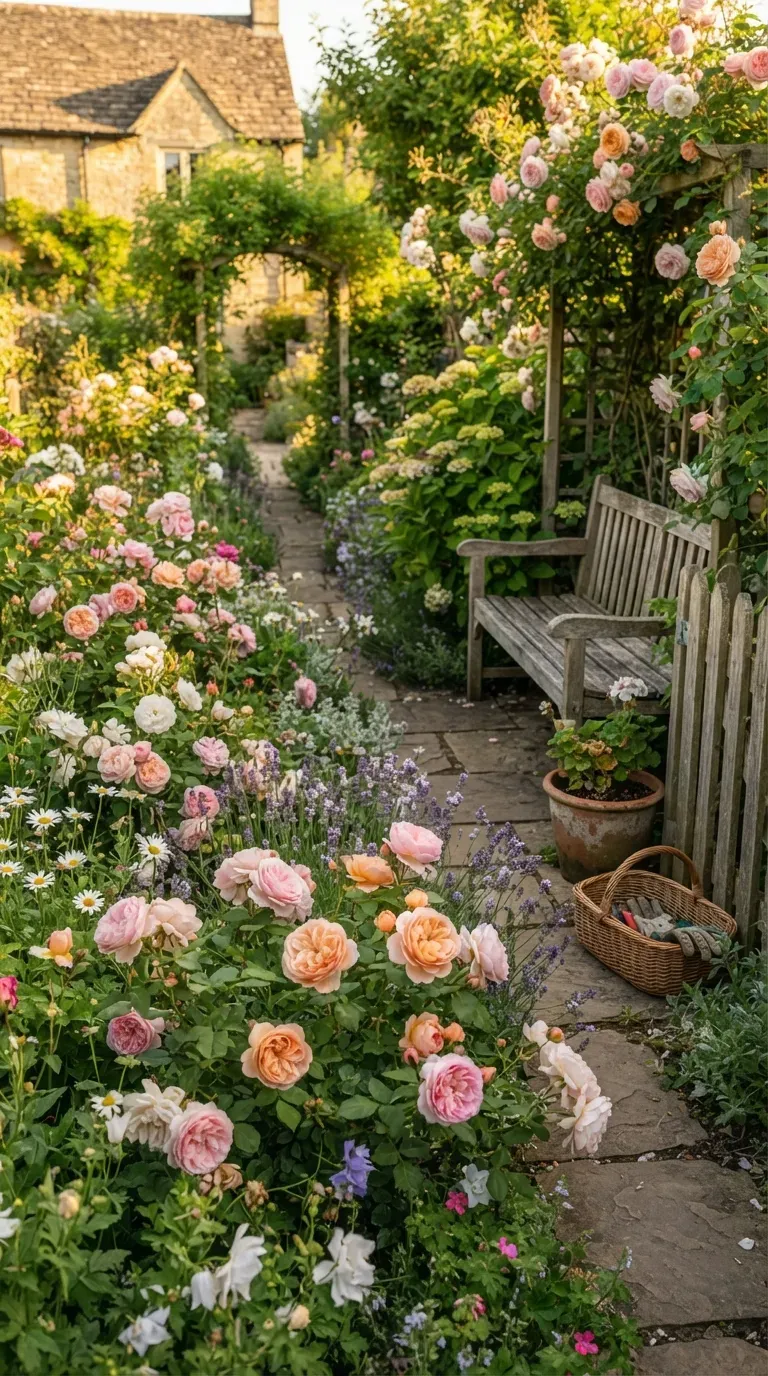
You do not need a large estate garden to enjoy English roses. In a small space, I would choose fewer varieties and repeat them instead of trying to fit too many different plants into one bed.
You can also add height with a climbing rose or narrow trellis. This creates more visual interest without taking up too much ground space.
Why You’ll Love It
- Works beautifully in compact backyards.
- Can feel lush without needing a large area.
- Makes a small garden feel more special.
10. Combine Roses with a Stone Wall
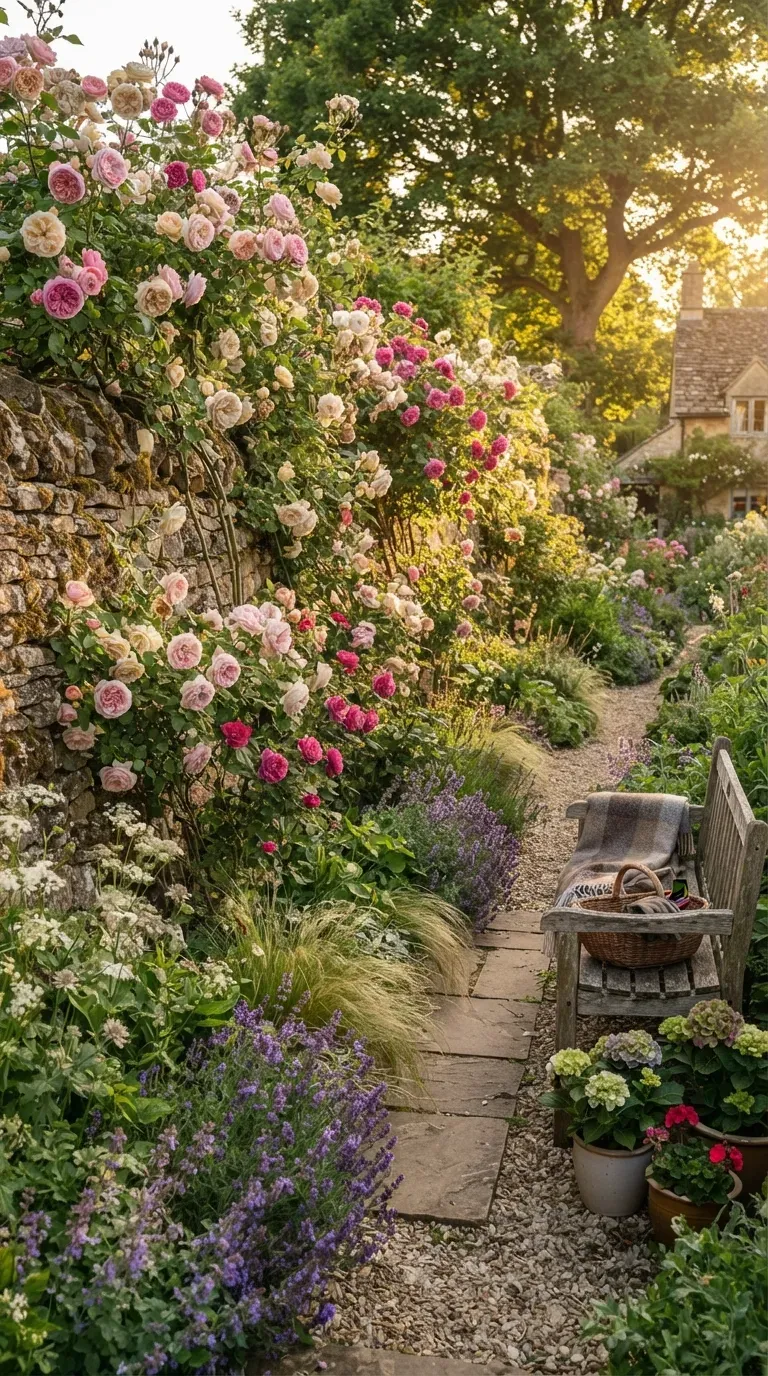
Stone and roses are a classic combination because the hard texture of the wall makes the soft blooms stand out. I like allowing climbing or tall roses to create height while lower companion plants soften the base.
Before planting close to a wall, pay attention to sunlight, reflected heat, and rain shadows. The conditions beside a wall can be different from the rest of the garden.
Why You’ll Love It
- Creates a timeless English garden appearance.
- Adds height and texture.
- Turns a plain wall into a beautiful backdrop.
11. Create an English Rose and Herb Garden
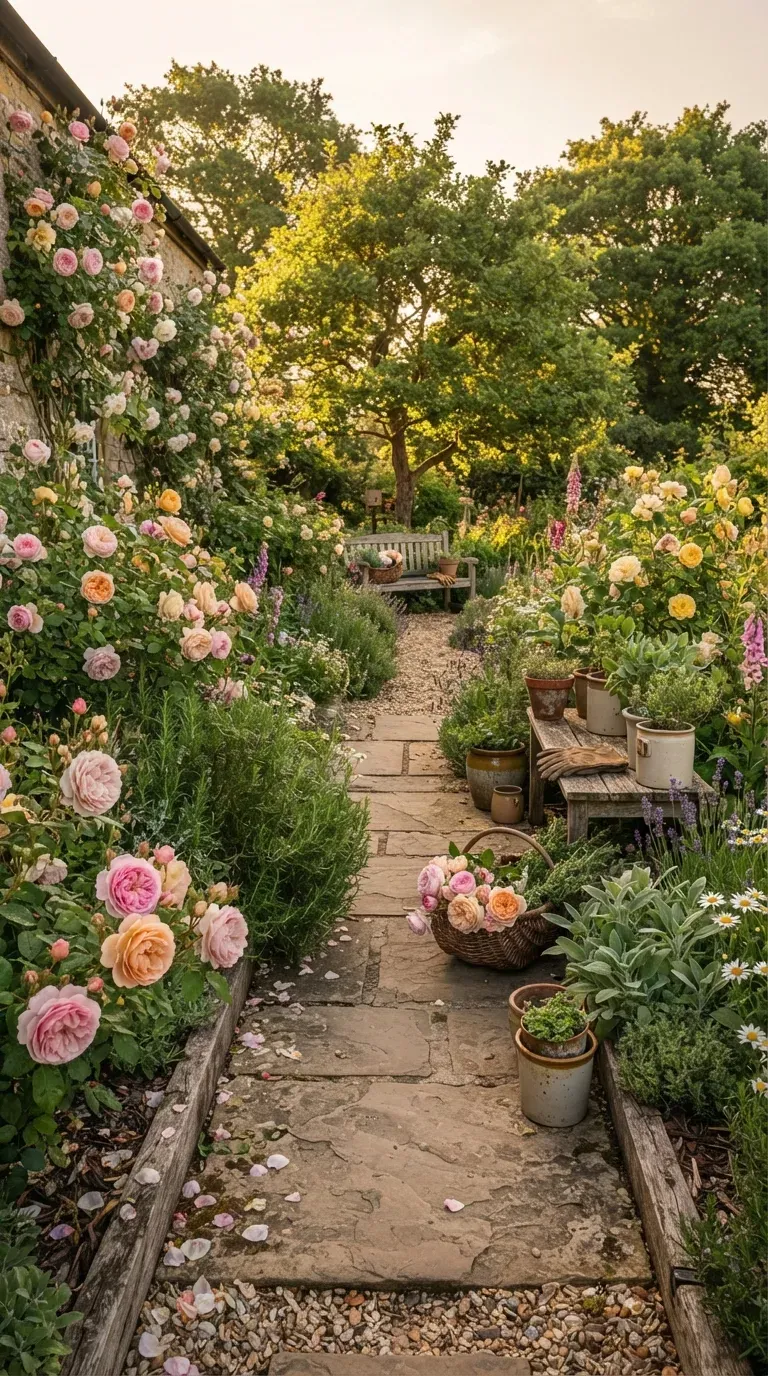
Combining roses with herbs can make the garden feel both decorative and useful. I like grouping plants with similar growing needs instead of mixing them randomly.
Fragrant herbs can also add another sensory layer to the garden. The result feels relaxed and natural while still giving you a clear planting structure.
Why You’ll Love It
- Combines beauty with practical planting.
- Adds fragrance and texture.
- Creates a rich English cottage garden feeling.
My Experience-Based Tips for Planning an English Rose Garden
From my experience planning garden content and studying successful rose layouts, the prettiest rose garden is not always the one with the most rose varieties. A smaller selection repeated throughout the garden often creates a more polished look.
I would also plan for maintenance before planting. Leave room to walk between mature plants, choose a support system for climbing roses early, and keep pruning tools and protective gloves accessible. Rose-growing experts also stress that pruning, feeding, plant selection, and good general horticultural practices all work together rather than acting as separate tasks.
Finally, don’t expect a newly planted English rose garden to look completely full in its first season. A garden develops character as roses mature and companion plants fill the spaces around them. Giving plants enough room at the beginning can produce a healthier and more attractive garden later.
Conclusion
These English rose garden ideas can help you create anything from a small romantic border to a lush cottage-style garden filled with climbing roses, lavender, stone paths, and fragrant companion plants.
My biggest recommendation is to start with a simple structure. Choose where the paths, arches, seating areas, and main rose beds will go first. Then build layers around that framework with roses and plants that suit your climate and garden conditions.
The most beautiful English rose gardens feel romantic, but they are also practical. When you plan for sunlight, mature plant size, access for pruning, and strong supports where needed, you create a garden that is not only beautiful in photos but enjoyable to care for and spend time in.