
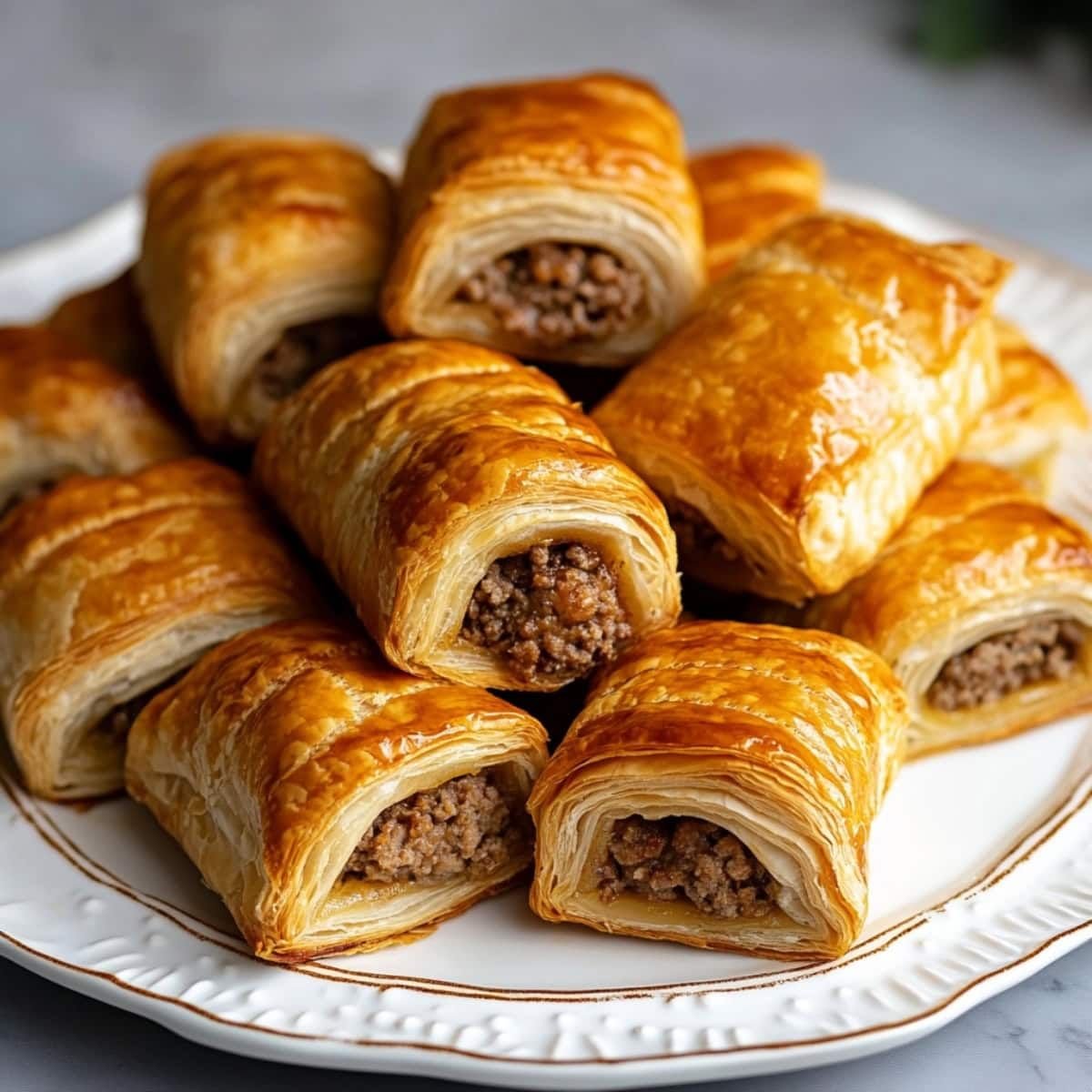
Classic British Sausage Rolls – Buttery, Flaky, and Delicious
There is something wonderfully comforting about biting into a freshly baked sausage roll. The golden, flaky pastry gives way to a juicy, savory sausage filling, creating the kind of simple, satisfying snack that makes you reach for another before you’ve even finished the first.
Classic British sausage rolls are a favorite at picnics, family gatherings, afternoon teas, and holiday celebrations. They’re also perfect for those days when you’re craving something homemade but don’t want to prepare an elaborate meal. With ready-made puff pastry and a flavorful sausage filling, you can create a delicious batch without spending hours in the kitchen.
I can easily imagine making these sausage rolls on a relaxed weekend, when the kitchen fills with the wonderful aroma of buttery pastry and seasoned meat. They’re the sort of treat everyone gathers around while they’re still warm, sometimes picking one up straight from the baking tray before they’ve even had time to cool!
What makes this recipe especially lovely is its simplicity. You don’t need fancy ingredients or professional baking skills. A few pantry staples, good-quality sausage meat, and a little patience are all you need to make these classic British favorites at home.
Let’s get baking!
Why You’ll Love These Classic British Sausage Rolls
- Crispy, flaky pastry: Puff pastry bakes into beautiful golden layers.
- Juicy, savory filling: Seasoned sausage meat provides plenty of flavor.
- Simple ingredients: This recipe uses easy-to-find ingredients.
- Perfect for sharing: Serve them at parties, picnics, afternoon tea, or family gatherings.
- Easy to prepare ahead: Assemble the rolls in advance and bake when needed.
- Freezer-friendly: Freeze them before or after baking for convenient snacks later.
Ingredients You’ll Need
This recipe makes approximately 12 classic sausage rolls.
For the sausage filling
- 500 g pork sausage meat
- 1 small onion, finely grated or minced
- 1 teaspoon dried sage
- ½ teaspoon dried thyme
- ½ teaspoon black pepper
- ½ teaspoon salt, or to taste
- 1 teaspoon Dijon mustard, optional
- 2 tablespoons breadcrumbs, optional, if the filling is very moist
For the pastry
- 500 g ready-rolled puff pastry, thawed if frozen
- 1 egg, beaten, for the egg wash
- 1 teaspoon sesame seeds or poppy seeds, optional
Ingredient tip: Good-quality sausage meat makes a noticeable difference. If you’re using sausages instead, remove their casings and use the meat inside. Choose a seasoned pork sausage that you enjoy eating on its own.
How to Make Classic British Sausage Rolls
Step 1: Prepare the sausage filling
Add the sausage meat to a mixing bowl with the grated onion, dried sage, thyme, black pepper, and Dijon mustard, if using.
Mix gently until the ingredients are evenly combined. Avoid overmixing, as this can make the filling dense.
If the mixture seems particularly wet, add a little breadcrumbs to help it hold its shape.
Taste only after cooking a small sample of the mixture thoroughly. Raw sausage meat should not be tasted.
Step 2: Prepare the puff pastry
Preheat your oven to 400°F (200°C), or 180°C for a fan-assisted oven.
Lightly flour your work surface if needed. Unroll the puff pastry and cut it lengthwise into two long rectangles.
If the pastry becomes soft or sticky while you’re working, place it in the refrigerator for several minutes. Cold pastry is easier to handle and tends to produce better layers in the oven.
Step 3: Shape the sausage rolls
Divide the sausage mixture into two equal portions.
Shape each portion into a long log and place it down the center of each pastry rectangle.
Brush one long edge of the pastry with a little beaten egg. Fold the opposite edge over the filling, then bring the egg-washed edge over it to seal the pastry.
Turn the rolls seam-side down and gently press along the seam to secure them.
Step 4: Cut into individual rolls
Using a sharp knife, cut each long roll into six smaller pieces, giving you 12 sausage rolls in total.
Place them seam-side down on a baking tray lined with parchment paper, leaving a little space between each piece.
For a traditional appearance, make two or three small diagonal slashes on top of each roll. These allow steam to escape and give the pastry a classic bakery-style finish.
Step 5: Apply the egg wash
Brush the tops and sides lightly with beaten egg.
If you like a little extra texture, sprinkle sesame seeds or poppy seeds over the top.
For an especially flaky result, refrigerate the prepared rolls for 10–15 minutes before baking. This helps the pastry stay cold as it enters the oven.
Step 6: Bake until golden
Bake for approximately 25–35 minutes, or until the pastry is puffed and deeply golden and the sausage filling is cooked through.
Cooking time depends on the size of the rolls and your oven. The center of the sausage filling should reach a safe internal temperature of 160°F (71°C) for ground pork.
If the pastry begins browning too quickly, loosely cover the tops with foil while the filling finishes cooking.
Step 7: Cool slightly and serve
Remove the sausage rolls from the oven and let them rest on the tray for about 5 minutes before transferring them to a serving plate.
Serve them warm with English mustard, ketchup, brown sauce, or your favorite chutney.
The combination of crisp pastry and juicy, savory filling makes these rolls especially hard to resist when freshly baked.
Tips for the Best British Sausage Rolls
Keep the pastry cold. Warm pastry can become sticky and may not puff as beautifully. Chill it briefly whenever it becomes difficult to handle.
Don’t overfill the pastry. A generous but manageable strip of filling makes sealing easier and helps the rolls cook evenly.
Seal the seam properly. A little beaten egg helps the pastry stick together and prevents it from opening during baking.
Avoid a soggy bottom. Bake the rolls on a properly preheated oven rack or a room-temperature baking tray. Don’t place cold pastry directly onto a hot tray unless your pastry instructions recommend it.
Use a sharp knife. Clean cuts help the pastry rise evenly and give the sausage rolls a neat appearance.
Let them rest briefly. A few minutes of cooling helps the filling settle and makes the rolls easier to handle.
Delicious Variations to Try
1. Cheesy Sausage Rolls
Mix a small amount of grated mature cheddar into the sausage filling for an extra savory flavor.
2. Caramelized Onion Sausage Rolls
Add a spoonful of cooled caramelized onions to the filling. Their natural sweetness pairs beautifully with seasoned pork.
3. Spicy Sausage Rolls
Add a pinch of chili flakes, smoked paprika, or cayenne pepper for a little heat.
4. Apple and Sage Sausage Rolls
Finely grate a little apple, squeeze out excess moisture, and combine it with the sausage meat and sage. This creates a lovely sweet-savory variation.
5. Vegetarian Sausage Rolls
Use a suitable plant-based sausage filling instead of pork. Check the product instructions and adjust the cooking time as needed.
What to Serve with Classic Sausage Rolls
Sausage rolls are delicious on their own, but they also pair well with a variety of sides and sauces.
- English mustard: Adds a sharp, savory kick.
- Tomato ketchup: A familiar favorite, especially for children.
- Brown sauce: A tangy accompaniment often enjoyed with British savory foods.
- Fresh green salad: Adds freshness and balances the rich pastry.
- Coleslaw: Offers a cool, crunchy contrast.
- Vegetable soup: Turns a few sausage rolls into a comforting lunch.
- Pickles or chutney: Add a bright, tangy flavor.
For an afternoon tea spread, serve them alongside small sandwiches, fresh vegetables, and a pot of tea.
Can You Make Sausage Rolls Ahead of Time?
Absolutely! Sausage rolls are excellent for preparing in advance.
You can assemble the uncooked rolls, arrange them on a tray, and refrigerate them for several hours before baking. Keep them covered and refrigerated until you’re ready to cook.
For longer storage, freeze the unbaked rolls on a tray until firm, then transfer them to a freezer-safe container or bag. Bake from frozen, allowing additional cooking time and checking that the sausage filling is thoroughly cooked.
You can also bake the sausage rolls in advance and refrigerate them once cooled. Reheat until piping hot throughout before serving.
For food safety, refrigerate cooked sausage rolls within two hours of baking and consume refrigerated leftovers within 3–4 days.
Common Mistakes to Avoid
- Using warm pastry: This can make the dough difficult to handle and reduce its flakiness.
- Overmixing the sausage meat: Excessive mixing can create a dense filling.
- Leaving gaps in the seal: The pastry may open during baking if the seam isn’t secured.
- Cutting the rolls too large: Oversized rolls need longer to cook, which can make it harder to achieve evenly baked pastry and filling.
- Removing them too early: Golden pastry doesn’t necessarily mean the sausage filling is fully cooked.
- Overcrowding the tray: Leave enough room for hot air to circulate around the rolls.
Nutritional Information
The following values are estimates for one sausage roll, assuming the recipe makes 12 rolls using pork sausage meat, puff pastry, and egg wash.
| Nutrient | Approximate amount per roll |
|---|---|
| Calories | 290 kcal |
| Protein | 8 g |
| Carbohydrates | 18 g |
| Dietary fiber | 1 g |
| Total sugars | 2 g |
| Total fat | 20 g |
| Saturated fat | 7 g |
| Sodium | 430 mg |
| Iron | 1 mg |
Nutrition values vary depending on the sausage meat, pastry brand, portion size, and optional ingredients. These estimates are intended as a general guide.
Frequently Asked Questions (Q&A)
Q1: What are traditional British sausage rolls made of?
A: Traditional sausage rolls are made with seasoned sausage meat wrapped in puff pastry and baked until golden. Pork sausage meat is commonly used, with seasonings such as black pepper, sage, and sometimes onion.
Q2: Can I use ready-made puff pastry?
A: Yes! Ready-made puff pastry is a convenient option and makes this recipe much easier. Choose a good-quality pastry and follow the package instructions for thawing if using frozen pastry.
Q3: How do I keep sausage rolls crispy?
A: Bake them until the pastry is thoroughly golden, allow steam to escape as they cool slightly, and store leftovers in the refrigerator once cooled. Reheat in the oven to restore some of their crispness rather than using the microwave.
Q4: How do I know when sausage rolls are fully cooked?
A: The pastry should be golden and the sausage filling should be cooked through. For ground pork, check that the center reaches 160°F (71°C) using a food thermometer.
Q5: Can I make sausage rolls without egg wash?
A: Yes. You can leave off the egg wash or brush the pastry lightly with milk for some browning. The finished pastry may have a slightly different color and shine.
Q6: Can I freeze homemade sausage rolls?
A: Yes. Freeze them either before or after baking. Freeze unbaked rolls on a tray first, then transfer them to a freezer-safe container. Follow safe cooking guidance and ensure the filling is fully cooked before eating.
Q7: Can I make sausage rolls with chicken or turkey?
A: Yes. Ground chicken or turkey can be used instead of pork, provided the meat is seasoned well and cooked to a safe internal temperature. Ground poultry should reach 165°F (74°C).
Q8: Why is the bottom of my sausage roll soggy?
A: The pastry may have been too warm, the filling may have released excess moisture, or the rolls may have been underbaked. Keep the pastry cold, avoid overly wet filling, and bake until the pastry is thoroughly crisp and golden.
Q9: Can I make mini sausage rolls for parties?
A: Definitely! Cut the filled pastry into smaller pieces before baking. Smaller rolls cook more quickly, so begin checking them early and make sure the filling reaches a safe temperature.
Q10: What is the best sauce to serve with sausage rolls?
A: English mustard, ketchup, brown sauce, and chutney are all popular choices. Choose a sharp mustard for contrast or a sweeter sauce if you prefer a milder flavor.
Q11: Can I prepare sausage rolls the night before?
A: Yes. Assemble the rolls, cover them, and refrigerate them overnight if your ingredients and handling practices allow it. For the best pastry texture, brush with egg wash just before baking and follow safe food-storage guidance.
Q12: Are homemade sausage rolls healthier than store-bought ones?
A: Homemade versions allow you to choose the sausage meat, pastry, seasonings, and portion sizes. However, they can still be high in calories, saturated fat, and sodium. Using leaner sausage meat and serving smaller portions can help adjust the nutritional profile.
Final Thoughts
Classic British sausage rolls are proof that simple ingredients can create something truly satisfying. With their buttery pastry, flavorful sausage filling, and irresistible golden crust, they’re a wonderful addition to family gatherings, weekend snacks, picnics, and holiday tables.
What makes this recipe especially useful is that you can prepare the rolls ahead of time, customize the seasonings, and serve them with all your favorite sauces. Once you’ve mastered the basic method, you’ll have plenty of opportunities to experiment with different fillings and flavors.