
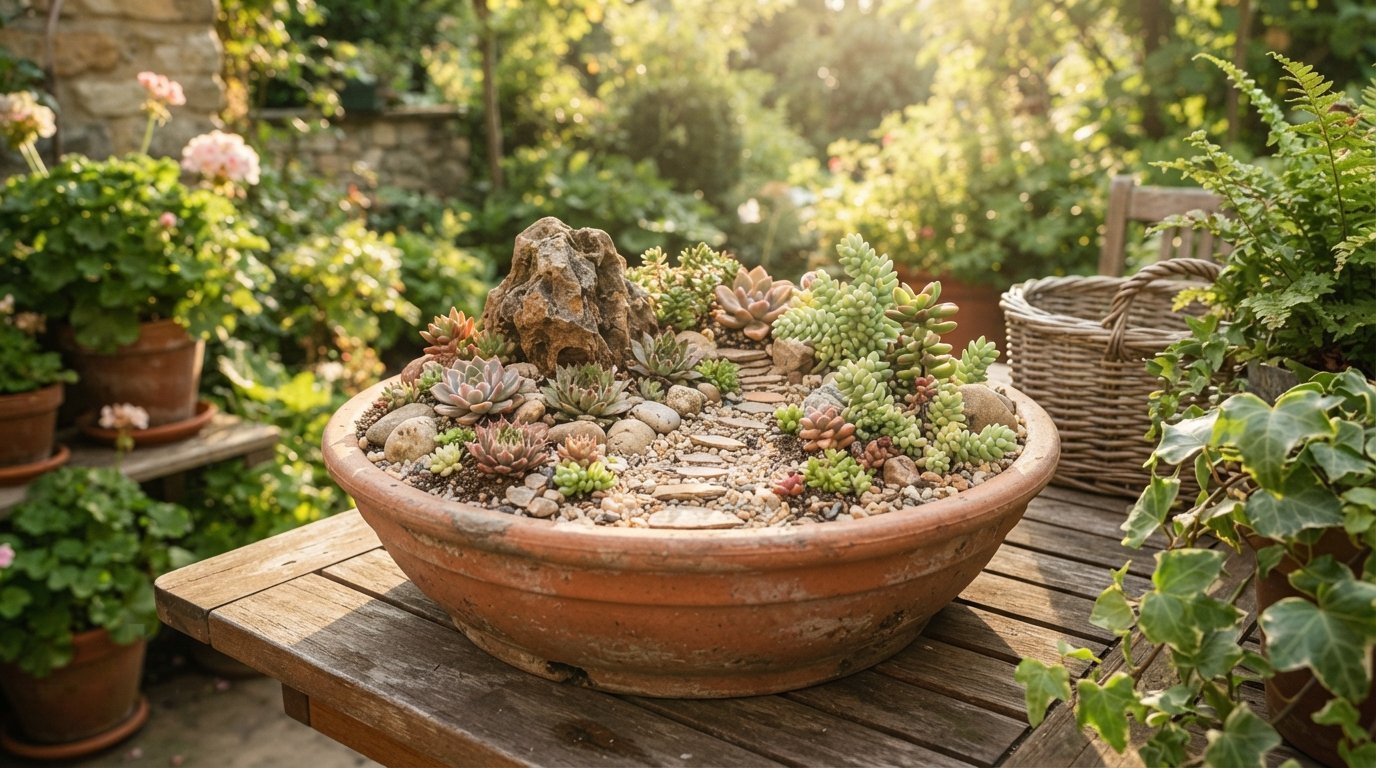
A succulent rock garden is one of my favorite ways to combine natural texture with low-maintenance planting. Rocks add structure and help create visual layers, while succulents bring interesting shapes, colors, and patterns to the spaces between them.
The best designs usually work with the natural conditions of the garden. I always think about sunlight, drainage, climate, and mature plant size before choosing succulents. In this guide, I’m sharing 11 creative succulent rock garden ideas, including useful product recommendations in Ideas 3 and 7.
1. Build a Natural Boulder Succulent Garden
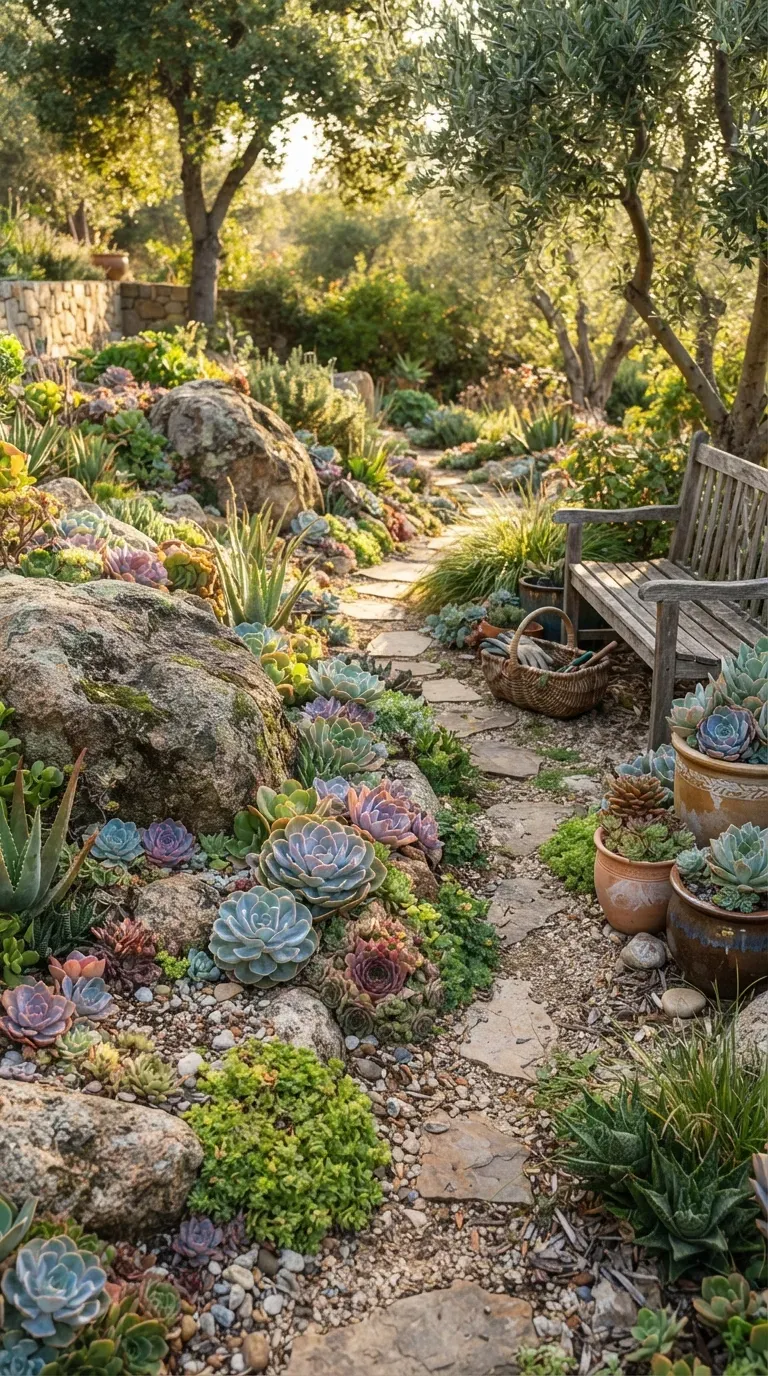
Large boulders can give a succulent rock garden an instant sense of structure. I like placing the biggest rocks first and then building the planting design around them. This makes the garden look more natural than adding rocks after everything else is planted.
Use a mix of larger focal succulents and smaller plants that fill the spaces between the stones. Rocks can also create height and texture, while mounds and varied levels can improve visual interest and support better drainage.
Why You’ll Love It
- Creates a natural and timeless focal point.
- Adds height and texture to the garden.
- Makes small succulent collections look more dramatic.
2. Create a Colorful Rosette Succulent Display
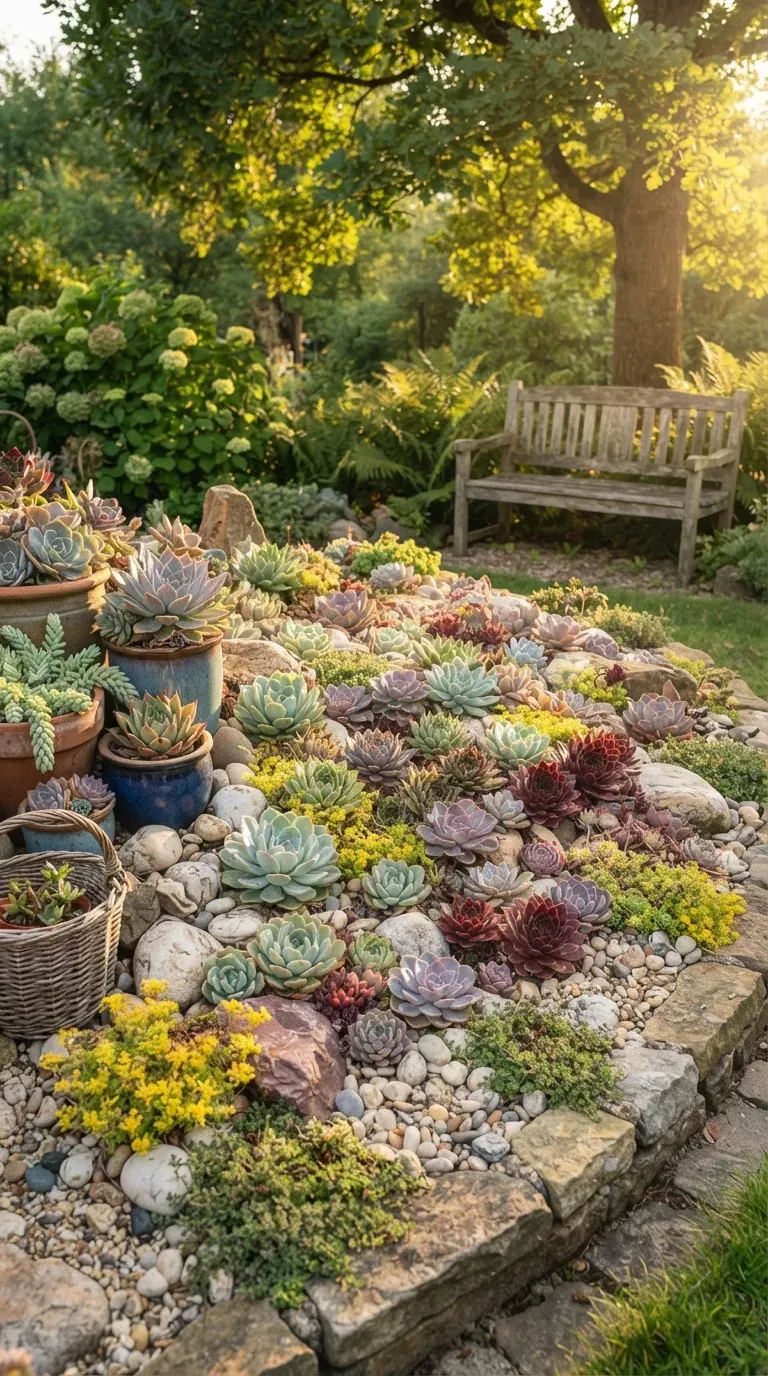
Rosette-shaped succulents can make a rock garden feel almost like a flower bed. Their repeating shapes look especially beautiful when you mix several sizes and colors while keeping the surrounding rocks relatively simple.
I would avoid arranging every plant in perfectly straight rows. Instead, create loose groups and leave enough room for each plant to reach its mature size. Mixing different heights and textures can also make the display feel more layered.
Why You’ll Love It
- Adds color without relying only on flowers.
- Creates a beautiful living pattern.
- Works well in small and large gardens.
3. Make a Raised Succulent Rock Bed
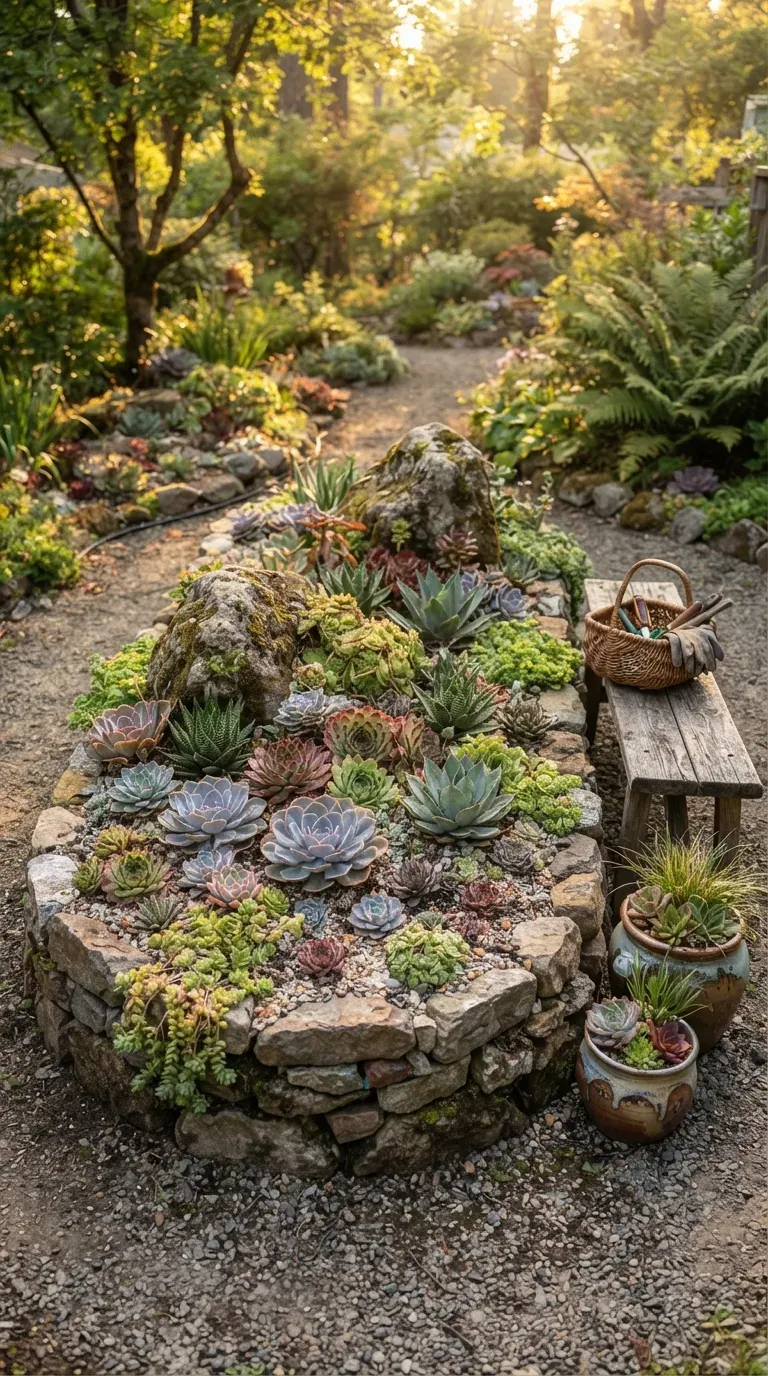
A raised bed is one of the best ideas for a succulent rock garden if your existing soil stays wet for long periods. Raising the planting area gives you more control over the growing medium and helps create a garden that sheds excess water more easily.
Useful product recommendation: A quality cactus and succulent potting mix can be a practical starting point for building the planting area. Look for a fast-draining mix rather than using heavy garden soil alone. Extension guidance recommends well-drained, sandy or gritty growing media for succulents, and perlite, coarse sand, or similar materials may be used to improve drainage when appropriate.
For a large outdoor bed, calculate the amount of material you need before buying. It is much easier to build the soil profile properly from the beginning than to replace a heavy, poorly draining mix later.
Why You’ll Love It
- Gives you more control over drainage.
- Adds attractive height to the landscape.
- Makes succulents easier to see and maintain.
4. Turn a Garden Corner Into a Mini Desert
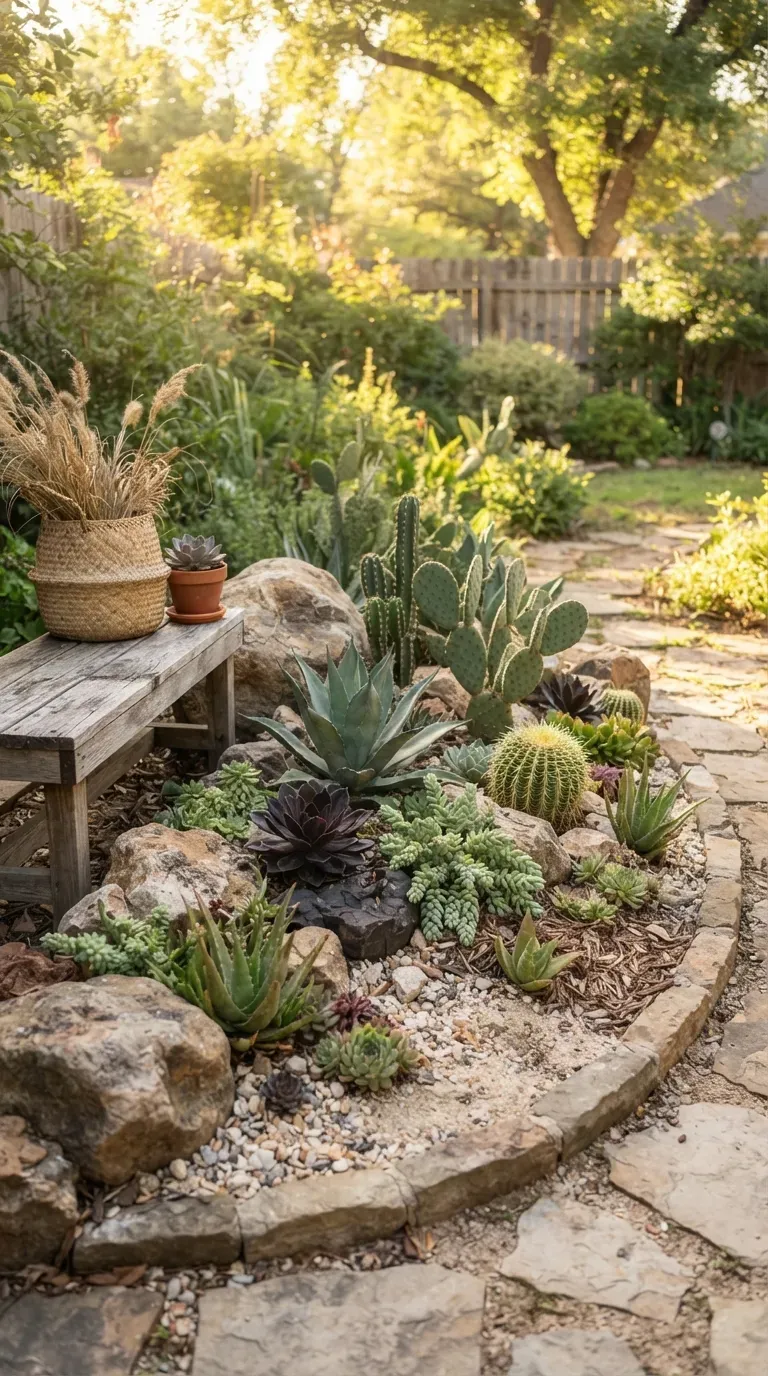
A small unused garden corner can become a striking mini desert landscape. I like using only a few types of plants and repeating them throughout the space so the design feels intentional rather than crowded.
Choose plants that suit your local climate. Not every succulent or cactus can survive outdoors year-round in every region, so matching the plants to your winter temperatures and rainfall is important.
Why You’ll Love It
- Turns an unused corner into a focal point.
- Has a clean and low-maintenance appearance.
- Works beautifully in sunny areas.
5. Plant Succulents Between Stone Crevices
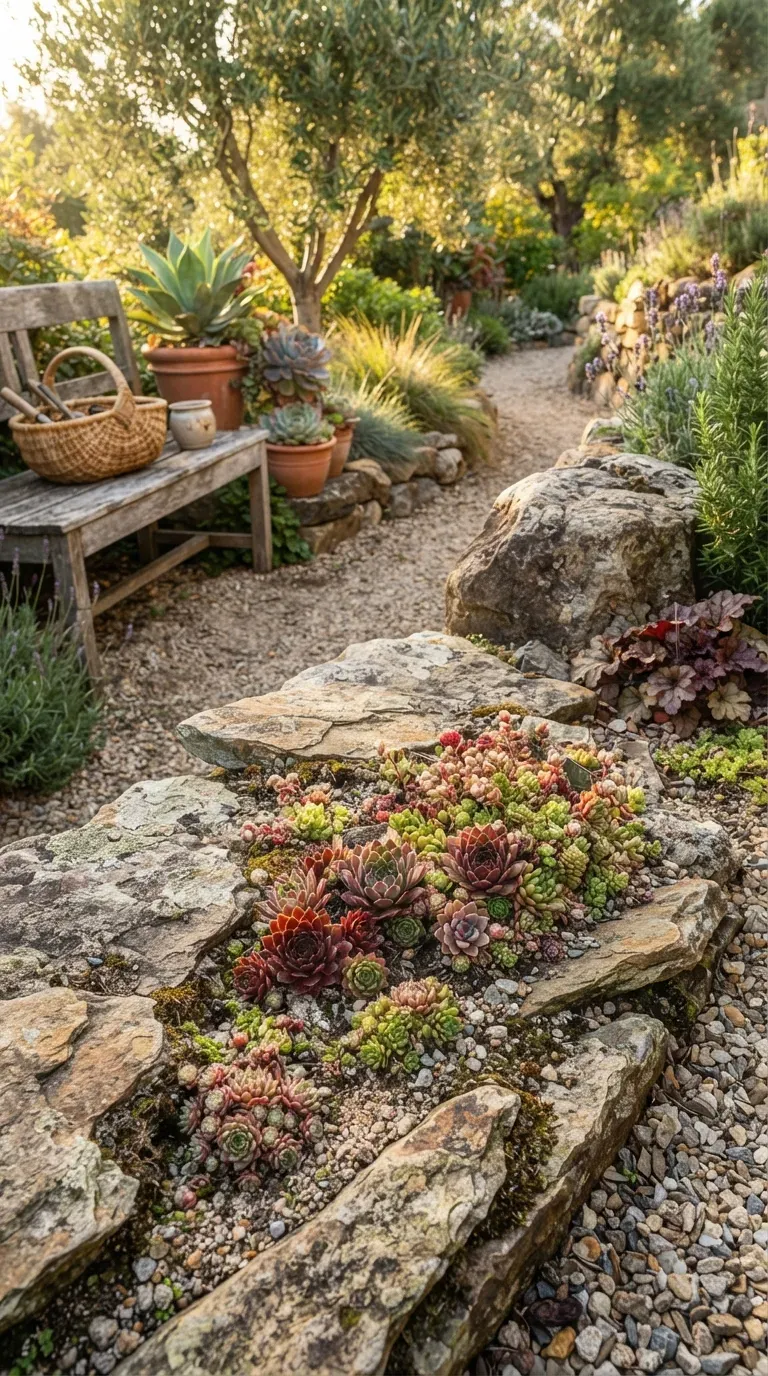
One of the things I love most about succulent gardens is how naturally some varieties fit into small gaps between rocks. This design works especially well with compact plants that stay relatively small.
Leave enough growing medium inside each planting pocket for the roots. The goal is not to plant succulents directly into solid rock but to create well-draining pockets between stones where their roots can establish.
Why You’ll Love It
- Creates a natural, aged appearance.
- Makes use of small spaces.
- Adds detail and texture throughout the garden.
6. Design a Succulent Rock Garden on a Slope
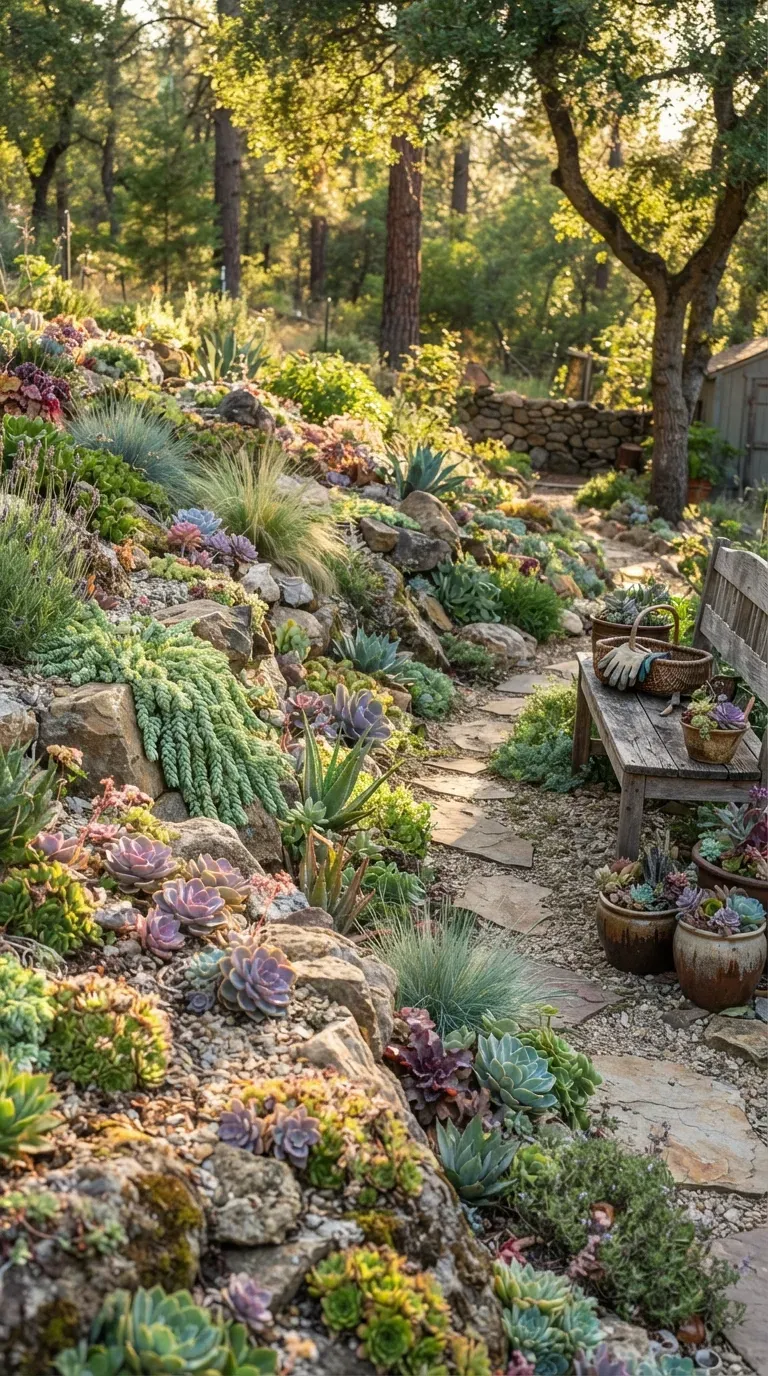
A gentle slope can be an excellent location for a succulent rock garden because water naturally moves downhill rather than sitting around the roots. You can use rocks to create small planting terraces and place trailing succulents near the edges.
I would position larger boulders securely before adding the smaller plants. Groundcover succulents can then soften the hard edges as they spread.
Why You’ll Love It
- Works beautifully with natural changes in height.
- Creates a layered landscape.
- Gives trailing plants room to spread.
7. Add Decorative Gravel and Pebble Mulch
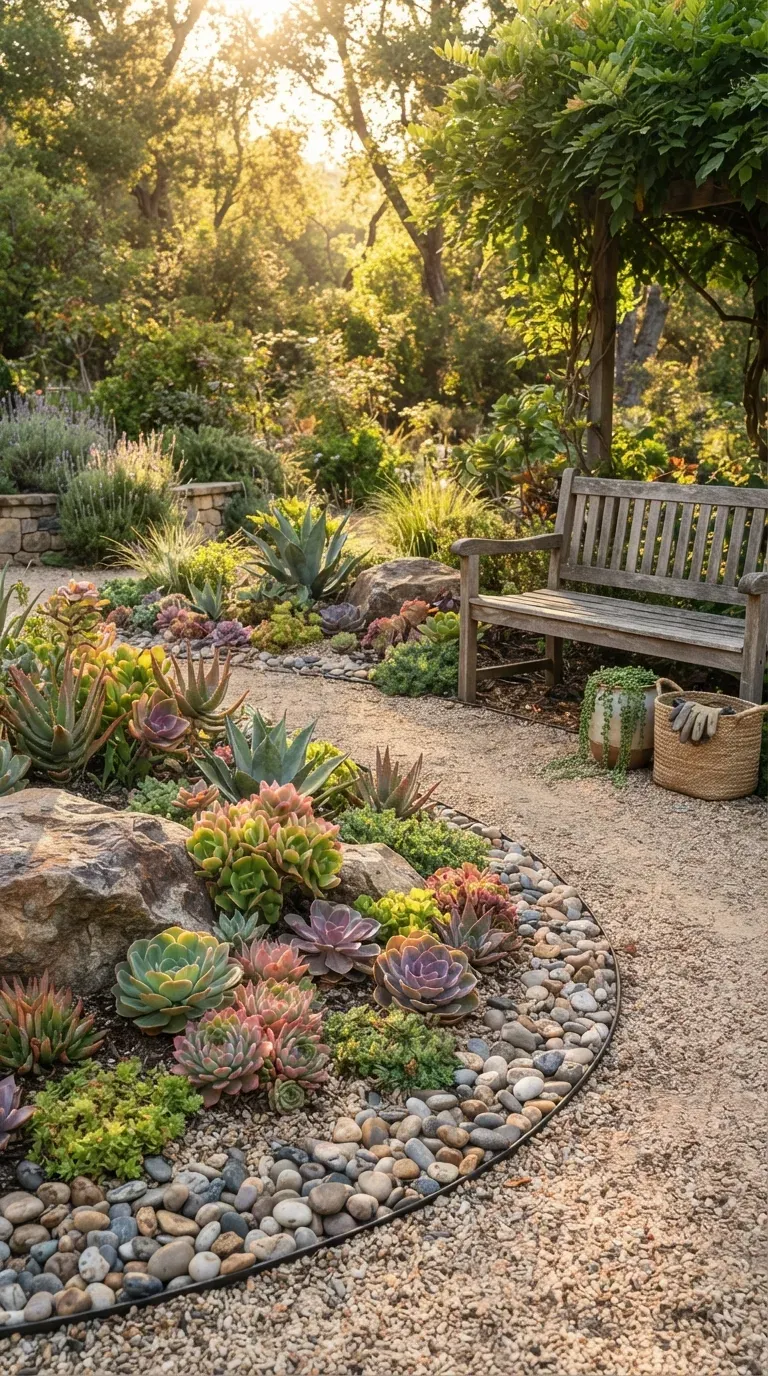
A layer of gravel or small pebbles can make a succulent garden look much more finished. I like using a color that complements the plants instead of choosing something that competes with their natural tones.
Useful product recommendation: Decorative landscape gravel or small rock top dressing is useful for covering exposed soil around succulents. It can add texture, help keep soil from splashing onto leaves, and support a cleaner-looking garden surface. University of California guidance notes that small rock top dressing can help keep succulent leaves lifted away from damp soil and also adds texture to the design.
Choose a size that looks proportional to your plants. Very large stones can overwhelm tiny succulents, while fine gravel usually works better around smaller rosettes and groundcovers.
Why You’ll Love It
- Gives the garden a polished appearance.
- Adds extra texture and contrast.
- Complements many different succulent shapes.
8. Create a Succulent Rock Waterfall Illusion
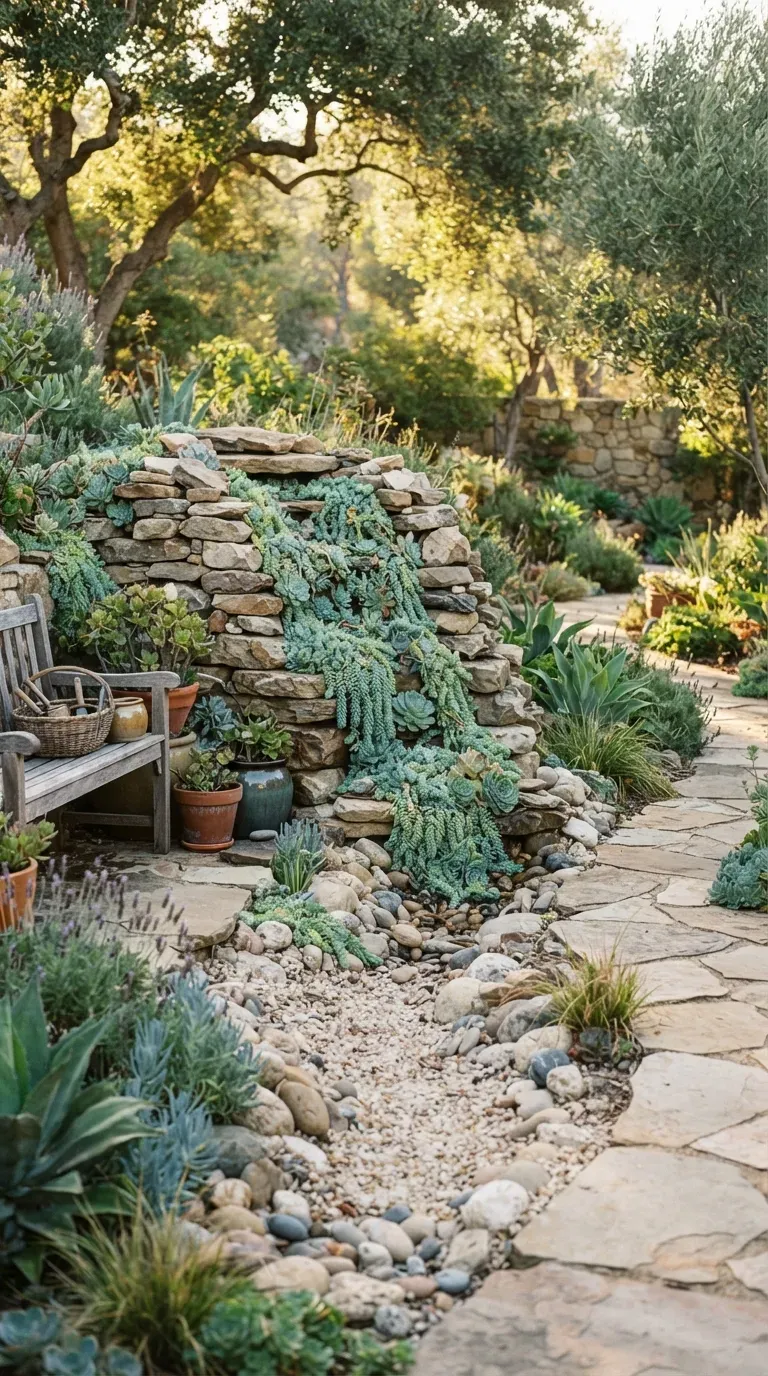
This idea uses rocks and cascading plants to create the appearance of a flowing stream or waterfall. I like using blue-green succulents near the top and trailing plants that gradually spread downward.
The design can become a beautiful focal point without the maintenance of a real water feature. Start with the larger stones to establish the direction of the “flow,” then add plants that soften the edges.
Why You’ll Love It
- Creates an artistic garden focal point.
- Does not require pumps or standing water.
- Combines texture, shape, and movement.
9. Build a Tiered Succulent Rock Garden
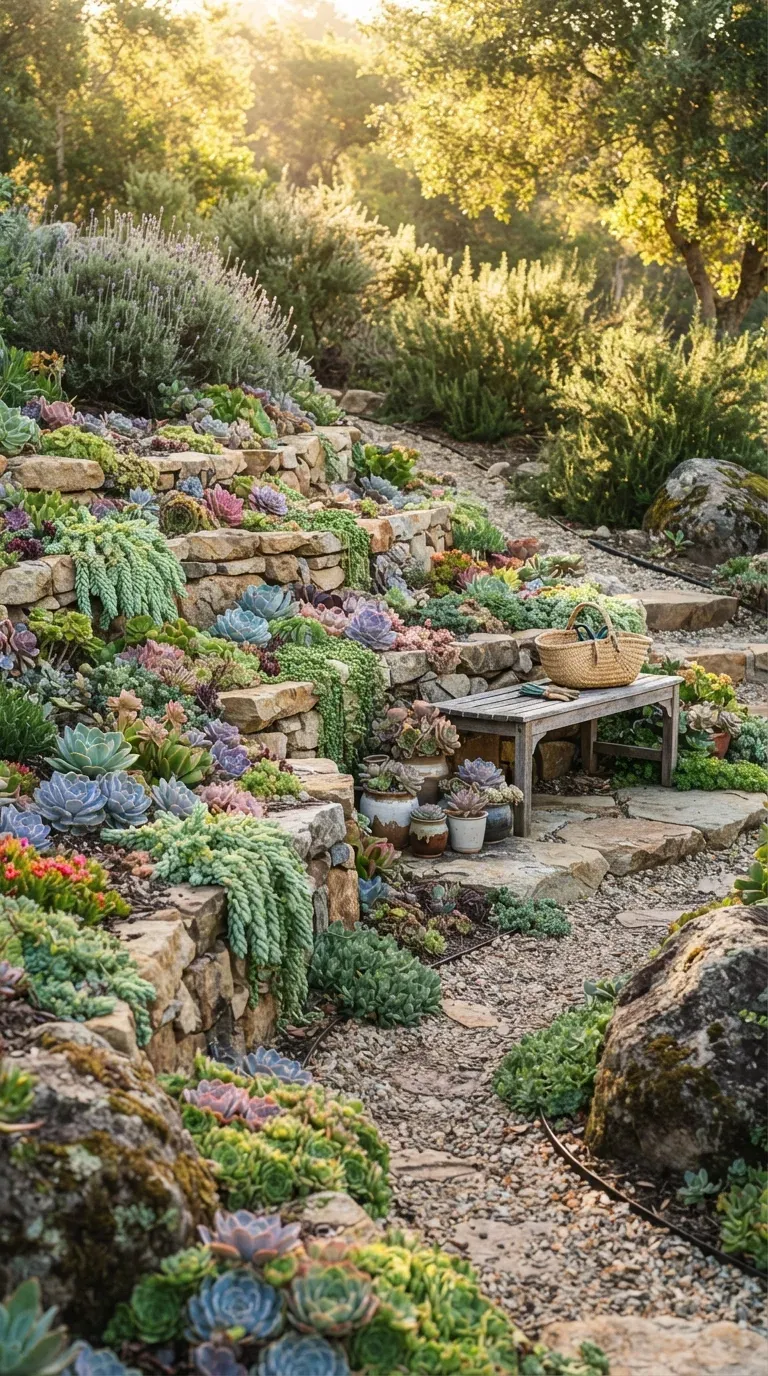
Tiered gardens are a great way to display several succulent varieties without making them compete for attention in one flat space. Each level can have its own combination of colors, heights, and textures.
I would repeat a few plant varieties across different tiers to create a sense of connection. Repetition can make even a diverse succulent collection feel organized.
Why You’ll Love It
- Creates strong visual depth.
- Gives every plant more visibility.
- Works well on slopes and raised areas.
10. Make a Mini Succulent Rock Garden
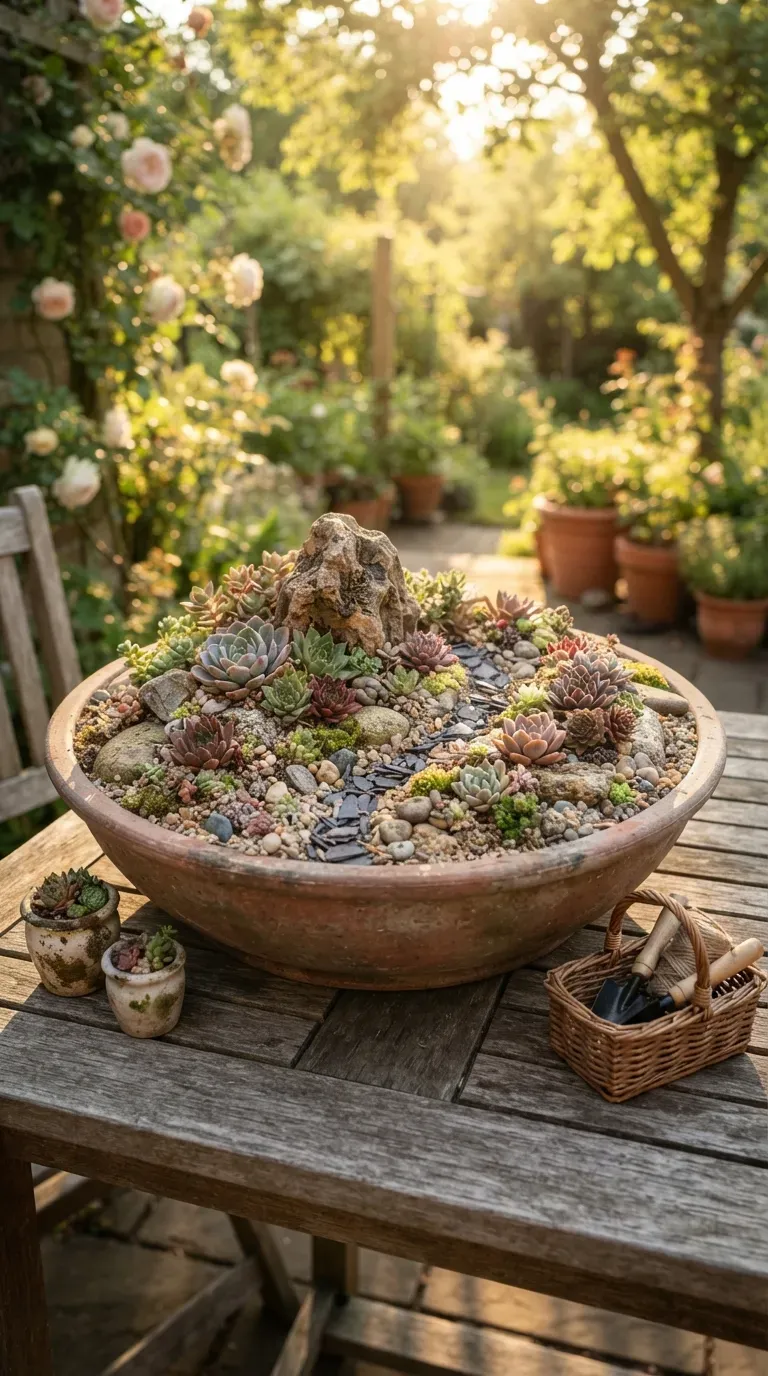
You do not need a large backyard to try this style. A shallow planter with proper drainage can become a miniature rock landscape for a patio, balcony, or small outdoor area.
Use one or two larger rocks as focal points and keep the smaller plants proportional to the container. A mix of plant shapes can make the miniature garden feel surprisingly detailed.
Why You’ll Love It
- Perfect for small outdoor spaces.
- Easy to personalize.
- Lets you experiment with rock garden design.
11. Create a Modern Minimalist Succulent Rock Garden
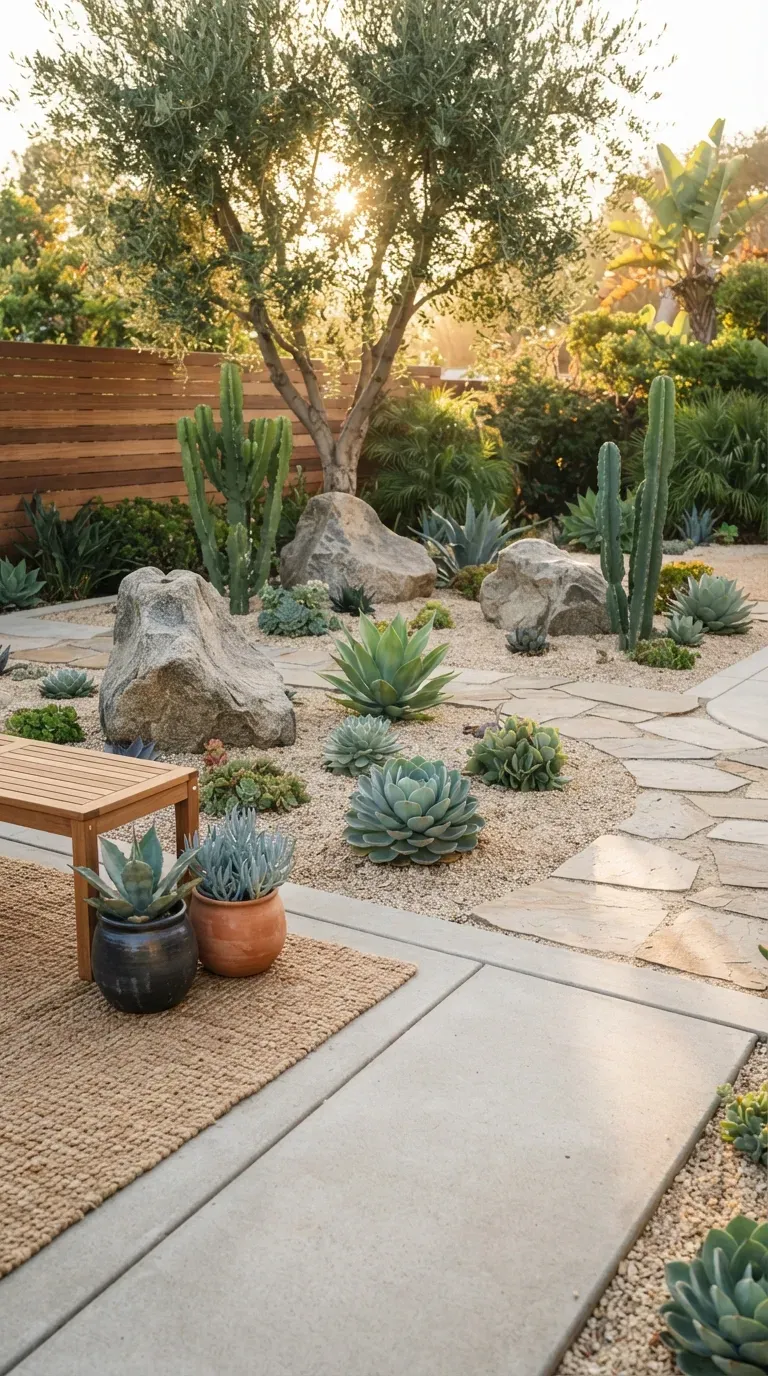
A minimalist design proves that a succulent garden does not need dozens of different plants. I like using a limited palette of stones and a few carefully selected succulents with interesting shapes.
Leave open areas of gravel between the plants. That negative space makes each succulent and boulder feel more intentional and creates a calm, modern look.
Why You’ll Love It
- Creates a clean contemporary style.
- Requires fewer plants and decorative elements.
- Makes sculptural succulents stand out.
My Experience-Based Tips for Creating a Succulent Rock Garden
When planning a succulent rock garden, I always put drainage before decoration. Succulents generally prefer a well-drained growing medium, and extension guidance repeatedly emphasizes that excess moisture can be a major problem. Sandy or gritty mixes, raised planting, and careful use of gravel or stone can help create better conditions.
I also recommend placing your largest rocks first. They establish the structure of the design and help you decide where planting pockets should go. Then add medium and small stones before filling the spaces with succulents. Accent boulders and rock top dressing can create focal points while adding texture and helping protect the soil surface.
Finally, choose plants based on your local climate, sunlight, and winter conditions. A succulent that thrives in a hot, dry climate may not survive outdoors in a cold or wet region. Matching the plant to the site will usually give you a healthier, easier-to-maintain garden.
Conclusion
These succulent rock garden ideas show how rocks and drought-tolerant plants can work together to create a landscape full of texture, color, and personality. Whether you prefer a natural boulder garden, a colorful rosette display, a mini desert corner, or a clean minimalist design, there are plenty of ways to make the idea your own.
My biggest tip is to start with the structure of the garden first: sunlight, drainage, soil, and rock placement. Once those basics are right, adding beautiful succulents becomes the fun part.