
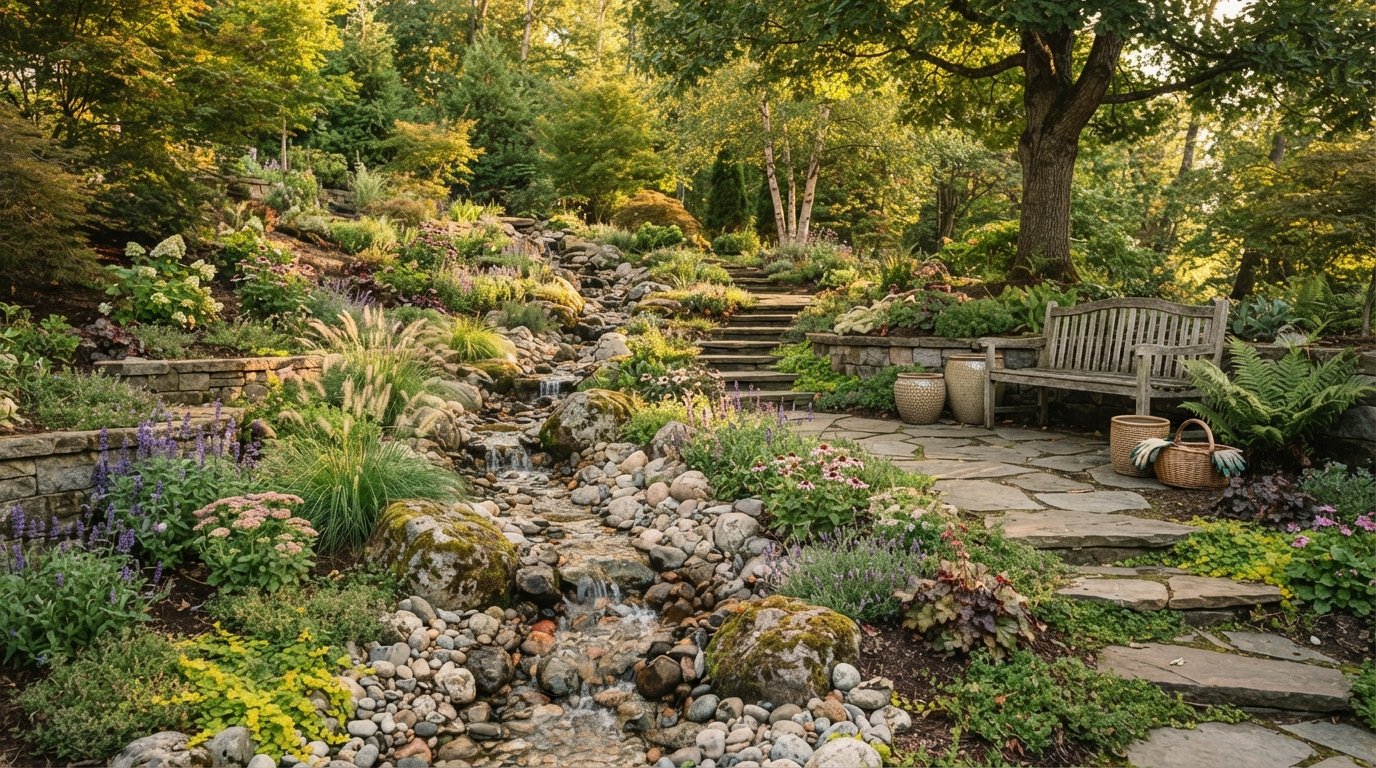
A sloped yard can feel challenging at first, but I’ve found that the slope itself can become one of the garden’s best features. Instead of trying to make every area flat, you can use the different levels to create terraces, layered flower beds, winding paths, and beautiful focal points.
The key is to combine good drainage, safe access, erosion control, and practical planting with a design that feels natural. In this guide, I’m sharing 11 sloped garden ideas that balance beauty with function. Ideas 3, 5, and 7 also include relevant product recommendations that can genuinely make those projects easier.
1. Create Layered Garden Terraces
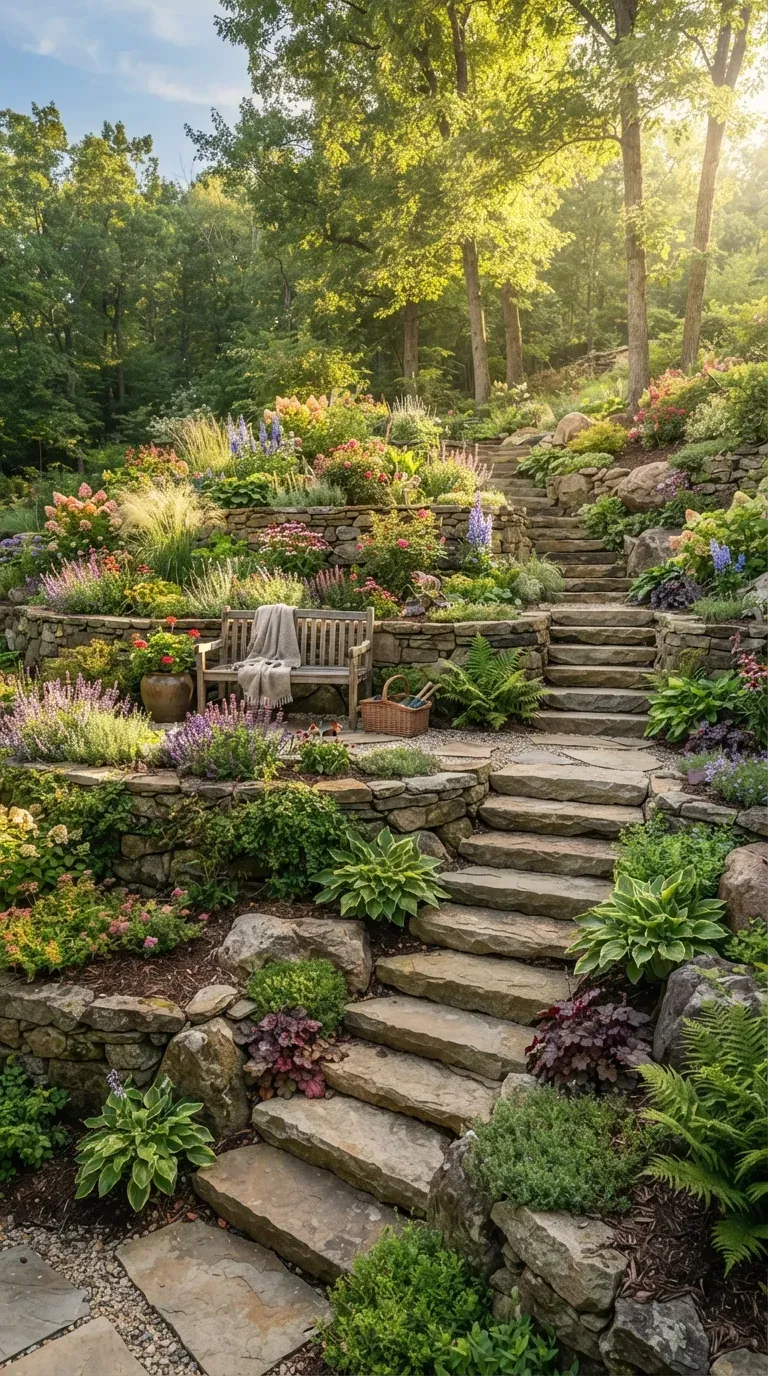
Terracing is one of my favorite ways to turn a difficult slope into usable garden space. Instead of seeing one long hillside, you create a series of smaller, flatter areas that can hold flowers, shrubs, vegetables, or even a seating area.
This approach is also practical because breaking a long slope into shorter sections can help slow water movement and reduce erosion. For larger or steeper retaining walls, I would treat the project as a structural job rather than a simple weekend DIY project and check local requirements or get professional advice when needed.
Why You’ll Love It
- Creates more usable gardening space.
- Adds beautiful layers and visual depth.
- Can help manage water moving down the slope.
2. Plant a Low-Maintenance Groundcover Slope
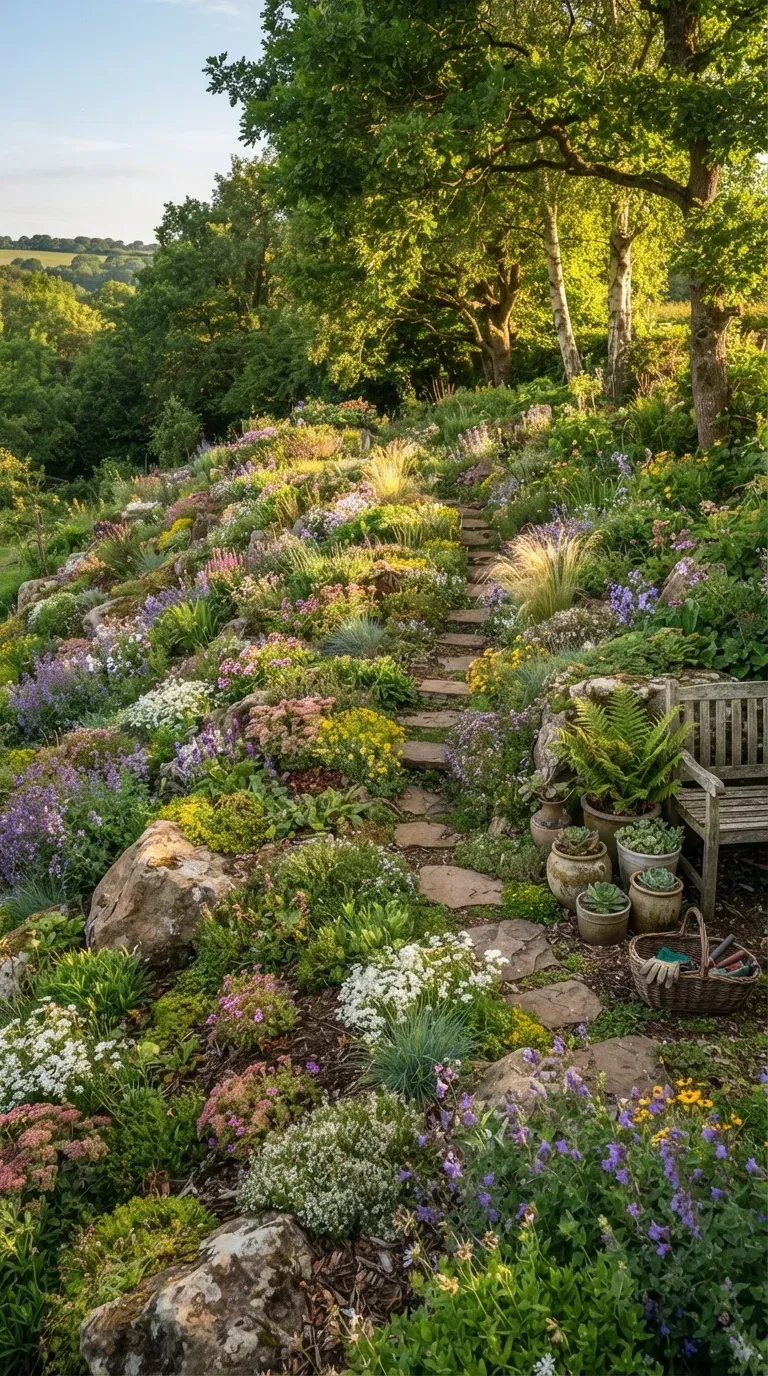
If the slope is too awkward to mow or walk across regularly, I would consider replacing high-maintenance lawn with plants that cover the soil. Groundcovers, grasses, shrubs, and other plants suited to the site’s sun and soil conditions can create a more stable and attractive hillside.
From my experience planning garden layouts, a mixture of plant types usually looks more natural than covering the entire slope with just one species. Extension guidance also notes that layers of vegetation can help protect soil and reduce the impact of rainfall.
Why You’ll Love It
- Reduces the need for mowing.
- Helps cover exposed soil.
- Creates a softer and more natural landscape.
3. Add an Erosion-Control Planting System
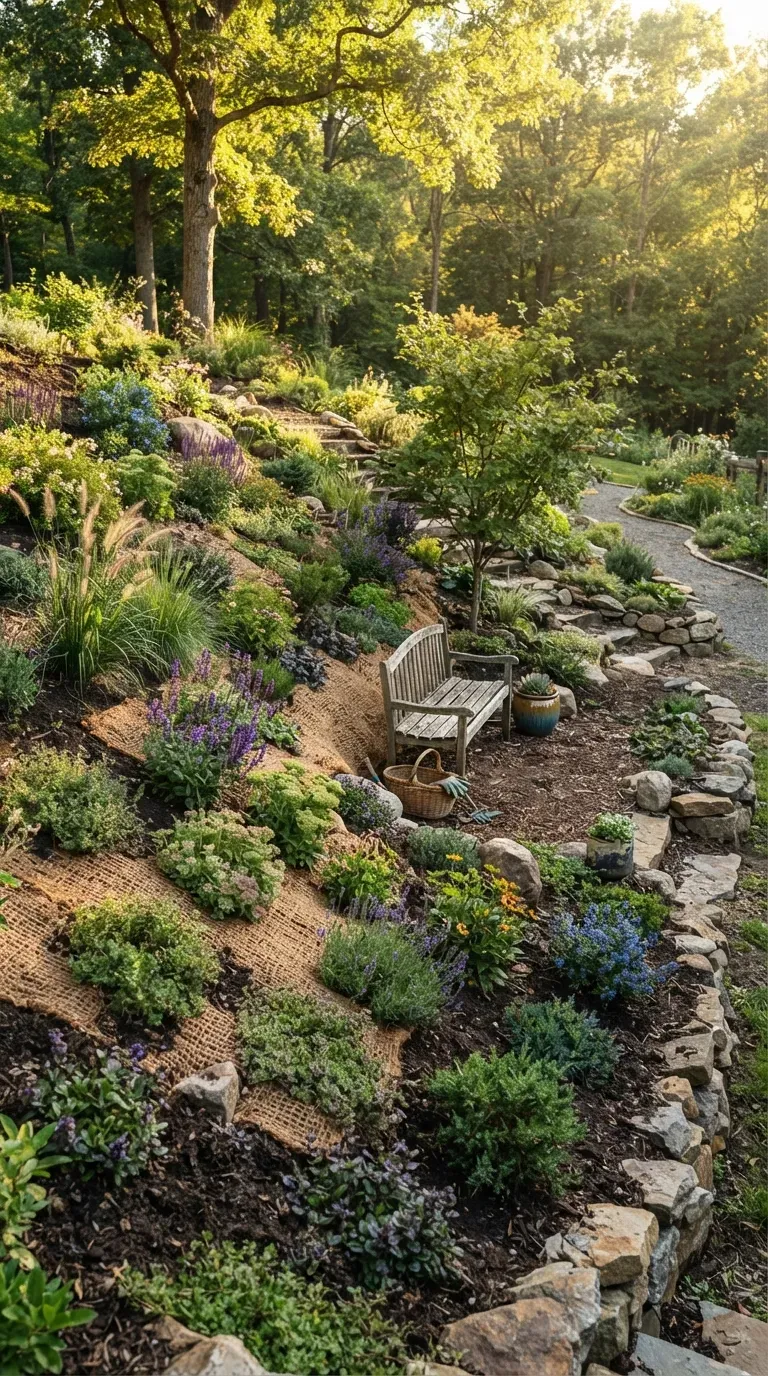
A newly planted slope is often at its most vulnerable before the plants establish strong roots. I would focus on keeping as much soil covered as possible while the garden fills in. Mulch, suitable vegetation, and erosion-control materials can all play a role depending on the slope and planting method.
Useful product recommendation: A biodegradable coir or jute erosion-control blanket can be useful for newly planted or seeded sections of a slope. These materials are designed to help hold soil in place while plants establish. I would choose a product suited to your slope, secure it properly with compatible landscape staples, and follow the manufacturer’s installation instructions. Extension guidance specifically identifies biodegradable materials such as burlap, jute, and coconut coir as options for temporary slope protection.
Why You’ll Love It
- Helps protect bare soil during establishment.
- Works well alongside new plants and seed.
- Supports a more stable-looking hillside.
4. Build a Winding Garden Path
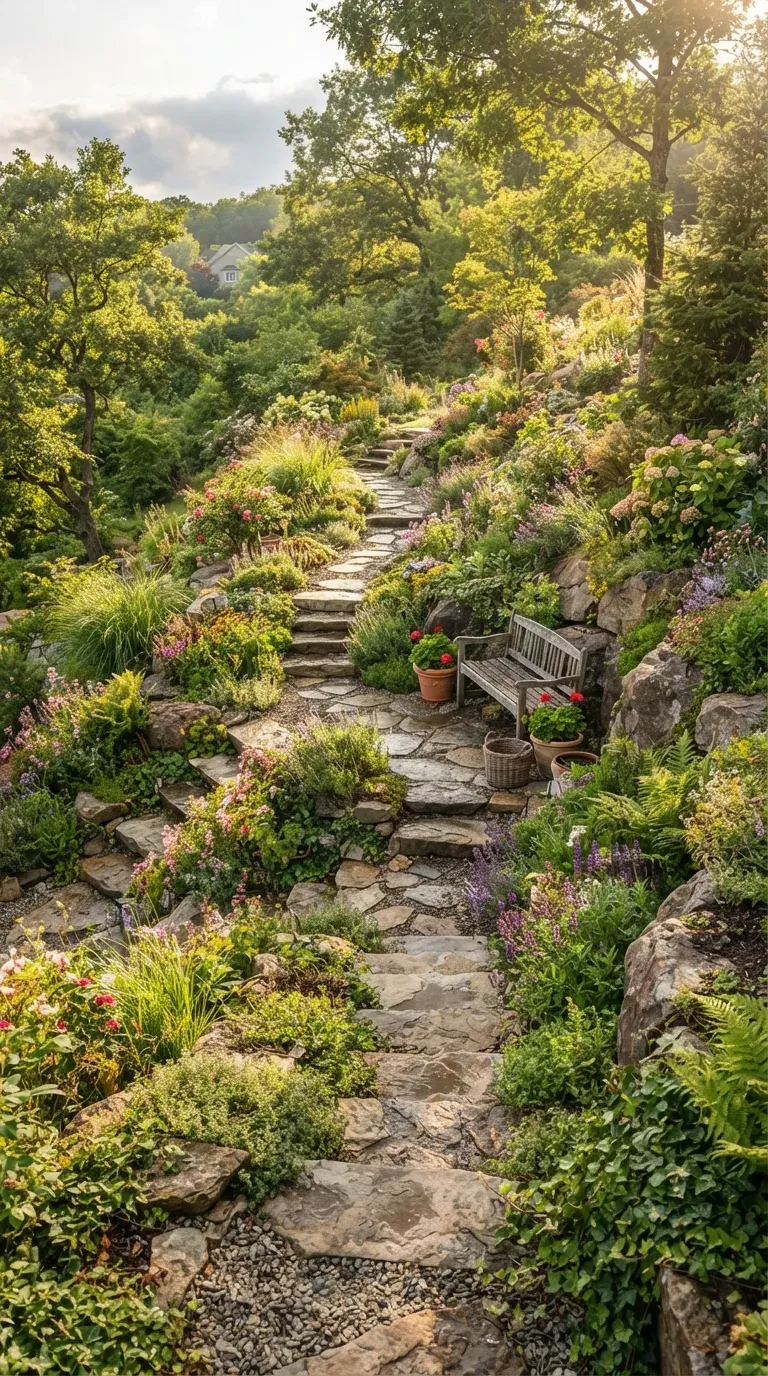
A winding path can make a sloped garden feel easier to explore. Instead of walking directly up or down the steepest part, the path can move gradually across the hillside.
I like using the path as part of the garden design rather than treating it as an afterthought. Let it curve around planting areas, rocks, or focal points. On steeper sites, proper steps, handrails, and construction may be needed for safety.
Why You’ll Love It
- Makes the slope easier to access.
- Adds structure and visual movement.
- Creates a more inviting garden journey.
5. Create a Natural Stone Retaining Wall
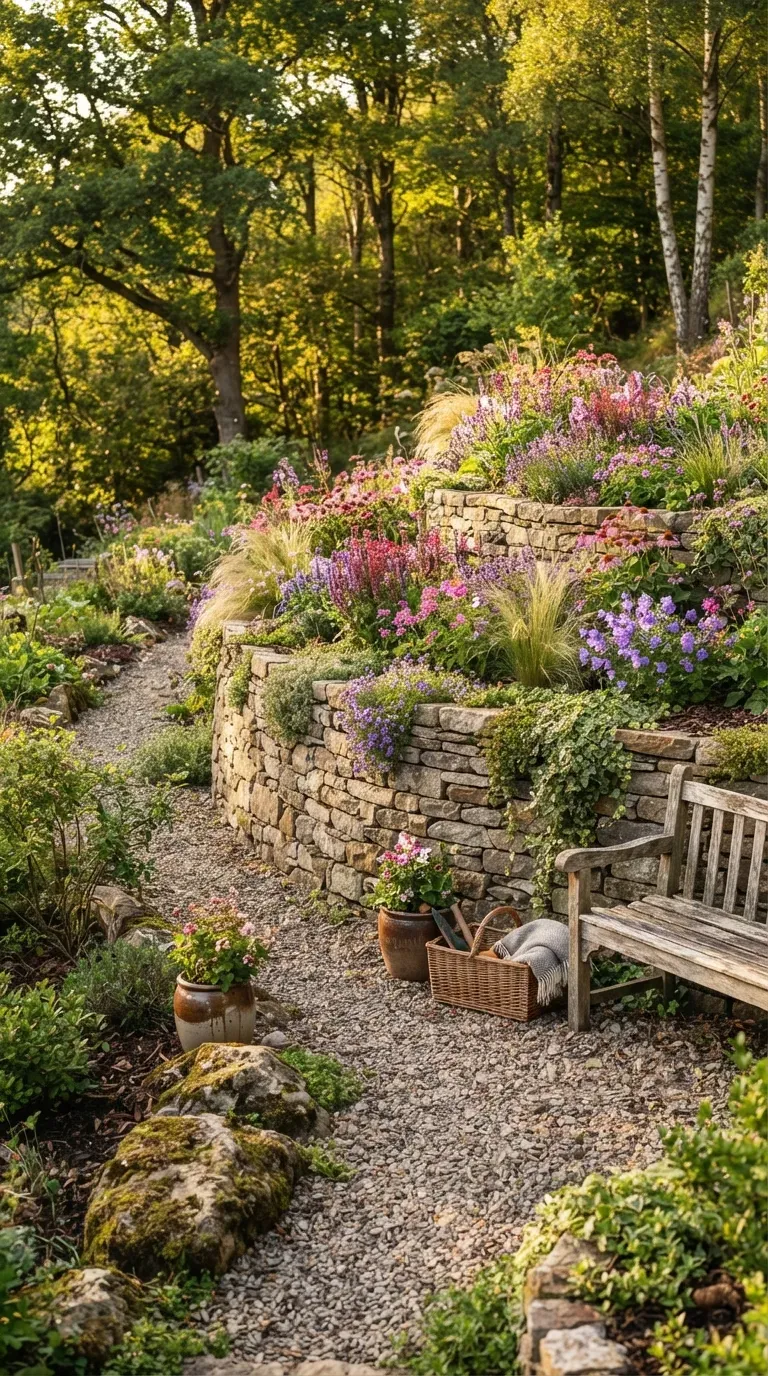
A retaining wall can turn a steep, difficult area into a level planting bed. Natural stone works especially well if you want a timeless or cottage-style garden because the wall itself becomes part of the landscape.
Useful product recommendation: For a small, appropriately designed DIY project, landscape retaining-wall blocks or natural wall stone can provide a practical starting material. Look for products intended for retaining applications rather than ordinary decorative pavers. Also consider drainage materials and the installation requirements as part of the system, not as optional extras.
For taller walls or slopes carrying significant soil pressure, I would strongly recommend professional guidance. Extension resources stress that retaining structures need proper drainage and construction because water and soil pressure can cause failure.
Why You’ll Love It
- Creates level areas for planting.
- Adds permanent structure to the garden.
- Works with rustic, modern, and natural designs.
6. Turn the Slope Into a Wildflower Meadow
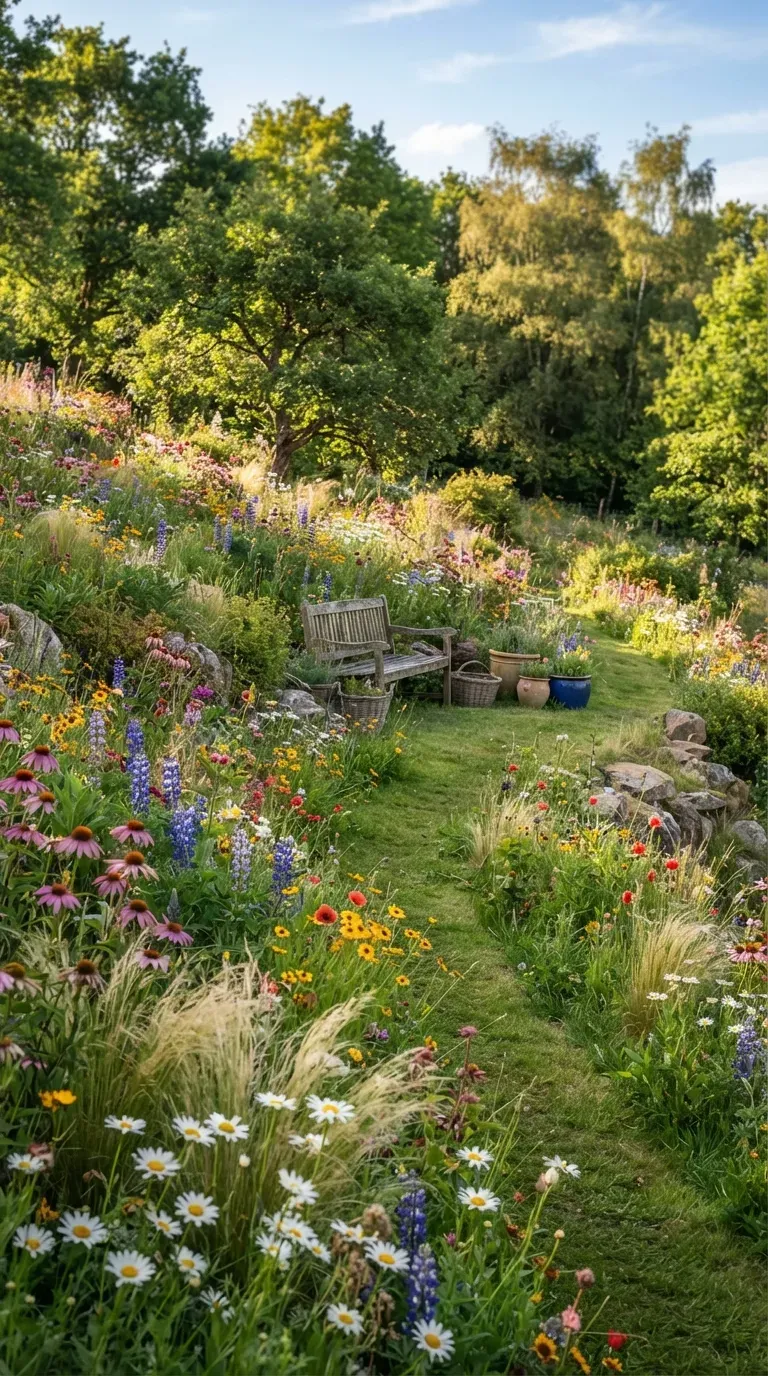
A sunny slope can become a beautiful meadow-style garden when planted with a diverse mix suited to your local conditions. I love this idea because it allows the hillside to feel relaxed and natural instead of forcing it into a perfectly formal layout.
For the best results, choose plants based on your climate, soil, and sunlight rather than copying a plant list from another region. Taller grasses, wildflowers, shrubs, and layered planting can also help slow water moving down the slope.
Why You’ll Love It
- Creates a relaxed natural landscape.
- Adds seasonal color and movement.
- Can reduce the need for regular mowing.
7. Install Stepping Stones Through the Slope
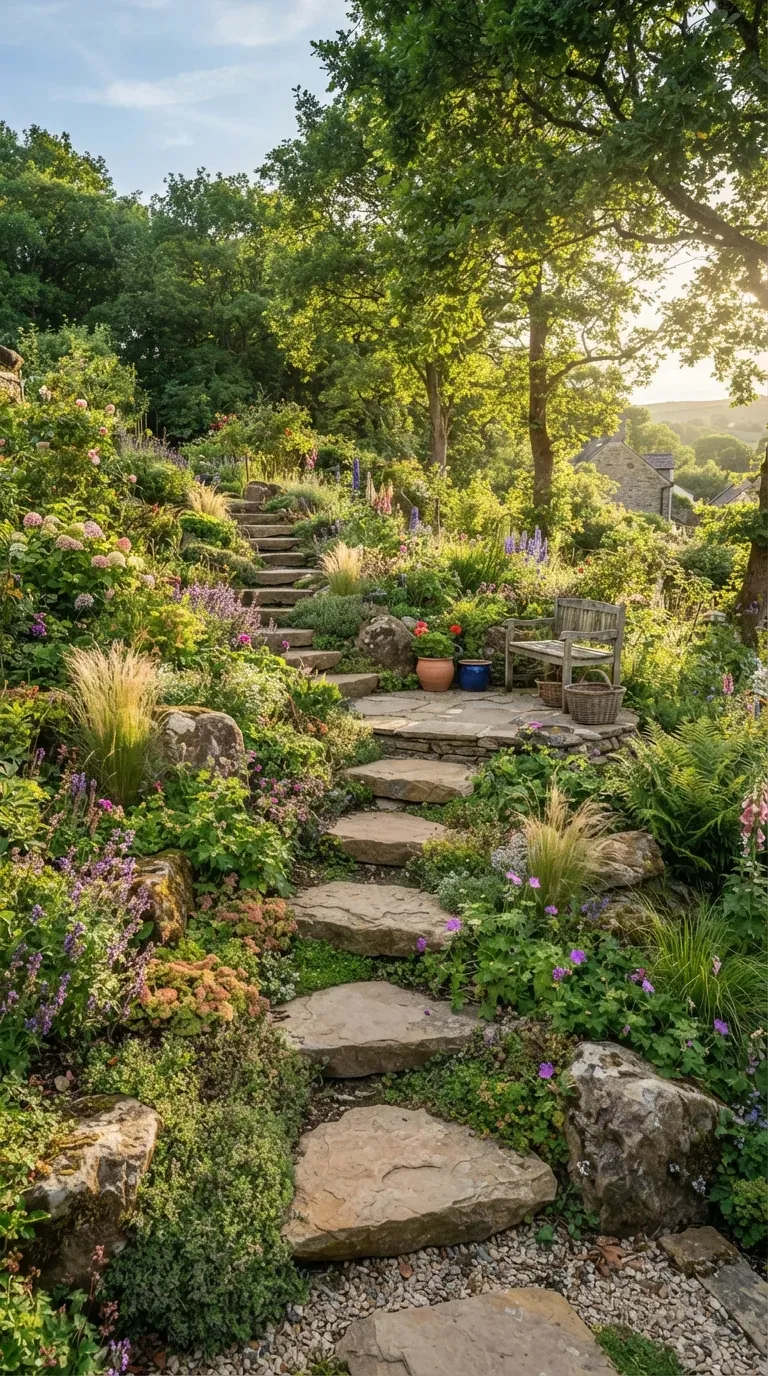
Stepping stones can make a gentle slope easier to navigate without covering the entire hillside with a large hardscape project. I like placing them where you naturally need access for watering, pruning, or enjoying the garden.
Useful product recommendation: Large textured outdoor stepping stones can be useful for creating a defined walking route. I would prioritize a stable, weather-resistant material and a surface with enough texture for outdoor use. Proper ground preparation is just as important as the stones themselves because loose or uneven placement can create a trip hazard.
For steep slopes, individual stepping stones may not provide enough safety. In that case, properly designed steps and railings may be a better solution.
Why You’ll Love It
- Makes garden maintenance easier.
- Adds a natural decorative feature.
- Helps protect planted areas from being stepped on.
8. Add a Rock Garden to the Hillside
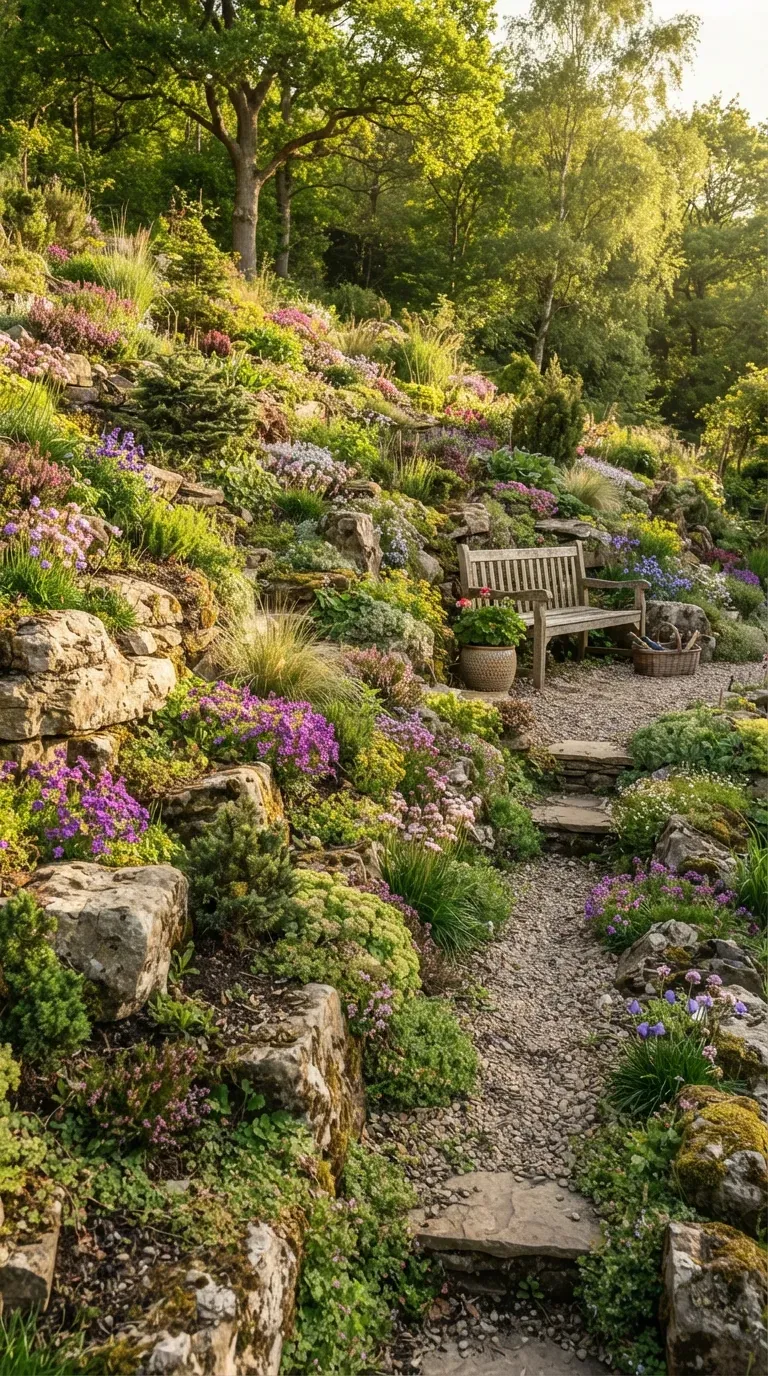
A rock garden can work beautifully with the natural shape of a slope. Instead of trying to hide the uneven ground, you can use boulders and rocks to create planting pockets and visual layers.
I would place larger rocks first and then build the planting around them. This usually creates a more believable and natural look than scattering small rocks randomly across the hillside.
Why You’ll Love It
- Works naturally with uneven terrain.
- Adds texture in every season.
- Pairs beautifully with drought-tolerant plants.
9. Create Tiered Vegetable Beds
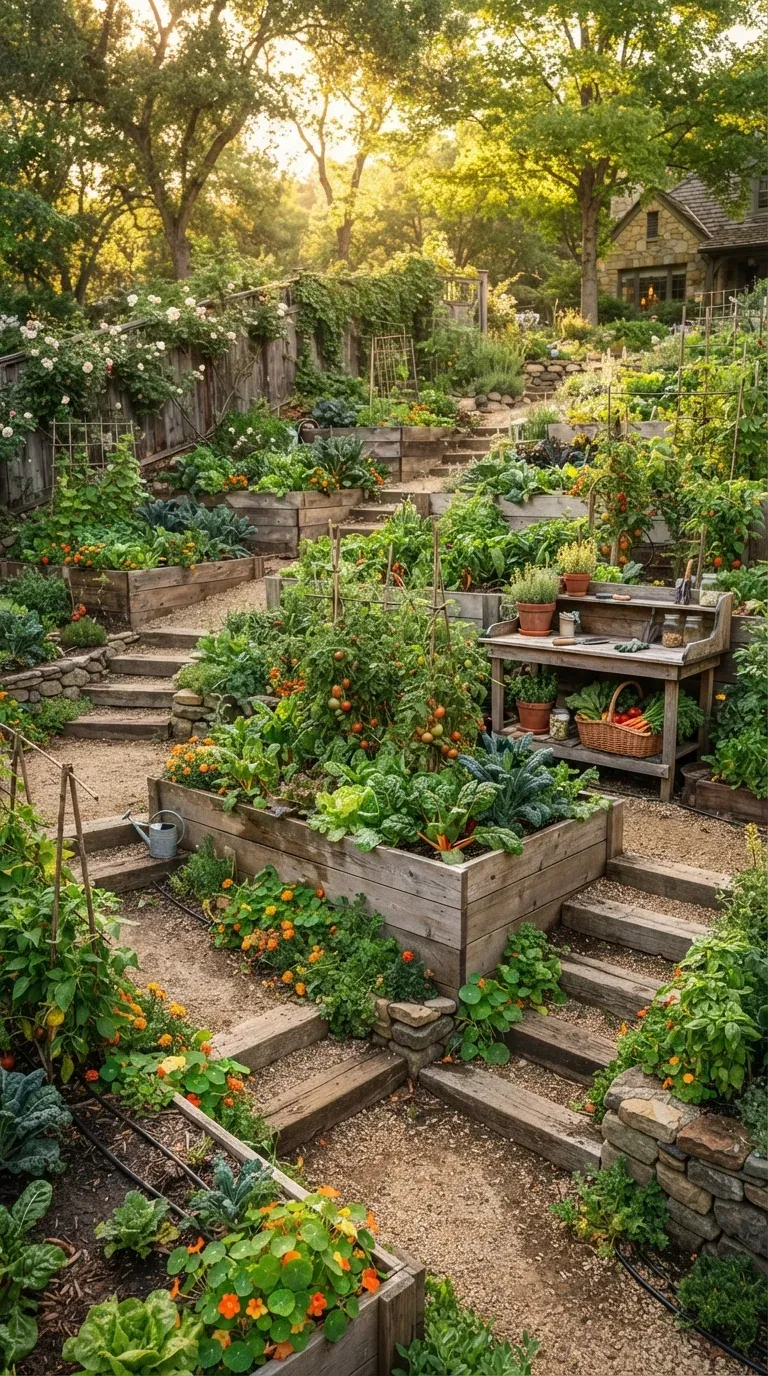
Terraced beds can turn a sunny slope into a productive growing area. Each level can create a more manageable space for planting, watering, and harvesting.
I would keep the beds wide enough to grow comfortably but narrow enough that you can reach the plants without stepping into the soil. Also think carefully about how water will move between levels before building the beds.
Why You’ll Love It
- Makes a slope useful for growing food.
- Creates organized planting zones.
- Can make maintenance more manageable.
10. Add a Dry Creek Bed for Drainage
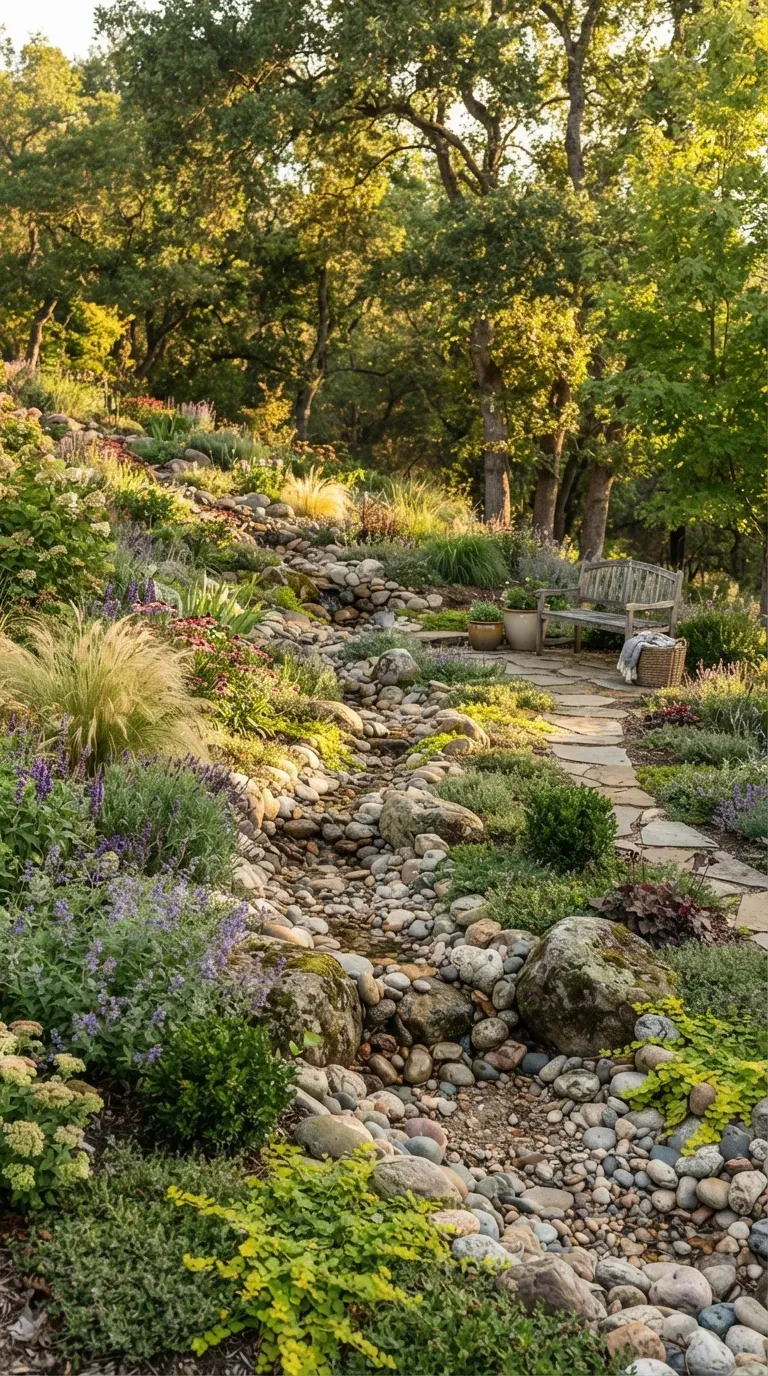
If water regularly runs down your slope, a dry creek bed can become both a practical and decorative feature. The goal is to direct water safely while giving the garden a natural focal point.
I would first observe where water actually travels during heavy rain before deciding on the final route. Drainage problems can sometimes involve water coming from roofs, driveways, or neighboring areas, so larger issues may require professional assessment.
Why You’ll Love It
- Turns a drainage route into a landscape feature.
- Adds natural texture and contrast.
- Can connect different parts of the garden visually.
My Experience-Based Tips for Designing a Sloped Garden
When I plan a sloped garden, I don’t start by choosing flowers. I first look at where water moves, how steep the slope is, where people need to walk, and which areas are sunny or shaded. That planning step can prevent expensive mistakes later.
I also recommend working with the slope whenever possible instead of trying to flatten the entire garden. Groundcover planting, terraces, paths, rocks, and layered vegetation can turn changes in height into part of the design. Plants are especially valuable because their roots and foliage help protect exposed soil and slow rainfall runoff.
For steep slopes or major retaining walls, don’t rely only on visual inspiration. Drainage, soil pressure, construction methods, local codes, and safety all matter. Professional guidance can be worthwhile for projects where structural failure could cause injury or property damage.
Conclusion
These sloped garden ideas show that an uneven backyard can become one of the most interesting parts of your landscape. From terraced flower beds and winding pathways to wildflower slopes, rock gardens, dry creek beds, and multi-level retreats, there are plenty of ways to work with the natural shape of your yard.
My biggest tip is simple: plan the water and structure first, then add the beauty. Once drainage, access, erosion control, and planting conditions are understood, it becomes much easier to choose a design that looks beautiful and remains practical to maintain.